Best Grit for Sanding Spackle and Joint Compound
Choosing the right grit for sanding spackle and joint compound speeds up repairs and yields a smoother, professional finish. A typical approach uses a progression: start with a coarser grit to remove ridges, then move to finer grits to refine the surface. The products below cover dual-grit sponges, angled designs for corners, and versatile blocks and screens that excel on drywall, patching, and wood finishing tasks. Use this guide to compare grit ranges, material quality, and usability for common spackle projects.
| Product | Brand | Grit Range | Best For |
|---|---|---|---|
| 3M Drywall Sanding Sponge 9095DC-NA | 3M | Fine / Medium | Moderate sanding and smoothing of joint compounds |
| 3M Angled Sanding Sponge CP-042 | 3M | Fine | Corners and crevices, interior edges |
| Romeda 8-Pack Sanding Sponge 60/80/120/220 | Romeda | 60 / 80 / 120 / 220 | Versatile drywall, wood finishing, and patches |
| Eoppen 6Pcs Sanding Sponge 60/80/120/220 | Eoppen | 60 / 80 / 120 / 220 | Wet or dry sanding; progressive finishing |
| SCOTTCHEN Drywall Sanding Screen Mesh #80/120/220 | SCOTTCHEN | 80 / 120 / 220 | Sanding joint compound and patching plaster |
Note: The table above highlights five selections that cover a broad range of spackle-related tasks—from smoothing ridges on patched drywall to finishing corners and edges with precision. The following sections provide deeper insights into each product and practical guidance for getting the best results from your sanding projects.
3M Drywall Sanding Sponge 9095DC-NA

The 3M Drywall Sanding Sponge 9095DC-NA is a dual-grit block designed for both material removal and surface smoothing. With a medium grit on one side and a fine grit on the other, it’s ideal for moderating joint compounds after a patch or skim coat. The flexible sponge adapts to both flat sheets and contoured surfaces, giving even pressure across high spots and gentle contact along rounded edges. This makes it particularly suitable for curing spackle on walls where texture varies or where a seamless finish is required.
Using this sponge effectively involves a two-step approach. Begin with the medium grit to flatten ridges and remove excess material. Switch to the fine grit to reduce scratches and achieve a smooth, paint-ready surface. Because the sponge is flexible, it can be used vertically or horizontally, which helps maintain control on large patches as well as tight corners. For a cleaner work area, dampen the sponge slightly to minimize dust and improve agglomeration of loose particles.
In practice, the 9095DC-NA supports efficient drywall repair workflows by combining removal and finishing tasks in one tool. Its 2-5/8 inch by 3-3/4 inch size fits comfortably in one hand, allowing steady pressure without fatigue. The sponge’s durability helps it hold up under repeated use, making it a solid choice for DIYers tackling multiple patches or ongoing renovations.
Sanding Sponge CP-042 Angled Fine Grit
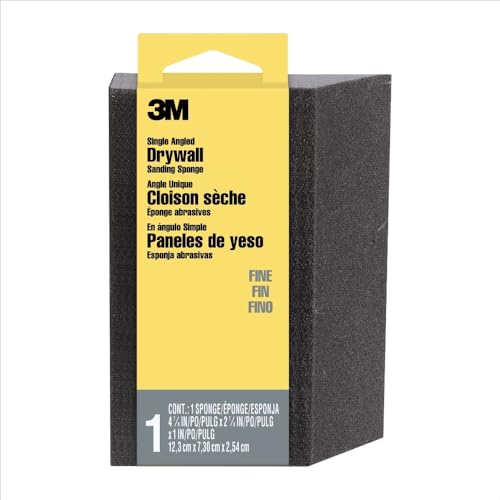
The 3M Angled Sanding Sponge CP-042 is a fine-grit option engineered for precision in crevices and corners. Its angled edge makes it easier to reach tight patches that straight-edged sponges might miss, helping to smooth joint compound in areas around trim, outlets, and window frames. The sponge is designed for wet or dry use and is washable and reusable, which adds to its long-term value in a busy workshop or on a remodeling job.
For best results, start with a light touch in corners to avoid gouging. Use longer, even strokes along the joint lines, then switch to a broader sweep for flat surfaces to ensure uniformity. The CP-042’s single-angle design emphasizes detail work, making it an excellent companion to other sanding tools when a precise finish is required in tight spaces.
Because it’s optimized for corners, this sponge is often the go-to choice after a rough patch has been filled. It can also be used in combination with a coarser grit sponge if more material removal is needed before final smoothing. The result is a cleaner, more professional patch that accepts paint and primer evenly.
Romeda 8-Pack Sanding Sponge 60/80/120/220

Romeda’s 8-Pack Sanding Sponge offers four grits per pack—60, 80, 120, and 220—giving you a complete progression for drywall and wood finishing. The set includes two blocks per grit size, with distinct color coding to help you quickly grab the right sponge for each stage of sanding. The high-density sponge is flexible and tear-resistant, designed to hold up under repeated use and avoid detaching grains during work on joints and patches.
In practice, begin with 60 and 80 grits to knock down raised areas and imperfections in plaster or joint compound. Progress to 120 for a smoother blend, and finish with 220 for a near-ready surface. Color coding helps you avoid cross-contamination between grits, ensuring a consistent finish across patch areas. The versatility makes this set suitable for drywall, furniture refinishing, and metal surfaces where a smooth, even texture is desired.
The Romeda pack’s reusability and variety make it especially valuable for homeowners who tackle multiple sanding tasks in a single project. Regular rinsing and proper drying extend the life of the sponges, while the durable construction minimizes shedding and wear over time.
Eoppen 6Pcs Sanding Sponge 60/80/120/220

Eoppen’s 6Pcs Sanding Sponge set provides four grit sizes—60, 80, 120, and 220—designed for durable, all-purpose hand sanding. The sponges use premium brown corundum bonded to a high-density sponge, delivering reliable grit performance with flexible handling. This makes them suitable for wood, metal, drywall, and painted surfaces. The kit’s emphasis on wet or dry use expands its versatility for dust control and smoother finishes in tight areas or larger surface areas alike.
To maximize results, pair the coarser grits with rough patches to remove excess material, then advance through the finer grits to remove scratches and produce a uniform finish. The washable design supports repeated use across different projects, reducing waste and increasing value for DIYers and professionals who perform regular touch-up work on spackled walls and trim.
Design-wise, the Eoppen set balances affordability with broad grit coverage, making it a practical choice for homeowners who want a single-inventory solution for drywall repair, furniture refinishing, and general surface prep before painting.
SCOTTCHEN Drywall Sanding Screen Mesh 4-3/16″ x 11-1/4″ Grit #80, 120, 220

SCOTTCHEN offers a drywall sanding screen mesh sheet in open, non-clogging mesh with grit options #80, #120, and #220. These sheets measure 4-3/16″ by 11-1/4″, making them well-suited for sanding joint compound and patching plaster across larger surfaces. The open mesh design resists clogging with dust and patches, allowing for faster material removal and a cleaner finish. The sheets are easy to install on standard hand or pole sanders, expanding their utility for projects that require reach and flexibility.
For best outcomes, start with the coarsest grit (#80) on rough patches to flatten irregularities, then move to #120 for a smoother blend, and finish with #220 for a refined surface ready for primer. The mesh construction helps prevent loading, which can save time during long sanding sessions, especially on larger patched areas or repair jobs where joint compound dries unevenly.
Buying Guide
Grit Range And Use Cases
- Coarse grits (60–80) are best for removing ridges and leveling patches on drywall and wood. Use them sparingly to avoid gouging the surface.
- Medium grits (120) provide a balance between material removal and surface refinement, ideal for smoothing skim coats and joint compounds after initial patching.
- Fine grits (220 and above) produce the final, paint-ready finish. Use these after the surface has been leveled with coarser grits to minimize scratches.
Choosing Between Sponges, Blocks, And Screens
- Sanding sponges (flexible blocks) excel on curved surfaces, corners, and irregular patches, offering control and comfort in hand sanding.
- Sanding blocks provide solid pressure on flat surfaces and large patches with fewer dips or gouges.
- Sanding screens are best for joint compound patches and open-surface sanding where clogging is a concern; they last longer on dusty tasks and patchwork.
Wet vs Dry Sanding
- Wet sanding reduces dust and helps achieve smoother finishes on spackle and primer coats.
- Dry sanding is often faster for initial material removal but can generate more dust; consider using protective equipment.
Care And Maintenance
- Rinse sponges and blocks after use to remove dust and debris; air dry completely to extend life.
- Avoid bending or tearing mesh screens; store in a dry place to prevent mold or degradation.
Value And Budget Considerations
- Multi-grit sets offer greater versatility and cost savings for homeowners tackling multiple tasks.
- Durable materials with reusable features tend to provide better long-term value, especially for frequent repairs.