Best Wood Filler for Rotted Wood: Top Picks for Repairs
Rotted wood can threaten structural integrity and curb appeal. Selecting the right wood filler or epoxy system is essential to stop decay, restore strength, and prepare a surface for priming and painting. The best products penetrate rotted zones, cure without shrinking, and bond firmly to surrounding fibers. The five options below are widely used for rotted wood repairs, offering options from penetrating restorers to durable two‑part fillers. Each product is suitable for indoor or outdoor projects and designed to deliver solid, paintable results.
| Product | Brand | Key Focus |
|---|---|---|
| Bondo Rotted Wood Restorer | Bondo | Rot-stopping, hardens rotted wood fibers |
| Re-Rot Rot Repair Epoxy | Epox-Sci | Multiuse epoxy for rotted wood repairs |
| Abatron Wood Restoration Kit | Abatron | LiquidWood and WoodEpox for restoration |
| 3M Bondo Wood Filler (WF-QT-ES) | Bondo | Two‑part formula, quick, durable repairs |
| 3M Bondo Wood Filler High-Performance | Bondo | High‑performance two‑part filler, fast cure |
Bondo Rotted Wood Restorer

Bondo Rotted Wood Restorer is designed to halt decay and create a solid base for subsequent filler applications. It stops rot and hardens soft wood surfaces, helping to stabilize compromised areas before filling. This product acts as a preparatory step in rotted wood repair, providing a sturdy foundation for the application of Bondo Wood Filler. It is suitable for both interior and exterior projects and complements Bondo’s standard wood filler by reinforcing the damaged zone.
Listed features emphasize its rot-stopping action, penetration into rotted fibers, and its role in forming a solid base for future repair. Use on dry wood, follow manufacturer directions, and then finish with a compatible filler for a smooth, paintable surface. The product is intended to be part of a two-step repair process rather than a standalone long-term fix for all rotted sections.
Re-Rot Rot Repair Epoxy Kit

Re-Rot is a complete rot repair kit designed to rebuild, restore, and reverse rotted or sun-damaged wood. It can be used as a filling paste, a petrifying liquid hardener, or a putty, offering versatility in one package. When dry, Re-Rot claims a high bond strength (up to 4,600 PSI), which contributes to a durable repair that supports subsequent surface applications. The kit is suitable for both flat repairs, such as window sills or thresholds, and vertical repairs like siding or columns, making it a flexible choice for many rotted-wood scenarios.
The listed features highlight its multiuse capabilities, strong dry bond, and broad repair applications. For best results, follow the kit’s mixing guidelines, allow adequate curing time, and plan for a final finish with compatible wood fillers or coatings. This product is most effective when rotted wood is cleaned and prepared prior to application.
Abatron Wood Restoration Kit
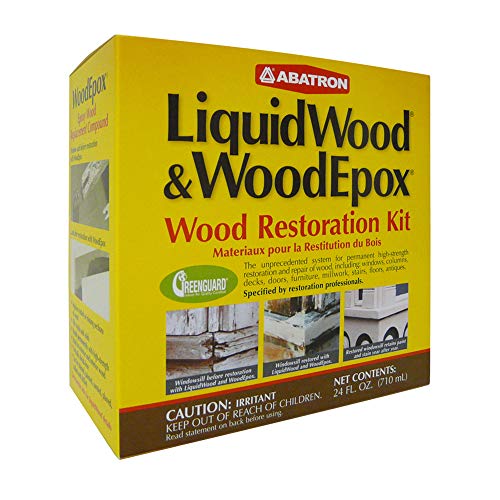
The Abatron Wood Restoration Kit combines LiquidWood epoxy resin hardener with WoodEpox wood filler to permanently repair damaged wood. It can regenerate, fill, replace, and waterproof wood, making it well-suited for historical restorations and structural repairs on windowsills, frames, trim, furniture, and more. The kit’s workflow typically involves first hardening the wood with LiquidWood, then applying WoodEpox filler to achieve a durable, paintable surface. The approach is designed to restore strength while preserving wood characteristics.
Key listed aspects include ease of use, defined pot lives for each component, and Greenguard certification with low VOCs. This makes the Abatron system a robust option for projects requiring a professional-grade restoration that minimizes user exposure to solvents. As with any epoxy-based repair, proper mixing, surface prep, and curing conditions influence results.
3M Bondo Wood Filler With Hardner (WF-QT-ES)

This Bondo Wood Filler is a two-part system that chemically bonds with the wood surface to form a permanent repair. It enables quick, durable repairs to damaged and rotted wood and is suitable for interior or exterior applications. The two-part formula, when properly mixed, yields a strong base for sanding and finishing. The product is designed for projects requiring a reliable, long-lasting repair that resists shrinking and cracking when cured.
Listed features emphasize the two‑part chemistry, rapid ready-to-sand results, and broad interior/exterior applicability. For best outcomes, match the hardener and filler to the project needs, maintain appropriate working time, and ensure a clean, dry surface before application. This option pairs well with compatible coatings once fully cured.
3M Bondo Wood Filler High-Performance

This high‑performance Bondo filler is a two‑part system designed for interior and exterior wood repairs with fast curing. It sets quickly, allowing sanding and painting in as little as 15 minutes, which can expedite project timelines. The filler forms a durable, permanent bond that resists shrinking and cracking, ensuring a long-lasting repair on rotted or damaged wood surfaces. It is suitable for a wide range of wood-based materials and finishes.
Key features include rapid curing, paintability, and stainability. When using this product, follow the recommended mixing ratios and curing times, and prepare the surface by removing loose material and cleaning dust. For best results, apply in thin layers and build up as needed to achieve a smooth, even finish before top-coating.
Buying Guide
Key purchase considerations
- Extent of rot: For deep, soft, or crumbling wood, consider epoxy restorers (like Re-Rot or Abatron) that harden and rebuild the substrate. For surface repairs, two-part fillers (such as Bondo products) can provide rapid, durable finishes.
- Penetration versus buildup: Penetrating restorers help stabilize the decay, while fillers add material to rebuild the surface. Choose a sequence that matches the wood condition.
- Bonding and cure time: Two-part systems require mixing and have varying working times. Fast-curing options speed up projects but may require careful handling to avoid premature setting.
- Finish compatibility: If the repaired area will be painted or stained, verify that the filler or epoxy accepts coatings evenly and matches the desired appearance.
- Outdoor versus indoor use: Outdoor repairs demand water resistance and UV stability; indoor repairs may prioritize ease of sanding and low odor.
Epoxy restorers vs. traditional fillers
- Epoxy restorers (like Abatron LiquidWood or Re-Rot) excel at rebuilding rotted wood and creating hard, paintable surfaces. They often require longer cure times but provide strong structural repairs.
- Traditional two‑part fillers (Bondo variants) cure quickly, are easy to sand, and work well for cosmetic patches or smaller rotted areas. They are typically more convenient for DIY projects with tight timelines.
Finish and color considerations
- Color matching: Some fillers dry natural or can be sanded smooth for staining; others may accept paint or stain to blend with surrounding wood. Test on a hidden area if color match matters.
- Sandability: Ensure the product sands to a feathered edge or flush finish for a seamless repair. Prompt sanding after cure helps prevent texturing or bonding issues.
Application tips and best practices
- Prepare the surface: Remove loose fibers, clean dust, and ensure the wood is dry before applying any filler or epoxy.
- Follow mixing instructions: Do not substitute components; accurate ratios ensure proper cure and bonding.
- Protect surrounding areas: Use masking and drop cloths to keep coatings tidy during repair and finishing.
- Test on a small area: Before committing to a large rotted section, test the chosen product to gauge adhesion, cure time, and finish quality.
Choosing the best wood filler for rotted wood depends on the severity of decay, desired finish, and project timeline. For extensive rot or structural concerns, epoxy restoration systems (Abatron or Re-Rot) are often preferred. For cosmetic fixes or smaller areas, two‑part fillers from Bondo provide rapid, paintable solutions. In many cases, a combination approach—using an epoxy hardener to stabilize, followed by a filler for shaping—delivers durable, long-lasting results suitable for both historical restorations and modern repairs.