Best Pneumatic Angle Grinders for Fast, Precise Metalworking
Lightweight pneumatic angle grinders offer strong grinding power without relying on electricity, making them ideal for tight spaces and continuous use in workshops, garages, and fabrication shops. This guide highlights five top pneumatic right-angle grinders, comparing speed, horsepower, weight, and safety features to help professionals and enthusiasts pick the best tool for deburring, grinding, polishing, and finishing jobs. The accompanying product table provides a quick snapshot of capabilities, including models from Ingersoll Rand and Chicago Pneumatic. When choosing, consider access to cramped areas, your air supply, and the balance of speed, control, and durability you require for your workload.
| Product | Brand | RPM | HP | Weight (lbs) | Notable Feature |
|---|---|---|---|---|---|
| 301B Right Angle Die Grinder | Ingersoll Rand | 21,000 | 0.25 | 1.02 | Ball bearing construction; safety lock; aluminum housing |
| CP875 1/4″ Angle Die Grinder | Chicago Pneumatic | 22,500 | 0.30 | Not specified | 90-degree head; built-in safety throttle |
| 3101G Edge Series 1/4″ Right-Angle Grinder | Ingersoll Rand | 20,000 | 0.33 | 1.30 | Rear exhaust; lightweight with ergonomic grip |
| DWMT70782L Die Grinder | DEWALT | 20,000 | Not specified | Not specified | Rear exhaust; touch control trigger |
| CP7408 1/4″ Die Grinder | Chicago Pneumatic | 23,000 | 0.34 | Not specified | Lock-off throttle; heavy-duty aluminum body |
Ingersoll Rand 301B Right Angle Die Grinder

The Ingersoll Rand 301B is a compact, ultra-light right-angle die grinder designed for better access in tight spaces. Weighing just 1.02 pounds, it minimizes user fatigue during extended grinding sessions. The tool is powered by a 0.25 horsepower air motor and turns at 21,000 RPM, delivering consistent biting speed for deburring and finishing tasks on metal, wood, or composites. A 1/4-inch collet accepts standard grinding bits, and the unit uses ball-bearing construction to improve balance, reduce vibration, and extend service life. The self-locking throttle adds an extra layer of safety, preventing accidental starts in busy shop environments. The aluminum housing helps with heat dissipation and rugged field use, making the 301B a reliable option for electricians, fabricators, and automotive technicians working in cramped bays or overhead positions.
Chicago Pneumatic CP875 — 1/4 Inch Angle Die Grinder

The CP875 from Chicago Pneumatic provides a robust 0.3 HP (220 W) output with 22,500 RPM, making it well-suited for fast grinding, polishing, and metal finishing. Its 1/4-inch (6 mm) collet matches standard grinder bits and accessories, allowing quick bit changes for different tasks. The tool features a lightweight, compact 90-degree head that reduces fatigue and improves control in confined spaces, such as welds, vehicle frames, and cabinetry. A built-in safety throttle prevents accidental starts, contributing to safer operation around other workers and during overhead jobs. The CP875’s combination of speed, compact ergonomics, and safety features makes it a versatile choice for automotive detailers, welders, and metalworkers who need reliable performance in tight spots.
Ingersoll Rand 3101G Edge Series Right-Angle Grinder

The 3101G Edge Series offers a robust 1/3 HP motor and a 1/4-inch collet with a steady 20,000 RPM, making it well-suited for heavy deburring, grinding, and polishing tasks. Its compact, rugged body houses ball bearings that help sustain performance under demanding use, while a rear exhaust design directs air away from the work surface for cleaner operation. The tool’s lightweight profile (about 1.3 pounds) reduces operator fatigue during long sessions and enhances maneuverability in tight spaces, such as engine bays, panels, and welded joints. The self-locking throttle ensures precise control, enabling fine finishing work with confidence in industrial or shop environments.
DEWALT Die Grinder, Angle (DWMT70782L)

DEWALT’s DWMT70782L is designed for heavy-duty grinding and finishing tasks, delivering up to 20,000 RPM at 90 PSI. The rear exhaust helps keep grinding dust away from the work surface, contributing to a cleaner and safer work environment. The touch control trigger enables the operator to apply precise power as needed, improving control during delicate shaping or aggressive material removal. While horsepower specifics aren’t stated, the combination of high RPM, ergonomic grip, and DEWALT’s reputation for rugged tool construction makes this model a strong choice for workshop professionals who perform frequent grinding, deburring, and cutting on metal or weld seams.
AIRCAT Pneumatic Tools 6280 Angle Die Grinder
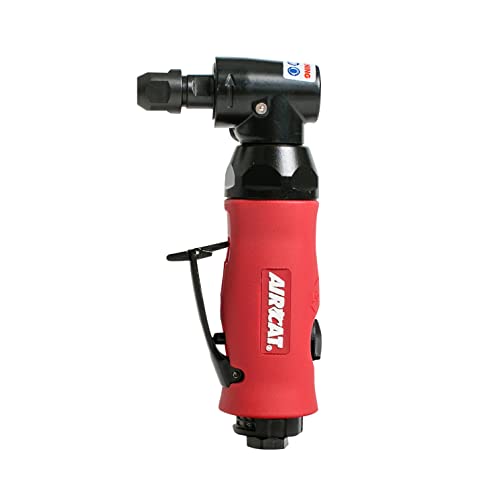
The AIRCAT 6280 features a quiet yet powerful 0.75 HP motor delivering 18,000 RPM. Its speed control switch is located at the top of the grip for convenient adjustment on the fly, while the patented silencing technology reduces noise to 79 dBA, making it one of the quieter options in a workshop setting. The tool’s angled design and 1/4-inch collet support a range of grinding, deburring, and light polishing tasks in tight spaces. The non-stall performance helps maintain smooth operation under load, and the ergonomic grip reduces fatigue during long sessions. This model suits mechanics and fabricators who value low noise and consistent performance in confined areas.
WORKPRO Air Angle Die Grinder

WORKPRO’s 1/4-inch air right-angle grinder combines a 20,000 RPM free speed with included 1/4-inch and 1/8-inch collets, providing flexibility for grinding, cutting, deburring, and polishing. Its slim, lightweight body supports one-handed operation, and the integral safety-lock throttle protects against accidental starts. The 90-degree head enables reach into cramped corners, welds, and bottlenecks, while the compact length makes it suitable for precision work in automotive repair, metal fabrication, and home workshops. This model is a practical option for users seeking a versatile grinder with a balanced mix of speed, control, and ease of use.
Buying Guide
Power, Speed, and Air Supply
Choose a grinder whose RPM aligns with your typical material and task requirements. Higher RPMs remove material faster but may require more careful control to avoid gouging delicate surfaces. Compare horsepower or air consumption ratings to your compressor’s capacity (CFM and PSI). A tool with a slightly lower RPM but more efficient air use can deliver steadier performance and less heat buildup during prolonged use.
Collet Size and Versatility
Most models here use a standard 1/4-inch collet, which fits common grinding bits and deburring wheels. If you anticipate using larger or specialized bits, verify compatibility or availability of adapters. The ability to switch to a smaller 1/8-inch collet can also extend fine finishing options, but ensure the grinder supports easy bit changes without losing control.
Ergonomics, Weight, and Comfort
Weight and balance influence fatigue during extended sessions. Lighter tools with well-shaped handles and good grip reduce vibration transfer and user fatigue. For overhead or confined-space work, a compact 90-degree head can dramatically improve maneuverability. Look for ergonomic contours, soft grips, and a design that minimizes hand strain for your typical workflow.
Safety Features and Durability
Key safety features include lock-off or self-locking throttles to prevent accidental starts, robust throttle controls, and sturdy housings. Ball-bearing construction can improve tool balance and longevity by reducing vibration. A rear exhaust helps keep debris away from the user and work surface, while a sealed or robust aluminum body can better withstand shop conditions.
Noise, Vibration, and Maintenance
Consider noise levels and vibration dampening if you work near teammates or with sensitive hearing equipment. Some models incorporate silencing technology or improved exhaust systems to curb noise. Regular maintenance—checking fittings, cleaning air passages, and ensuring proper lubrication—extends lifespan and keeps performance consistent.
Price, Availability, and Support
Balance initial cost with expected durability and availability of replacement parts and accessories. Reputable brands with broad accessory ecosystems typically offer better long-term value. Review warranty terms and the availability of service centers or authorized distributors to minimize downtime on critical projects.