Best Vapor Barriers for Walls: Durable Solutions for Moisture Control
Walls face moisture challenges from humidity, leaks, and temperature swings. The right vapor barrier helps prevent condensation, protect insulation, and improve energy efficiency. This guide highlights five top products for wall moisture control, spanning durable tapes, smart retarders, and film barriers. Each option provides a different approach to blocking vapor at walls while fitting common building codes.
| Product | Brand | Type | Notable Feature |
|---|---|---|---|
| TapeManBlue Vapor Barrier Tape | TapeManBlue | Tape | 4″ x 180′, 9 mil, UV resistant |
| CertainTeed Smart Vapor Retarder Barrier | CertainTeed | Vapor Retarder | Adaptive humidity-permeance |
| Vega Bond V200 Spray Foam Kit | Vega Bond | Spray Foam Kit | 200 board feet, R-7/in, low GWP |
| PURTERIA | Vapor Barrier Film | 10 mil, odor-free, reusable | |
| Bghdas Butyl Sealant Tape | Bghdas | Tape | Double-sided, strong adhesion |
TapeManBlue Vapor Barrier Tape
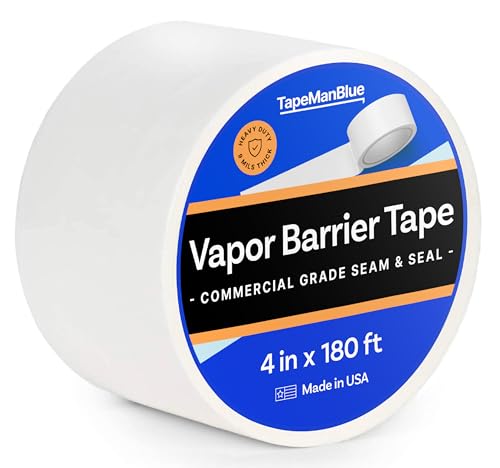
TapeManBlue’s Vapor Barrier Tape is designed for sealing moisture barriers on walls and other surfaces. The roll is 4 inches wide and 180 feet long, with a 9 mil thickness for durability. A UV-resistant coating helps it endure outdoor exposure during staging or installations where edges may be exposed. It adheres well to plastic liners, foil-faced insulation, and various barrier materials, creating tight seams that deter vapor intrusion. This tape excels at sealing laps, joints, and penetrations where walls meet insulation or liner materials, helping ensure a continuous moisture barrier.
In practice, use TapeManBlue tape to secure seam joints and lap joints in wall vapor barrier systems. Surface prep is important: clean, dry surfaces produce the strongest bond. Press firmly to expel air pockets, then overlap slightly at edges to maximize seal integrity. Pair this tape with an overall barrier system for best results in walls exposed to moisture or condensation risks.
Tip: Store in a cool, dry place and cut with clean scissors to avoid uneven edges. This tape pairs well with other barrier products for a robust wall moisture strategy.
CertainTeed Smart Vapor Retarder Barrier

CertainTeed 902008 Smart Vapor Retarder is designed for wall cavities, offering a dynamic permeance that adapts with humidity. This barrier is specified for 8’4″ tall walls and 100′ long runs, making it suitable for standard residential walls that require vapor control. It is intended for use with un-faced insulation in climate zones where a vapor retarder is mandated, providing a modern alternative to fixed plastic sheets or kraft paper barriers. The smart material aims to balance moisture control with energy efficiency by adjusting permeance as conditions change.
The system is especially useful in walls where humidity varies across seasons or between conditioned and unconditioned spaces. By modulating moisture transfer, it helps reduce the risk of condensation inside wall cavities and mitigates long-term deterioration of insulation. It is a good choice for builders seeking code-compliant, performance-driven wall barriers that respond to environmental changes.
When implementing, verify local code requirements and ensure proper installation with uninterrupted runs and complete coverage of all wall studs and joints. The adaptive design can simplify compliance for zones that require vapor control without resorting to rigid, fixed-permeance barriers.
Vega Bond V200 Spray Foam Kit

Vega Bond V200 is a high-density closed-cell spray foam installer designed as a vapor barrier for walls and roofs. The kit provides 200 board feet of material with a density around 2.2 lb/ft³ and an insulation value near R-7 per inch. Its low GWP formula aligns with environmental goals while delivering a robust air and vapor seal. The quick cure aids rapid project completion, reducing indoor moisture risk from leaks or drafty walls. This option integrates insulation and vapor control in a single step, often preferred for new construction or major remodels.
Spray foam creates an continuous barrier that fills gaps, cracks, and penetrations—areas that can be difficult to seal with sheets or tapes alone. In walls, it minimizes air movement and vapor transport, contributing to energy efficiency and interior moisture management. Professional application ensures proper thickness and curing, with attention to venting and safety during installation.
Purteria Crawl Space Vapor Barrier

Purteria’s crawl space vapor barrier uses a true 10-mil polyethylene film sized at 10′ x 100′. This barrier provides durable moisture protection over a large area (covering up to 1,000 sq ft) and is designed to be odor-free and reusable. The product is presented as a professional-grade barrier suitable for crawl spaces, basements, or any area requiring durable moisture control against vapor intrusion. The white surface helps reflect light, while the black side blocks light to reduce moisture and heat exchange through the barrier during installation.
For wall-oriented applications, Purteria film can be used where a lightweight, economical barrier is needed to complement other wall systems. Its thickness and tearing resistance make it a practical choice for temporary or long-term moisture control in spaces with fluctuating humidity. Proper seam sealing and edge protection improve overall performance in both walls and adjacent spaces.
Bghdas Butyl Sealant Tape

The Bghdas 3-pack Butyl Sealant Tape provides a flexible, double-sided sealant option ideal for walls and crawl space barrier joints. At 2″ by 90′ per roll, these tapes offer strong adhesion and moisture resistance across temperature ranges, remaining effective in cold conditions without losing tack. The double-sided configuration is convenient for sealing edges, seams, and penetrations where vapor barriers meet walls or liners, offering an economical way to reinforce barrier continuity in enclosed spaces.
Butyl tapes are particularly useful for sealing irregular surfaces, uneven studs, or curved corners where traditional tapes may falter. They complement film barriers and tape seals by providing an extra layer of moisture protection at critical junctions. When applying, ensure clean surfaces, press firmly, and smooth to avoid air pockets that could undermine the seal.
Buying Guide
Types Of Barrier Options
Vapor barriers come in three broad forms: film barriers (heavy-duty plastic sheets), tape-based systems (for sealing seams and joints), and spray foam barriers (integrated insulation and vapor control). Film barriers are often cost-effective for large areas but require careful seam sealing. Tape-based solutions excel at sealing edges and joints, offering flexibility for retrofit projects. Spray foams provide an air-tight barrier and high R-value but may require professional installation. Each type serves different wall scenarios, climates, and budgets.
Key Specifications To Check
- Thickness (mil): Thicker films and tapes generally offer better moisture resistance and durability but may be harder to install in tight spaces.
- Coverage area: Width and length determine how much material is needed for walls and adjacent spaces.
- Permeance rating or resin formulation: Smart retarders or barrier films should meet local code requirements for vapor control.
- UV and weather resistance: Outdoor exposure during construction requires durable coatings or materials.
- Ease of application: Adhesion, curing time, and surface prep affect installation quality.
Climate And Building Type Considerations
Climate zones influence the choice between fixed vapor barriers and adaptive retarders. Areas with wide humidity swings benefit from smart vapor retarders that adjust permeance with moisture, while consistently humid environments may require more robust barrier films or interior sealants. For walls adjacent to un-conditioned spaces, ensuring a continuous seam and proper edge sealing reduces condensation risks and improves energy efficiency.
Installation Considerations
Proper installation is essential for effectiveness. Surface preparation, clean and dry substrates, and careful seam sealing prevent vapor leaks. When using film barriers, overlap seams and apply sealant or tape at joints. For spray foam, professional application ensures uniform thickness and safe curing, with attention to ventilation and safety guidelines during installation.
Durability And Longevity
Durability depends on material quality, exposure, and how well seams are sealed. UV resistance helps panels or exposed edges survive outdoor conditions during construction. Reusability is a plus for some barrier films used in temporary applications; however, long-term walls typically benefit from a sealed system with durable seams and attention to substrate compatibility.
Cost And Availability
Cost varies by barrier type and project scope. Film barriers tend to be economical for large-area coverage, while sprays incur higher upfront costs but reduce labor through one-step installation. Tape-based solutions can offer targeted, cost-effective reinforcement for seams and edges. Availability is usually strong for each category, with several brands available through home improvement retailers.