Best Propane Gas Detectors for Home Safety
Propane leaks and other combustible gases pose serious safety risks in homes, RVs, and vehicles. A reliable gas detector helps identify leaks quickly, giving you time to react before dangerous concentrations develop. The following five detectors offer fast response, practical features, and dependable alerts for propane, methane, natural gas, LPG, and related fuels. Use the table below to compare core specs at a glance, then review each device’s strengths to determine which best fits your space, power needs, and monitoring style.
| Product | Brand | Type | Key Benefit |
|---|---|---|---|
| Kidde Gas And CO Alarm | Kidde | Plug-in CO and Gas Alarm | Digital LED with battery backup |
| TOPTES PT520A Natural Gas Detector | TOPTES | Gas Leak Detector | Gooseneck probe for tight spaces |
| TopTes PT199 Natural Gas Leak Detector | TOPTES | Portable Gas Sniffer | Fast warm-up and audible/visual alarms |
| Firlarm Natural Gas Detector | Firlarm | Plug-in Gas Leak Detector | LED display and 24/7 monitoring |
| Leakbee RV Propane Gas Detector | Leakbee | 12V DC RV Gas Alarm | Real-time display and high-output alarm |
Introduction notes: The five products selected emphasize propane and combustible gas detection across home and RV environments. Each option balances ease of installation, alert visibility, and sensor response time. The Kidde unit adds a carbon monoxide capability and a battery backup, suitable for living spaces. TOPTES offers long-reach detection for hard-to-access areas, while the portable TopTes PT199 is handy for temporary setups. Firlarm provides a plug-in solution with a clear LED readout, and the Leakbee model addresses RV-specific safety with 12V power and a strong audible alert.
Kidde Gas And CO Alarm
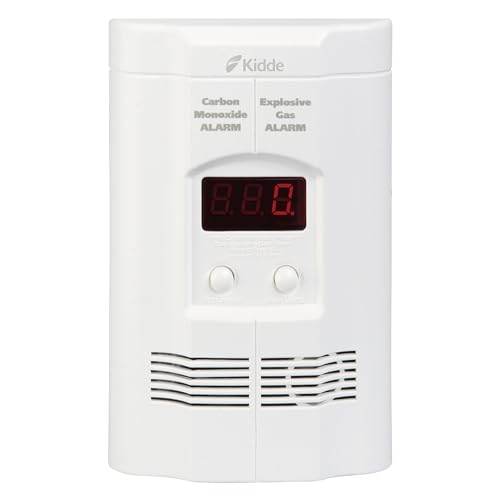
The Kidde device functions as a dual alarm for carbon monoxide and explosive gases, with plug-in 120V power and a 9-volt battery backup to maintain protection during outages. Its digital LED display shows the current CO level or indicates “GAS” when an explosive gas is present, delivering clear, at-a-glance information for quick decisions. The unit is designed for simple installation in kitchens, living rooms, or near gas appliances, and is suitable for households seeking a combined CO and gas alert solution.
TOPTES PT520A Natural Gas Detector

The PT520A natural gas detector uses a 17-inch gooseneck to reach tight spaces such as pipelines, storage areas, and basements. It detects methane, propane, natural gas, LPG, and butane, offering quick 0.5-second response with seven colored bars and a 75 dB audible alarm that intensifies with gas concentration. The device covers a detection range from 50 to 10,000 ppm (methane), enabling rapid identification of leaks in constrained environments and providing visual confirmation via the bar indicator for easier interpretation on the job site.
TopTes PT199 Natural Gas Detector
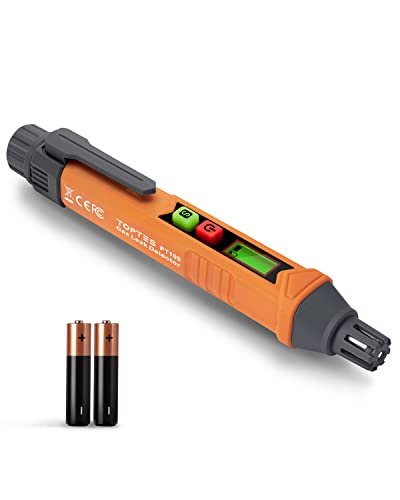
The PT199 is a portable gas leak detector designed to locate combustible sources such as methane, propane, and other flammable gases. It provides a visual and audible alarm within 0.5 seconds of detection, with an LCD that turns red when gas levels rise. Batteries are included (two AAA), and the unit warms up quickly in about 30 seconds. A low-battery indicator helps ensure readiness, and the detector powers down automatically after a period of inactivity to conserve power in mobile scenarios.
Firlarm Natural Gas Detector

The Firlarm device provides multi-gas detection for home use, including natural gas, propane, LPG, and LNG. It offers real-time 24/7 monitoring with an 85 dB audible alarm and synchronized red flashing lights when a concentration exceeds a threshold. The unit features a flame-retardant PC housing and uses under 2W of power. It plugs into standard 110V–220V outlets and is intended for installation in kitchens, basements, or near gas appliances to deliver persistent safety coverage with rapid alerts when leaks occur.
Leakbee RV Propane Gas Detector

Designed for RVs and similar mobile setups, the Leakbee RV Propane Gas Detector operates on 12V DC and is optimized for safety in motorhomes, travel trailers, and campers. It provides real-time digital concentration displays and an 85 dB alarm to ensure audible notices in noisy environments. The unit employs a lever-nut connector system to simplify wiring and offers a practical solution for travelers who need dependable propane monitoring without relying on household AC power. It is not a carbon monoxide detector and focuses on propane and other combustible gases.
Buying Guide
Choosing the right propane or combustible gas detector depends on how you use the space, how you power the device, and the level of alert you expect. Here are key considerations from multiple perspectives to help you compare options and select a model that best fits your safety plan.
Gas types and coverage
Consider whether you need single-gas propane detection, or a multi-gas detector that also senses methane, LPG, LNG, or carbon monoxide. Home environments often benefit from multi-gas or dual alarm units (like the Kidde) for broader protection, while RV or portable needs may favor a dedicated propane detector (like Leakbee or PT199/PT520A) that emphasizes quick localization of leaks in confined spaces.
Power source and installation
Power options vary: plug-in 120V devices with possible battery backups, portable battery-powered units, and 12V DC detectors for vehicles or RVs. Choose based on installation location: fixed home outlets near gas appliances, or mobile setups where 12V DC power is available and space is constrained. Also consider whether the unit requires permanent mounting versus a portable handheld format for quick checks.
Alarm type and readability
Effective detectors provide clear audible alerts (often 85 dB or higher) and visual indicators, such as LEDs or digital readouts. A device with a quick 0.5-second response helps reduce exposure time during a leak. Units with digital displays (CO or gas concentration) aid in quick assessment, while LED bars or red LCDs provide at-a-glance status at a distance.
Placement and environmental suitability
Place detectors near potential gas sources but away from direct steam, cooking splashes, or ventilated airflows that could diminish sensitivity. In homes, install near kitchens, basements, and near gas-burning appliances. In RVs, position devices where leaks are most likely to accumulate but avoid direct exposure to outdoor elements unless rated for external use. Mounting height and wall location can affect response time in different layouts.
Durability, certification, and maintenance
Look for UL or equivalent safety certifications and check warranty terms. Battery-powered units require periodic battery replacement, while plug-in devices may rely on line power but still benefit from backup power. Regular testing (as recommended by the manufacturer) and sensor replacement timing are important for sustained reliability.
Cost, value, and compatibility
Balance upfront cost with expected longevity and feature set. A multi-gas detector might have a higher price but offers broader protection, while a simple propane detector may suffice for RVs focused on propane safety. Consider whether the detector integrates with other safety devices in your space and whether it suits both seasonal and everyday needs.
In summary, select a detector that aligns with your space usage (home vs RV), power availability (plug-in, 12V, or battery), and the level of alerting you require. For households seeking wide coverage and CO alerts, a dual-function device like the Kidde may be ideal. For RV enthusiasts prioritizing propane detection with portability and ease of wiring, options like the Leakbee or PT199/PT520A provide practical, reliable protection. Always follow installation guidelines and schedule periodic maintenance to maintain peak performance.