Best Dust Collection Systems for a Woodworking Shop
Clean air and a dust-free workspace are essential for safety, comfort, and productivity in a wood shop. The right dust collection system helps protect lungs, keeps surfaces tidy, and reduces cleanup time between projects. This guide highlights five effective options spanning portable collectors, wall-mounted units, and a low-profile separator that can improve any shop setup. Each model balances airflow, filtration, and ease of use to suit different workshop sizes and budgets. Use the Buying Guide below to compare airflow, capacity, and setup needs before you buy.
| Product | Brand | Airflow (CFM) | Capacity / Bag | Type |
|---|---|---|---|---|
| WEN DC1300 1,300 CFM | WEN | 1,300 | 50-Gallon Bag | Portable Dust Collector |
| WEN DC3401 | WEN | 660 | 12-Gallon Bag | Portable; Optional Wall Mount |
| Dustopper PRO | Dustopper | — | Fits 5-Gallon Buckets | Low-Profile Dust Separator |
| Bucktool Auto Start 750CFM | Bucktool | 750 | 5.4 cu ft Bag | Auto-Start Dust Collector |
| POWERTEC 1 HP 560 CFM | POWERTEC | 560 | 1 Micron Bag | Wall-Mount Dust Collector |
WEN DC1300 1300 CFM Dust Collector

The WEN DC1300 delivers up to 1,300 CFM of airflow to move wood dust quickly away from work surfaces. Its dual 4-inch air inlets enable connecting two tools at once, improving workflow in a busy shop. A sizeable 50-gallon collection bag provides extended run time between emptying, and the mobile base makes repositioning within the shop simple as projects change locations. Powered by a 14-amp motor, this unit handles common woodworking tasks without overtaxing the electrical circuit. The 5-micron bag traps a broad range of dust before it exits the system, helping keep the shop air clearer during long sessions.
Installation is straightforward for many hobbyists and small shops, and the DC1300 supports flexible ducting layouts. It can be moved to adapt to evolving tool layouts or to vacate congested corners. The combination of high airflow and practical capacity makes it a versatile choice for mid-sized shops that require reliable, multi-tool dust collection without dedicated ducting to every machine.
WEN DC3401 Woodworking Dust Collector
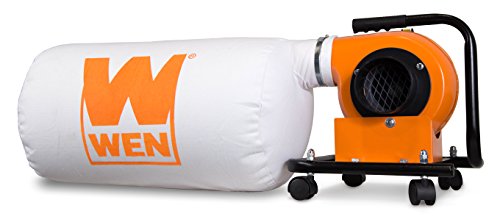
The WEN DC3401 provides 660 CFM of airflow with a compact footprint, making it well-suited for small to medium woodworking spaces. A 6-inch impeller helps move air efficiently, while a 12-gallon collection bag keeps dust contained between bag changes. The unit features a 4-inch dust port that’s easy to connect to a wide range of woodworking tools. Mobility is enhanced by a built-in handle and caster base, and the setup is compatible with an optional wall-mount configuration for shops with limited floor space.
For users who don’t require maximum airflow, the DC3401 offers a practical balance of performance and size. It’s particularly appealing to hobbyists upgrading from handheld vacuums or small shop vacs, providing cleaner air without a large industrial footprint. Regular bag maintenance remains essential to preserve suction efficiency and dust control over time.
Dustopper PRO Low-Profile Dust Separator

The Dustopper PRO is a low-profile dust separator designed to work with standard shop vacuums and tools that use a 2-1/2″ hose. It captures the vast majority of dust before it reaches the vacuum, helping protect filters and reduce maintenance. The system fits most 5-gallon buckets, making it an economical upgrade for workshops that already own a shop vac. It’s compatible with a range of tools and hoses, and adapters are available for different port sizes. This separator is ideal for smaller shops or setups where a dedicated large-dust-collector unit isn’t feasible.
While the Dustopper PRO doesn’t replace a full-sized dust collector, it significantly improves dust control by keeping most debris out of the vacuum. It’s a practical add-on for hobbyists or shops with single-tool operations, or as a starter solution that can be paired with a future dedicated collector if needs grow.
Bucktool 1.2 HP Auto Start 750CFM Dust Collector

The Bucktool model combines a 1.2 horsepower, 120V motor with 750 CFM of airflow to support mid-sized woodworking projects. The auto-start feature offers convenience by providing a built-in power outlet for your tools, reducing the need for separate outlets and minimizing startup steps between tool use and dust collection. A 5.4 cubic foot bag capacity and a simple bag-clasp system simplify maintenance, while the unit’s 6-inch ports accommodate a range of hoses and ducting configurations.
Auto-start capability and practical bag capacity make this option appealing for shops that use multiple machines but want a compact, integrated solution. Users should verify outlet availability and plan hose routing to maximize dust capture across the workflow, especially when switching between machines during a project.
POWERTEC 1 HP 560 CFM Wall Mount

The POWERTEC 1 HP 560 CFM wall-mount dust collector is designed for space-conscious shops. It uses a 1-micron bag to capture finer dust and is mounted on the wall to free floor space for tooling and storage. The unit benefits from a Vortex Base design that guides airflow efficiently, reducing turbulence and improving overall dust removal by an estimated margin. With a single 4-inch intake, it’s straightforward to connect to a variety of machines and ducting layouts, making it a solid choice for small professional shops or serious hobbyists looking to optimize floor space.
While mounted, this model minimizes clutter and can be integrated into existing ductwork more easily than larger portable units. Consider this option if you value a compact footprint, straightforward installation, and consistent performance in a dedicated workshop corner or under a bench area.
Buying Guide
Choosing the right dust collection system involves balancing airflow, filtration, space, and workflow. The following considerations help ensure you select a model that meets current needs and accommodates future growth.
- Shop size and airflow: Larger spaces generally benefit from higher CFM—typically 1,000 CFM or more for medium-to-large shops with multiple tools. Smaller shops can often perform well with 500–750 CFM units, especially when combined with strategic ducting and local tool hoods.
- Filtration and bags: Filtration quality matters for air quality. Micron ratings (such as 1 micron) and bag design influence how much fine dust is captured. Replaceable bags simplify maintenance but factor in replacement costs and availability.
- System type and footprint: Portable units offer flexibility and easier relocation, while wall-mounted models save floor space in tight workshops. A low-profile separator can complement a vacuum system when upgrading an existing setup without a full collector.
- Port sizing and ducting: Ensure the system includes compatible 4-inch ports or provides adapters for common tools. Plan duct runs, blast gates, and hoods to minimize resistance and balance suction across multiple machines.
- Automation and usability: Auto-start features reduce manual plug-in actions. Mobility features like wheels or a solid mounting system improve portability and space utilization. Consider noise levels and power requirements to fit your electrical setup.
- Maintenance and lifecycle: Larger units with bigger bags or canisters reduce downtime but require more frequent bag changes. Consider how easy it is to access bags, replace filters, and clean the collector chamber.
- Future expansion: If you anticipate adding more tools or increasing capacity, choose a system with scalable ducting options, additional inlets, or the ability to add a separator or secondary canister without a complete overhaul.