Best Screws for MDF Projects
MDF, or medium-density fiberboard, requires specialized fasteners to hold strong without splitting the material. The right wood screws for MDF combine sharp points, proper thread design, and heads that sit flush or slightly recessed for a clean finish. This article highlights five top picks that work well with MDF and common woodwork tasks, offering guidance on size, head type, and installation considerations. Each option balances grip, ease of use, and durability to support cabinetmaking, shelving, trim, and general woodworking.
Summary table of selected products
| Product | Brand | Size (Diameter x Length) | Head Type | |
|---|---|---|---|---|
| Rok #10 3/4-Inch MDF Screws | Rok | #10 x 3/4″ | Pan Head | Coarse thread; black phosphate finish |
| Rok #8 1-Inch MDF Screws | Rok | #8 x 1″ | Pan Head | Coarse thread; black phosphate |
| SPAX MDF Screws 4351010400454 | SPAX | Noted as MDF screws | Multi-head / self-drilling style | Thread technology for fast driving; minimal splitting |
| SPAX #8 1-3/4-Inch Trim Head MDF Screws | SPAX | #8 x 1-3/4″ | Interior trim head | 4CUT point; no pre-drilling; flush finish |
| FASTENPOWER #8 1-1/4-Inch Wood Screws | FASTENPOWER | #8 x 1-1/4″ | Standard wood screw head | Type 17 point; chip-cutting; zinc-coated |
Rok #10 3/4-Inch MDF Screws

The Rok #10 x 3/4″ coarse deep-thread pan head screws are designed for MDF and other wood applications. With a diameter of #10 and a length of 3/4 inch, these screws offer a substantial bite in composite woods while minimizing fiber tear-out. The coarse thread provides strong pull-in while the pan head sits slightly proud or flush with a finishing surface, depending on pilot hole quality. The black phosphate coating adds corrosion resistance for indoor projects. These screws are especially suitable for fastening hardware or cabinet components where MDF sheets meet solid wood outlines. A versatile choice for small-to-medium joinery, toolbox builds, and frame work where modest thickness demands reliable grip.
Worked applications include attaching hinges and brackets to MDF panels or securing cross supports in shelving. Because the thread is optimized for wood, pilot holes are recommended to avoid any risk of splitting on denser MDF, or when driven into a denser patch of fiberboard. Users should ensure the screw length is appropriate for the combined thickness of materials being joined, and consider a countersink if a flush finish is required.
Rok #8 1-Inch MDF Screws

The Rok #8 x 1″ coarse deep-thread pan head screws are compact and effective for MDF projects requiring slightly shorter fasteners. The #8 diameter reduces material displacement while maintaining strong engagement with the fiberboard. The pan head design provides a broad seating surface, which helps distribute load and resist pull-out in thinner panels. A black phosphate finish aids corrosion resistance in indoor environments and helps the screws blend with dark hardware accents. These screws are well-suited for attaching trim, small brackets, shelf supports, and light cabinet hardware where MDF panels are used extensively.
When using these screws, consider a pilot hole for precise entry and reduced tear-out, especially in medium-density MDF. These fasteners are compatible with a wide range of project scopes, from installing decorative trim to mounting light fixtures on MDF-backed surfaces. The shorter length makes them ideal for applications where panel thickness is limited or where a flush appearance is desired after installation.
SPAX MDF Screws 4351010400454

SPAX 4351010400454 MDF screws emphasize fast, simplified installation with patented threading that reduces split risk and ensures quicker driving. These MDF screws are designed to work without excessive pre-drilling in many wood composites. The multihead countersink feature helps seat the screw flush in wood, producing a smoother surface for cabinetry and furniture projects. The technology behind SPAX threads and the superior drive system minimizes cam-out, enabling efficient one-handed driving in overhead or tight spaces. When working with MDF and fiberboard, these screws deliver reliable sheer strength and consistent seating across various panel thicknesses.
Applications include attaching cabinet frames to MDF faces, fixing light hardware, and assembling decorative trim where a flush finish matters. As with any MDF project, selecting the right length is crucial to avoid protruding fasteners or insufficient grip. These screws strike a balance between strength and ease of use, making them a solid option for professional and DIY projects alike.
SPAX #8 1-3/4-Inch Trim Head MDF Screws
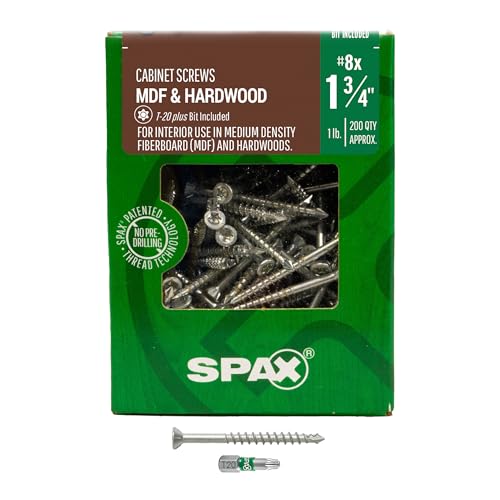
SPAX’s #8 x 1-3/4″ interior trim head screws are tailored for MDF, hardwood, and fiberboard applications that demand a flush or nearly flush finish. The 1-3/4 inch length provides strong anchorage for cabinet trim, door skins, and decorative panels without excessive protrusion. The no-pre-drilling capability, driven by a 4CUT point, minimizes the risk of cracking and splintering in MDF while delivering efficient installation. The trim head is designed to countersink smoothly for a clean, professional look, especially on faced panels. The T-Star Plus drive offers superior bite and easier driving in tight spaces.
Ideal uses include MDF trim work, face frames, and furniture components where a sleek finish is important. When using these screws, ensure the panel thickness and any underlying support are compatible with the 1-3/4″ length. A pilot hole is rarely required, but pre-testing on a sample piece helps confirm the expected seating depth and finish appearance.
FASTENPOWER #8 1-1/4-Inch MDF Screws

FASTENPOWER’s #8 x 1-1/4 inch wood screws are a practical choice for MDF and cabinet work. The Type 17 point helps the screw penetrate quickly, even through tougher wood fibers, while the cutting edge reduces resistance and improves grip. The zinc coating provides corrosion resistance for interior use, helping maintain finish quality over time. These screws are suited for mounting hinges, brackets, and light hardware on MDF panels, as well as general woodworking projects where reliable joinery is needed without pre-drilling in many cases.
Consider using these screws when working with medium-density fiberboard and similar composites that may compress or split under heavier fasteners. They offer a balanced approach: enough length for secure connections, a sharp point for easy starting, and a geometry that minimizes material damage during installation. For best results, pair with proper pilot holes if the MDF thickness is marginal or when joining with denser substrate materials.
Buying Guide: Key Considerations For MDF Screws
Choosing screws for MDF hinges on understanding how MDF behaves under fasteners. Here are the main considerations and comparisons to help make an informed choice:
- Diameter and length: MDF panels vary in thickness. For thin surfaces, shorter screws (like 1/2″ to 1″ ranges) minimize panel crush, while thicker panels require longer screws (1-1/4″ to 2″ ranges) for robust joining. A #8 or #10 diameter offers a good balance between grip and less panel splitting on most common MDF sheets.
- Thread design: Coarse-thread screws provide better bite in MDF by engaging more fibers per turn. Self-tapping or thread-cutting features can reduce the need for pre-drilling, though pilot holes still help prevent tear-out on denser MDF regions or when joining with hardwoods.
- Head type: Pan heads provide a wider seating surface, which reduces the risk of tearing out edges; trim heads or flush countersunk designs offer a cleaner finish suitable for cabinetry and overlays. For concealed installations, consider countersunk or flush-mount heads that sit flush with the surface.
- Drive system: Torx/T-Star or star drives generally offer superior bit engagement and less cam-out, especially in overhead or tight spaces. A robust drive system improves accuracy and reduces user fatigue during long runs.
- Finish and corrosion resistance: For indoor cabinetry and furniture, a black phosphate or zinc coating can resist moisture exposure and help prevent rust. For projects near moisture, consider coatings with higher corrosion resistance or stainless options if budgets allow.
- Pre-drilling and installation technique: MDF often benefits from light pilot holes to prevent tear-out, especially at panel edges. No-pre-drill designs can speed up installation, but choosing the right point type (like 4CUT) helps prevent splitting and improves seating.
- Load and application: Consider the load on the joint (shelves, hinges, or face frames). Heavier loads necessitate longer screws and possibly additional fasteners or support cleats to distribute weight evenly and reduce stress on MDF edges.
Overall, the best MDF screws combine sharp entry, strong bite, and a finish appropriate for the project. The five products highlighted here cover a broad range of uses—from cabinet trim to structural joining—while illustrating the tradeoffs between size, head style, and drive design. By matching the screw to the panel thickness, desired finish, and load requirements, you can achieve durable MDF assemblies with clean, professional results.