Best 2 HP Irrigation Pumps for Lawn and Garden Watering
Finding the right 2 HP irrigation pump can boost sprinkler performance, ensure a steady water supply, and reduce energy waste. This guide reviews five reliable 2 HP pumps, focusing on construction, efficiency, suction capabilites, head, and flow. Whether you pump from well water, lake water, or other sources, selecting the right pump matters for lawns, gardens, and landscapes across the United States. The following table offers quick comparisons to help you decide which model best fits your irrigation needs.
| Product | Brand | Power | Flow | Head | Voltage |
|---|---|---|---|---|---|
| Red Lion RL-SPRK200 | Red Lion | 2 HP | 76 GPM | N/A | 230V |
| AQUASTRONG 2 HP Shallow Well | AQUASTRONG | 2 HP | ≈87 GPM (5200 GPH) | 108 ft | 230V |
| GOULDS GT20 IRRI-Gator | Goulds | 2 HP | N/A | N/A | 230V |
| Superior Pump 96220 | Superior Pump | 2 HP | N/A | N/A | 120V (noted 2 HP may vary by model) |
| Little Giant LSP-200-C | Little Giant | 2 HP | 97 GPM | ≈111 ft | 230V |
Red Lion 2 HP Sprinkler Pump

The Red Lion RL-SPRK200 features a rugged cast iron pump housing with a glass-filled thermoplastic impeller, designed for well and lake water. It runs on 230 volts and draws about 10.9 amps in operation, using a capacitor-run PSC design for reliable performance. The unit is thermally protected and CSA listed in the US and Canada, offering a robust option for larger residential irrigation. Notably, it does not require priming after the initial fill, though the owner’s manual outlines proper priming at setup. This combination aims to balance durability with straightforward operation for outdoor watering systems.
AQUASTRONG 2 HP Shallow Well Pump

The AQUASTRONG 2 HP jet/centrifugal pump delivers up to 5200 GPH (roughly 87 GPM) with a maximum head of 108 ft. It uses a 2″ NPT suction and a 1-1/2″ NPT discharge, making it well suited for lawn sprinklers and general garden irrigation. The pump employs an enhanced impeller and diffuser to maximize efficiency and water flow across a range of applications. Operating on 230 V, it provides a high-efficiency solution for larger residential irrigation setups, especially where water pressure and volume are critical for even coverage.
Goulds GT20 Irri-Gator 2 HP

The GT20 Irri-Gator self-priming centrifugal pump provides 2 HP operation at 230 volts, with built-in overload protection and a straightforward 1-1/2″ NPT suction and discharge. This model is designed for lawn sprinkling, irrigation, and water transfer, offering reliable priming and protection features for continuous operation in variable irrigation setups. It is well-suited for users seeking a dependable pump that handles diverse irrigation tasks, including HVAC-related water transfer and moderate dewatering needs.
Superior Pump 96220 2 HP
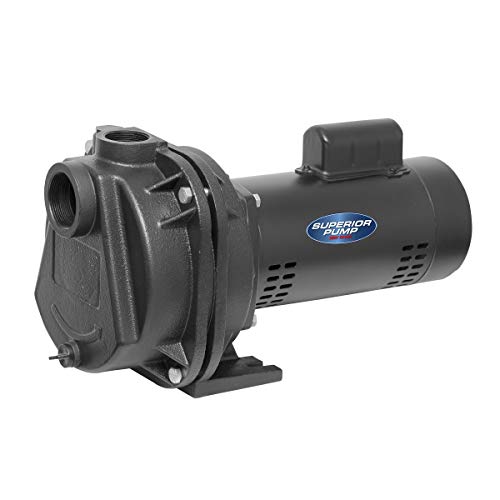
Superior Pump 96220 is a cast-iron lawn irrigation pump that emphasizes durability and high capacity for larger sprinkler systems. The rugged housing and solid brass impeller design contribute to long life in outdoor water applications. The model targets reliability in expansive residential irrigation networks where consistent flow is essential for uniform coverage over large lawns or gardens. While specific GPM ratings are not listed in the brief features, the build quality and emphasis on high capacity make it a solid option for demanding irrigation layouts.
Little Giant LSP-200-C 2 HP

Little Giant LSP-200-C is a 2 HP, 230-volt pump with a cast iron housing and brass impeller designed for well water (down to 25 feet), lake water, or ditch water. It delivers 97 GPM and includes one-time priming instructions in the Owner’s Manual. The unit’s 48 PSI rating corresponds to roughly 110 feet of head, providing ample pressure to power mid-size irrigation zones. The pump’s durability and known performance in varied water sources make it a popular choice for residential irrigation networks that demand steady, reliable water delivery.
Buying Guide
Choosing the right 2 HP irrigation pump involves balancing flow, head, power source, and installation needs. Consider these factors to identify the best fit for your system.
- Flow rate vs. head: Higher GPM is beneficial for large sprinkler zones, but head height determines how far water can be pushed. Match the pump’s flow to your sprinkler layout and the required head height for even coverage.
- Voltage and motor design: Most 2 HP pumps run on 230V single-phase power, with capacitor-run PSC motors common for efficiency. If your shop has 120V circuits, you’ll need a different setup or a different model.
- Self-priming vs. priming requirements: Self-priming models (like some Goulds Irri-Gator variants) simplify initial setup, especially if the source is above the pump. Others require priming at startup; follow the manual for proper priming procedures.
- Durability and materials: Cast iron housings with brass impellers offer durability for outdoor use and variable water quality. Check for corrosion resistance if pumping through muddy or mineral-rich water.
- Suction and discharge connections: Typical configurations use 1-1/2″ NPT or similar sizes. Ensure compatible pipe fittings and appropriate check valves to prevent backflow and maintain prime.
- Energy efficiency and running costs: Compare horsepower, efficiency, and runtime. A model with robust efficiency and appropriate head can lower operating costs over time.
- Compatibility with controllers and relays: If using smart irrigation controllers, ensure the pump or relay supports the intended wiring and control methods. Products like start relays can synchronize pumps with sprinkler controllers to avoid running dry.
- Maintenance needs: Look for pumps with accessible seals, impellers, and serviceable components. Regular inspection reduces downtime and extends life.
- Installation environment: Outdoor pumps should be rated for exposure to weather. Plan for a dry, ventilated area and proper drainage to prevent overheating and moisture damage.
Across these five options, users should weigh flow and head against installation specifics, such as water source depth, wire availability, and available space. For large, open lawns with extensive sprinkler zones, prioritizing higher GPM along with adequate head will yield more uniform coverage. For systems connected to wells with shallow depths, a pump with strong suction and reliable self-priming may reduce setup complexity. By aligning pump capabilities with your irrigation plan, you can optimize performance and minimize energy use over the growing season.