Best Non-Contact Voltage Detectors for Safe Electrical Work
Non-contact voltage detectors provide a quick, safe way to verify the presence of AC voltage without direct contact with wires. This guide showcases five top models available on Amazon, chosen for their balance of sensitivity, reliability, and durability across residential and professional settings. Each pick offers practical features like dual voltage ranges, visual LEDs, audible alarms, and convenience extras such as built-in flashlights or LCD displays. Whether you’re a DIY homeowner wiring outlets or a professional electrician testing panels, these detectors help reduce guesswork and improve job safety. Use the buying guide below to compare key considerations and pick the right model for your toolbox.
| Product | Brand | Voltage Range | Notable Feature |
|---|---|---|---|
| KAIWEETS Voltage Tester | KAIWEETS | 12-1000V AC / 70-1000V | LCD display with percentage; adjustable sensitivity |
| Klein Tools NCVT1P | KLEIN TOOLS | 50-1000V AC | Pocket-friendly; green LED and red alert beeps |
| Southwire 40150N Advanced AC Tester | Southwire | 12-1000VAC / 100-1000VAC | IP67 waterproof; built-in LED flashlight |
| TESMEN TN-213 | TESMEN | 12-1000V / 70-1000V | LCD display with percentage; IP66 rating |
| Klein Tools NCVT3P | KLEIN TOOLS | 12-1000V AC | Dual-range operation; flashlight; audible & LED indicators |
KAIWEETS Dual-Range NCV Voltage Tester

The KAIWEETS NCV Voltage Tester is a compact, dual-range detector designed to safely identify AC voltage without contact. It uses an inductive NCV probe to sense voltage near terminals, outlets, or power cords. When voltage is detected, a red LED lights and the device emits a beep; the alarm frequency increases with higher voltage or closer proximity, and a percentage readout on the LCD communicates signal strength. The device can automatically distinguish live from neutral wires and is suited for breakpoint testing, making it valuable for both electricians and informed homeowners. A sensitivity button allows tailoring performance for different wiring tasks.
With two detection ranges—12-1000V AC for standard circuits and 70-1000V AC for more sensitive jobs—the KAIWEETS tester covers a wide spectrum of residential wiring, low-voltage controls, and appliance circuits. A dynamic bar graph on the screen provides a quick visual sense of voltage magnitude, while the color-coded display (red for high voltage, green for low) reinforces safety cues. The built-in design emphasizes portability, allowing you to carry it in a tool pouch or pocket, ready for doorbells, thermostats, irrigation wiring, and basic panels. This model prioritizes intuitive operation and rapid voltage checks in everyday electrical work.
Klein Tools NCVT1P Non-Contact Tester

The Klein Tools NCVT1P is a compact non-contact voltage tester designed for everyday electrical checks, with a focus on simplicity and reliability. It detects AC voltage in cables, cords, circuit breakers, lighting fixtures, switches, non-tamper-resistant outlets, and wires without requiring direct contact. A bright green LED indicates the tester is powered and ready, while voltage presence triggers a red LED flash and an audible alert. The unit’s broad range—50 to 1000V AC—supports common residential and small commercial circuits, enabling quick confirmation of live wires and the safe isolation of a circuit before work begins. Its pocket-friendly form factor makes it ideal for technicians who need a dependable, on-the-go tester.
The NCVT1P emphasizes clear, immediate feedback: green means safe operation; red, accompanied by beeping, signals voltage in the target area. This model suits quick checks in outlets, switches, and panel feeders, and its straightforward operation minimizes learning curves for new users. For technicians who prioritize portability and ease of use without extra features, the NCVT1P offers a reliable baseline tester that performs consistently across typical household wiring tasks.
Southwire 40150N Advanced AC Non-Contact Tester
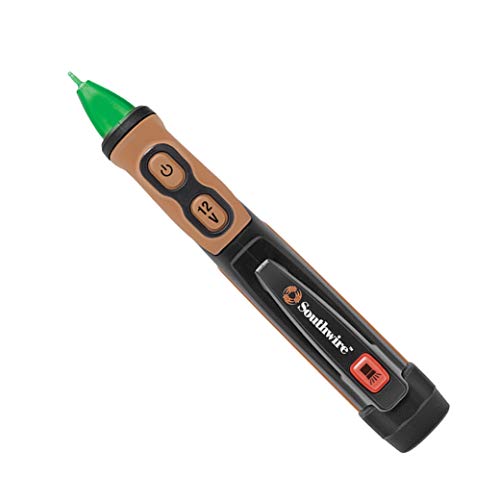
The Southwire 40150N Non-Contact Voltage Tester is designed for versatile performance with dual-range AC voltage detection. It offers two detection ranges: 12-1000V and 100-1000V, allowing users to tune sensitivity for high- or low-voltage environments. The tester provides both audible and visual indications through a bi-color LED system that shifts between red and green based on voltage presence and range selection. The device is built with rugged durability, including a drop-rated construction and IP67-rated protection for moisture and dust resistance. The integrated LED flashlight adds practicality for working in dark areas or dim panel spaces.
Designed for electricians and serious homeowners, the 40150N’s dual-range capability supports a wide array of applications—from basic lamp circuits to more demanding panel wiring. The waterproof and dustproof design enhances reliability in challenging environments, while the compact, pen-shaped form factor keeps it accessible during routine inspections, installations, and troubleshooting. This tester emphasizes safety and visibility, delivering clear feedback in busy work sites where lighting and environment can complicate voltage checks.
TESMEN TN-213 Non-Contact Voltage Detector

The TESMEN TN-213 combines visual and audible cues with a responsive LCD display that shows voltage percentage and a bar graph. It operates across dual ranges—12-1000V at high sensitivity and 70-1000V at low sensitivity—making it adaptable for a range of tasks, from motorized curtains to outdoor lighting. The device features an NCV probe that safely distinguishes live and neutral wires, reducing the risk of misidentification during tests. With IP66 protection and CAT ratings for safety, the TN-213 is designed to withstand dust and water exposure in harsh work sites, while maintaining accurate voltage detection even in challenging environments.
Users benefit from a clear, escalating alert pattern: red indicators and rapid beeps accompany higher voltage readings, while the LCD percentage increases to reflect signal strength. The S-button allows switching between sensitivity modes, enabling precise adjustments when working with low- or high-voltage installations. The combination of durability, NCV safety features, and informative display makes the TN-213 a strong option for professional electricians and advanced hobbyists who require reliable, real-time voltage feedback.
Klein Tools NCVT3P Dual Range Non-Contact Tester

The Klein Tools NCVT3P is a robust dual-range non-contact voltage tester built for professional use. It detects voltage across a wide range (12-1000V AC) and provides simultaneous visual and audible feedback to confirm voltage presence. A bright built-in flashlight enhances visibility in dim work areas, making it easier to identify wiring locations and connections during testing. The tester’s audible alarm can be complemented by flashing LEDs, providing redundancy in noisy environments or when lighting is poor. Its pocket clip and ergonomic design support extended use on job sites, where quick, consistent voltage verification is essential for safety and efficiency.
For electricians who regularly work with both low and high voltage circuits, the NCVT3P’s dual-range capability, along with a reliable flashlight and clear indicators, offers a balanced tool for routine checks, panel work, and outlet testing. The combination of tactile design, durable construction, and straightforward alarms aligns with field requirements where accuracy and speed matter most. This model is well-suited for daily professional use in residential, commercial, and light industrial settings.
Buying Guide
When selecting a non-contact voltage detector, consider how the tool fits your typical workflow and environments. Key factors include voltage range, sensitivity, and the clarity of indicators. A detector that covers a broad range (roughly 12-1000V AC) is versatile for both home wiring and professional tasks, but some jobs benefit from adjustable sensitivity to reliably detect low-voltage signals without misreading nearby lines.
Indicator systems vary across models. Look for devices that combine audible alerts with visible LEDs or LCD readouts. Some testers also display a percentage or bar graph to convey signal strength at a glance, which can help in breakpoint testing and locating energized wires. Red indicators and sharper beeping usually signal higher voltage, while green hints at safe, lower voltage conditions. A robust tester should clearly differentiate live versus neutral wiring to avoid misinterpretation during inspections.
Durability and safety ratings are crucial for work in real-world environments. IP66 or IP67 ratings indicate strong protection against dust and moisture, while CAT ratings (for example CAT III or CAT IV) describe the voltage environments for which the tool is rated. A rugged, pen-sized form factor with a drop rating and a comfortable grip also improves reliability at the job site. If you work in dusty or damp settings, prioritize models with waterproof or water-resistant builds and protective housings.
Additional features can influence the decision based on needs. Built-in LED flashlights are helpful when testing in dark panels or wall cavities. Some units include a dedicated S or sensitivity button to switch between high and low sensitivity ranges, which is especially useful for testing devices like thermostat wiring, doorbells, or low-voltage controls. A compact tester with a pocket clip is ideal for technicians who move between tasks quickly, while a larger model with a bright display may be preferred for bench work or teaching environments where visibility matters.
Price and warranty are practical considerations. While premium models may offer more features and greater durability, many mid-range testers provide reliable performance for standard residential tasks. Check for manufacturer warranties and availability of replacement probes or components, particularly if you depend on the tool for frequent use. Finally, weigh brand reputation and user reviews to gauge long-term reliability and potential maintenance needs.