Best Jigsaw Blades for Aluminum: Quick and Clean Cuts
Aluminum projects demand blades engineered for metal, with the right teeth-per-inch (TPI), durable construction, and compatibility with your jigsaw’s blade system. For clean cuts in aluminum sheets and lightweight extrusions, around 8 TPI blades are common and help deliver fast, straight edges. Higher tooth counts, such as 21 or 24 TPI, can yield smoother finishes on thinner metals but may require slower feeds. The balance of blade rigidity, heat resistance, and shank type matters for ongoing performance. The following options highlight blades designed to cut aluminum effectively, plus related metals, with notes on thickness ranges, life span, and cut quality to help you choose confidently.
To help you compare at a glance, the table below summarizes core specs for five blades that perform well on aluminum and similar materials. Consider your typical thickness, desired cut type, and whether you favor straight precision or flexibility for curved paths when selecting a blade.
| Product | Teeth (TPI) | Material Range | Best For |
|---|---|---|---|
| Bosch T127D 4-In. Aluminum Jigsaw Blades | 8 | Aluminum 3/16″–5/8″, Fiberglass 3/16″–3/4″, Plastic 3/16″–1 1/4″ | Fast, straight cuts in aluminum |
| Bosch T227D 4-In. Aluminum Jigsaw Blades | 8 | Aluminum 3/16″–5/8″, Fiberglass 3/16″–3/4″, Plastic 3/16″–1 1/4″ | Versatile, straight or curved cuts |
| Bosch T127DF 4-In. 8 TPI Flexible Aluminum Blades | 8 | Aluminum 3/16″–5/8″, Fiberglass 3/16″–3/4″, Plastic 3/16″–1-1/4″ | Flexible, durable cuts for varied shapes |
| Diablo DJT118AHM Carbide Blade (3-1/4″) | 24 | Thin metals, including aluminum 1/32″–1/16″ | Thin metal cutting with long life |
| TAROSE T118A 3″ 21 TPI Blade Set | 21 | Metal cutting; compatible with many jigsaws | General metal cutting with good wear tolerance |
Bosch T127D 4-In. Aluminum Jigsaw Blades

The Bosch T127D line is designed specifically for aluminum with an 8 TPI tooth pattern, delivering fast, straight cuts through aluminum sheets and light extrusions. These 4-inch blades fit most standard jigsaws and are built with high-speed steel to resist heat buildup during longer cuts. The blade’s construction supports work with fiberglass and certain plastics, making it a versatile option for mixed-material projects. This set typically emphasizes reliability and consistent edge quality, particularly useful when you need to produce repeatable, clean edges across multiple pieces.
In practice, the T127D blades excel on aluminum up to about 1/2 inch thick, offering a balance between speed and edge quality. The 8 TPI pattern minimizes burrs on thin metal and helps keep edges straight through longer runs. While they perform well in straight cuts, users report stable control for gentle curves as well, provided you maintain a steady feed rate and minimal blade deflection. For jobs that demand repeatable thickness control, these blades are a dependable choice in both workshop and job-site settings.
BOSCH T227D 4-In. Aluminum Jigsaw Blades

The Bosch T227D blades offer the same 8 TPI design with a broader cutting range that covers aluminum and fiberglass quickly, plus plastic. Their 4-inch length makes them a versatile choice for compact jigsaws and tight spaces, while their HSS construction supports longer blade life under standard metal-cutting workloads. This set is particularly suitable for projects that require a mix of straight and curved cuts, as its tooth geometry balances aggressiveness with edge control. If you frequently switch between sheet metal and assorted plastics, the T227D is a reliable, general-purpose blade family.
Designed for moderate to frequent use, these blades handle aluminum up to 5/8 inch thick and similar material thicknesses with minimal blade drift when guided properly. Users appreciate consistent cutting action and predictable performance across multiple passes. For best results on curved paths, maintain a steady hand and slow feed to reduce tooth heat and edge distortion. The included set provides multiple blades to address varied aluminum profiles without swapping blades mid-project.
BOSCH T127DF 4-In. 8 TPI Flexible for Aluminum

The T127DF variant from BOSCH adds flexibility without sacrificing aluminum performance. With the same 8 TPI count and 4-inch length, these blades incorporate a bi-metal construction designed to improve durability and life through heavy use. Flexibility helps resist blade fracture when making curved or intricately contoured cuts in aluminum, fiberglass, and some plastics. This makes them suitable for projects that involve complex patterns or shapes where a stiffer blade might not follow the intended path as cleanly.
In practice, the T127DF blades deliver dependable results in recurring metal-cutting tasks, especially when you are cutting thinner aluminum stock or working with composite materials. The bimetal construction enhances longevity under heat and friction, which helps maintain sharpness across longer sessions. For finish quality, a light touch and a steady feed help reduce edge chatter and burr formation, particularly on sheets closer to the lower end of the thickness range.
50 Piece Contractor Jigsaw Blades Set for Metal
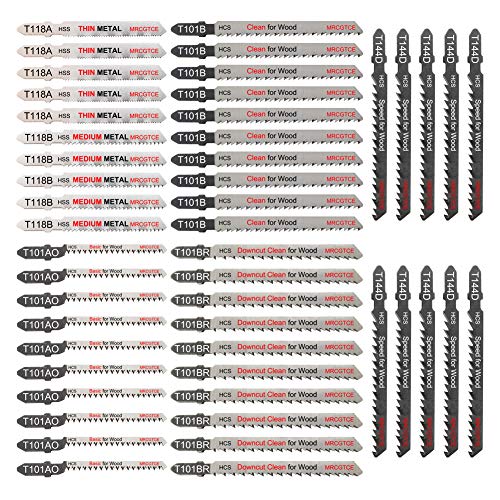
This 50-piece blades set from MRCGTCE provides a broad assortment for metal cutting, including several blades designed for metal and a few for wood or mixed materials. While not specialized exclusively for aluminum, the kit offers cost-effective options for general metalworking, with a mix of tooth counts and blade shapes intended to cover common cutting tasks. The blades are manufactured with high-carbon steel for durability and some edges with high-speed steel elements for longer life in metal work. A storage case helps keep cutters organized for frequent project changes.
For users seeking value and variety, this set can be a practical complement to a smaller selection of dedicated aluminum blades. It is particularly helpful for multi-material jobs where occasional aluminum cuts are required, and you want to avoid swapping blades often. Expect good performance for light to moderate metal cutting, and be prepared to replace or re sharpen blades as they show wear from tougher metals.
Diablo Carbide Jig Saw Blade DJT118AHM
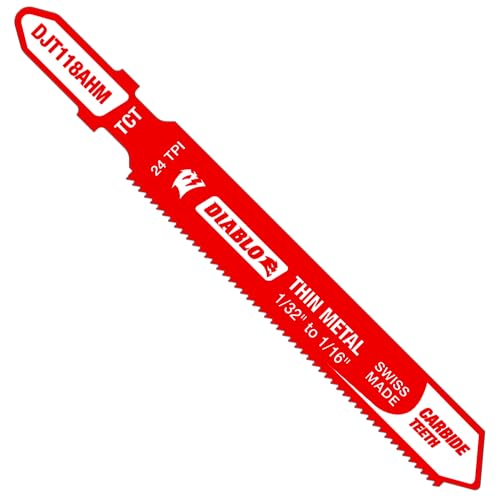
The Diablo DJT118AHM features carbide teeth (TiCo Hi-Density carbide) for extended life in metal cutting, including aluminum sheet metal and other thin metals. With a 3-1/4-inch length and 24 TPI, it targets thin stock where precision and long blade life are critical. Diablo emphasizes rapid, smooth cutting through metal with reduced heat buildup, which helps minimize edge chatter and burrs. The carbide construction makes this blade a strong option for frequent metal cutting tasks, including repeated passes through aluminum and other soft metals where a standard HSS blade might dull quickly.
Performance notes highlight long life and robust durability, especially for challenging cuts that would wear ordinary blades quickly. For best results, maintain a steady feed, avoid excessive forcing that can cause blade deflection, and allow the carbide teeth to do the work. This blade is especially well-suited for craftsmen and technicians who encounter recurring, high-precision cuts in light-gauge aluminum and similar materials.
Tarose 10-Piece T118A 3″ 21 TPI Set

The Tarose 10-piece T118A set is a budget-friendly option featuring 21 TPI blades, designed for metal cutting with T-shank compatibility that fits most modern jigsaws. The blades’ 3-inch overall length and narrow tooth geometry provide precise cuts on metal, including aluminum, with a balance of speed and clean edges. The kit emphasizes wear resistance through HSS materials and a robust build, offering several blade variants suitable for straight cuts, scroll cuts, and light curves. It’s a practical starter or backup set for homeowners and hobbyists handling common aluminum tasks.
In practical terms, Tarose blades are a solid value for general metal cutting, especially when you need multiple blades that perform well across various metals, including aluminum. Expect good performance for typical DIY projects and light fabrication. As with most low-cost blade sets, the best results come from proper feed rates, minimal blade deflection, and finishing touches such as deburring after cutting to improve surface quality.
Buying Guide
When shopping for aluminum jigsaw blades, start with the core material and shank compatibility. Blades designed for metal work often use high-speed steel (HSS), bi-metal (a mix of HSS and other metals), or carbide teeth. Carbide blades (like the Diablo option) offer exceptional wear resistance for frequent use and especially tough metals, but come at a higher initial cost. For lighter or occasional aluminum work, HSS or bi-metal blades provide reliable performance at a lower price. Shank compatibility (T-shank is standard on most modern jigsaws) ensures easy swapping and secure seating during operation.
Tooth count and geometry determine how clean your edges will be and how quickly you cut. For aluminum, 8 TPI blades are a common default for straight cuts in sheet metal and moderate thickness. Higher TPI blades (21–24 TPI) are advantageous for thinner metals where burrs are a concern and edge quality is critical, though cutting speed may drop a bit. For curved or intricate cuts, flexible blades with a slightly lower rigidity can track curves more predictably, provided you maintain a steady feed and minimal blade deflection.
Blade length also matters. Shorter blades (3″ to 4″) provide better control for tight spaces and fine work, while longer blades can cover larger swaths of material with fewer blade changes. In aluminum work, the blade’s thickness and backing influence heat buildup and life. A robust blade with good heat resistance remains sharper longer, especially during longer runs. Consider your typical work environment: a shop with short, repetitive cuts might benefit from durable carbide or bi-metal blades, whereas occasional DIY projects may be satisfied with HSS options at a lower price point.
Durability and edge quality come into play when determining value. Carbide blades offer superior life and reliable cuts in metallic materials, but their higher cost is justified mainly for frequent use. Bi-metal blades provide a good compromise between life and price, especially for mixed-material tasks. For occasional aluminum cutting, a solid HSS blade with an 8 TPI or 21–24 TPI pattern can deliver dependable performance without a large upfront investment. Regularly clear chips and burrs, and consider a light coating of lubrication to reduce friction and heat during longer cuts.
Practical considerations also include maintaining blade alignment and avoiding overheating. Keep the jigsaw at a steady speed and allow the blade teeth to do the work without forcing the cut. Deburr aluminum edges after cutting to improve edge finish, particularly for parts that will be fastened or retained. If you often cut a variety of metals, a mixed-blade set can save time and reduce blade-changing downtime, but for dedicated aluminum work, select blades optimized for aluminum or thin metal with appropriate TPI and construction.