Best Rubber Roof Coating for Flat and RV Roofs
Protecting a roof from leaks and weather damage starts with selecting the right rubber roof coating. The right coating delivers elasticity to move with temperature changes, reflects sun to lower attic temperatures, and adheres to a variety of substrates such as metal, EPDM, fiberglass, and concrete. This guide highlights five top options, including elastomeric acrylic coatings and professional-grade rubber membranes. Use the quick reference table to compare elongation, reflectivity, and compatibility, then read practical considerations for choosing a coating that matches your roof type and climate.
| Product | Brand | Key Benefit | Coating Type |
|---|---|---|---|
| Ames Maximum-Stretch Roof Coating | AMES | 650% elongation, bright white reflectivity | Elastomeric acrylic |
| Liquid Rubber Waterproof Sealant | Liquid Rubber | Over 950% elongation, flexible membrane | Liquid rubber |
| HENG’S Rubber Roof Coating | HENG’S INDUSTRIES | RV-ready, UV resistant, expands/contracts | EPDM-based rubber coating |
| RubberTop Roof Coating | Rubbertop USA | Waterproof, lowers interior temperatures | Waterproof acrylic & siliconized elastomeric |
| Liquid Rubber RV Roof Sealant | Liquid Rubber | Professional-grade, solar reflective, flexible | Elastomeric membrane |
Introduction to five selected products follows, each evaluated for compatibility with flat and RV roofs, ease of application, and long-term performance under temperature variation. While all are designed to seal and protect, the best choice depends on roof material, climate, and whether RV-specific maintenance or general flat-roof protection is the priority. The product table above provides a quick snapshot to help you compare core attributes at a glance.
AMES Maximum-Stretch Roof Coating (1 Gallon)
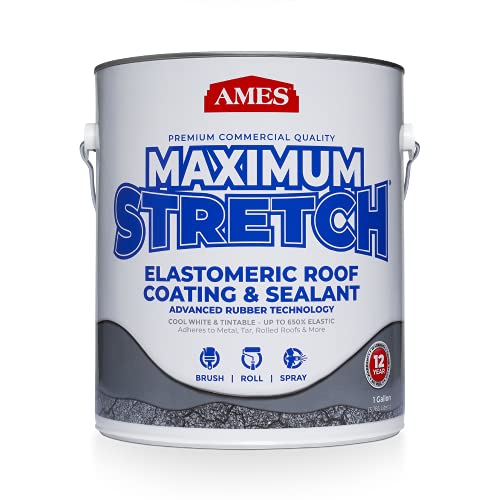
AMES Maximum-Stretch Roof Coating is a white, elastomeric acrylic coating designed for low-slope roofs. With up to 650% elongation, it accommodates roof movement without cracking or flaking, a critical feature on aging structures and RV roofs where movement is common. The bright white finish reflects sunlight with about 88% reflectivity, helping to reduce surface temperatures and lower cooling costs inside the structure. The coating adheres to metal roofing, tar, and rolled roofs, making it versatile for residential sheds, RVs, and commercial flat-roof installations. It can be brushed, rolled, or sprayed on for flexible application options.
The product’s rubberized properties provide durable protection against weathering and UV exposure, contributing to longer roof life with fewer maintenance cycles. For best results, ensure a clean, dry surface and follow recommended curing times between coats. A single gallon covers a moderate area with multiple coats necessary for full membrane thickness, so plan project scope accordingly.
Liquid Rubber Waterproof Sealant (1 Gallon)

Liquid Rubber Waterproof Sealant is designed to create a seamless membrane on flat roofs, metal roofs, low-slope roofs, foundations, and more. It uses an industrial-strength bitumen formula and boasts over 950% elongation, allowing the coating to move with building shifts and temperature fluctuations without cracking. This flexibility helps maintain adhesion and weatherproofing across seasons while resisting UV damage. It serves as a robust alternative to traditional tar or patch products and forms a durable, rubberized coating that protects underlying substrates from water intrusion.
Professional coverage guidance indicates that application can be brush, roll, or spray. For flat/low-slope surfaces, one gallon typically covers about 15 square feet per coat, with 3-4 heavy coats achieving a thick membrane. Vertical surfaces may require about 30 square feet of coverage per gallon. While versatile for roof repairs and preventative maintenance, proper surface preparation and coat thickness are essential to achieve optimal results.
HENG’S Rubber Roof Coating (1 Gallon)
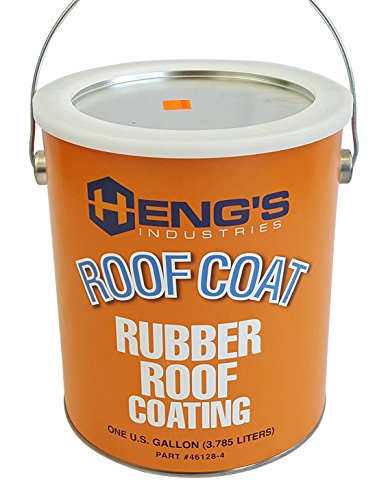
HENG’S Industries Rubber Roof Coating is designed specifically for RV roofs, including seams and tears, with a focus on durability and flexibility. The coating is UV resistant and expands and contracts with roof movement, addressing the typical stress points around vents, air conditioners, and seams. It resists cracking and impact, offering a reliable seal in variable weather conditions. The product is formulated to be non-polluting and non-toxic, aligning with safety and environmental considerations for RV interiors and exterior surfaces alike.
With RV-focused performance in mind, this coating provides practical patching capability for small tears and leaks. Surface preparation remains important—clean and dry surfaces yield better adhesion. The coating’s long-lasting elasticity helps maintain a watertight seal as the roof expands on hot days and contracts in cooler seasons, reducing the likelihood of future leaks and the need for frequent reapplications.
RubberTop Roof Coating (1 Gallon)

RubberTop Roof Coating combines waterproof acrylic with a siliconized elastomeric formulation. It offers effective protection against leaks while helping to lower interior temperatures by reflecting sunlight. The coating is designed for ease of application, allowing spray, roller, or brush methods to suit the user’s preference and project constraints. Its elastomeric composition maintains flexibility in both hot and cold conditions, reducing the risk of cracking as roofs expand and contract with temperature cycles.
Suitable for various roof types, RubberTop aims to deliver durable performance with straightforward maintenance. For best results, ensure clean, dry surfaces, apply in appropriate weather, and follow cure times to form a resilient membrane. The coating’s versatility makes it a practical choice for homeowners tackling both flat and gently pitched roofs, as well as RV platforms that require dependable protection from the elements.
Liquid Rubber RV Roof Sealant (1 Gallon)

Liquid Rubber RV Roof Sealant is a professional-grade, solar-reflective, flexible membrane coating designed for EPDM, TPO, fiberglass, and aluminum RV roofs. It creates a leak-proof seal that remains flexible across temperature shifts, protecting interior spaces from moisture intrusion. This coating is particularly well-suited for travel trailers, motorhomes, and campers, providing reliable protection against sun exposure and weathering for extended periods.
Designed to work as part of a complete RV roof sealing system, this product pairs with Liquid Rubber EPDM Primer for enhanced adhesion on EPDM and TPO surfaces. The system-oriented approach supports long-term roof health and interior comfort by maintaining a reflective surface and a resilient protective layer that resists cracking and UV damage across seasons.
Buying Guide
Choosing the right rubber roof coating involves evaluating roof material, climate, and intended use. Here are key purchase considerations and how they influence your decision.
- Roof substrate compatibility: Confirm whether the product adheres well to EPDM, TPO, metal, fiberglass, or asphalt tar. RV roofs often use EPDM or rubber membranes, so compatibility is critical.
- Elongation and movement: Higher elongation (hundreds to thousands of percent) allows the coating to move with roof expansion and contraction, reducing cracks and peeling over time.
- Reflectivity and cooling: White or light-colored coatings reflect sunlight, lowering surface temperatures and reducing interior cooling loads.
- UV resistance: UV blockers extend membrane life by minimizing sun-related degradation.
- Application method: Some products are easier to apply with brushes, rollers, or sprayers. Choose based on roof size, access, and tool availability.
- Coverage and thickness: Expect varying coverage per gallon depending on the surface and number of coats. Plan for multiple coats on larger areas to achieve a durable membrane.
- Movement and weather tolerance: Look for coatings that resist brittleness in cold weather and cracking in heat, ensuring performance across seasons.
- Safety and environmental impact: Non-toxic formulations reduce indoor exposure and environmental concerns; consider VOC content and cleanup requirements.
- Maintenance and re-coating: Assess recommended re-coating intervals and ease of inspection to maintain a long-lasting seal.
- Cost vs. value: Factor in application effort, expected lifespan, and potential energy savings from reflectivity when evaluating price.
When selecting a coating, balance substrate compatibility, environmental conditions, and project goals. For RVs, prioritize elastomeric and UV-resistant formulations with strong adhesion to EPDM surfaces, plus ease of patching around vents and seams. For flat or low-slope roofs, emphasize elongation, reflectivity, and long-term durability to minimize future repairs. Real-world results depend on proper surface preparation, correct coat thickness, and adherence to cure times. By aligning product features with roof type and climate, homeowners can improve roof longevity while maintaining interior comfort.