Best File for Sharpening Garden Tools and Blades
Keeping garden tools sharp reduces effort, improves safety, and extends tool life. The right file or sharpening stone can revitalize blades on lawnmower blades, axes, hedge shears, and chisels, as well as kitchen knives and kitchen tools. This guide highlights five top picks that balance durability, ease of use, and value for American gardeners. From diamond-coated stones to traditional files, these options cover professional-grade performance and DIY convenience.
Below is a quick overview table of the five picks to help you compare at a glance. All selections are focused on garden tools and edge maintenance, with attention to grit, material, and handling convenience.
| Product | Brand | Key Use |
|---|---|---|
| SHARPAL 121N Dual-Grit Diamond Sharpening Stone | SHARPAL | Edge setting and finishing, dry sharpening |
| Corona Sharpening Tool AC 8300 | Corona | Pocket sharpening for straight blades |
| Berry&Bird Sharpening Stone File Garden Tool | Berry&Bird | Tool edges with wooden handle, 180 grit |
| WORKPRO W051002 10 In. Flat File | WORKPRO | Metal edge shaping and deburring |
| AccuSharp Garden Tool Sharpener | ACCUSHARP | All-purpose sharpener for lawnmower blades and more |
SHARPAL 121N Dual-Grit Diamond Sharpening Stone

The SHARPAL 121N combines two sharpening surfaces on a single stone: a coarse 325 grit (45 microns) for quick edge setting and an extra-fine 1200 grit (12 microns) for honing. Crafted with durable monocrystalline diamonds plated onto stainless steel, this tool stays sharp through heavy use. The full-tang construction adds rigidity, and the dry-sharpening capability eliminates oil and messy cleanup. An integrated angle guide helps users maintain consistent edge geometry, making it suitable for lawnmower blades, axes, hatchets, hedge shears, chisels, and even drills. Two surfaces cover both rapid edge creation and refinement in one compact package.
Design features emphasize portability and user safety. The diamond coating resists wear, while the double-sided setup reduces the number of tools needed in a tool shed or on a workbench. This makes it ideal for homeowners who want professional-grade sharpening without a full workshop. Note that best results come from maintaining a steady, consistent angle and drying the stone after use to extend its life. The SHARPAL 121N is a versatile addition to any sharpening kit, especially when time and space are at a premium.
Corona Sharpening Tool AC 8300

The Corona AC 8300 is a compact, pocket-friendly sharper designed primarily for straight blades. It excels at quick touch-ups on kitchen knives, pruning shears, and similar tools, while explicitly excluding use on saw blades. Its small form factor makes it easy to carry in a pocket or tool bag for on-the-go sharpening. The non-slip rubber grip enhances control and safety during use, reducing the risk of slips when guiding a blade along the sharpener. This tool is best suited for gardeners who need a simple, portable option for routine edge maintenance rather than heavy-duty reshaping.
While the device prioritizes portability, it may not be ideal for large, thick, or curved blades. It provides reliable performance for everyday garden tasks and light-duty jobs, keeping blades sharp between more thorough sharpenings. The Corona AC 8300 complements larger grinding setups or fieldwork where quick maintenance is preferred over complete edge restoration.
Berry&Bird Sharpening Stone File Garden Tool

The Berry&Bird sharpening stone combines durability with an ergonomic design. It uses 180 grit silicon carbide abrasive for faster material removal and edge setting. The tool features a wooden handle that provides a comfortable, controlled grip, improving safety during use. The 6-inch sharpening surface offers a substantial working area for sharpening axes, hedge trimmers, knives, and garden shears. The combination of silicon carbide and a wooden handle makes this option appealing to hobbyists who value a stable, traditional feel and straightforward maintenance.
Its versatility extends beyond garden work to sharpeners for kitchen blades as well. The stone’s grit is coarse enough to repair moderately dull edges but fine enough to deliver a prepared finish when followed by a finer step. As with other sharpeners, keeping the surface free of debris and drying after use will help maximize longevity and performance.
WORKPRO W051002 10 In. Flat File
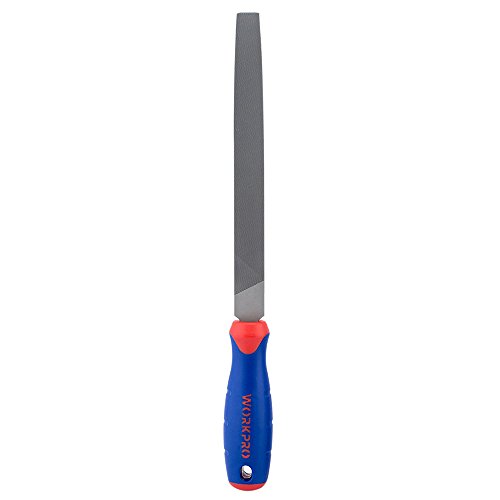
The WORKPRO W051002 is a 10-inch flat file designed for precise metal shaping and deburring. Its ergonomic, anti-slip grip gives users solid control during filing, while the tool’s durable high-carbon steel construction supports heavy-duty use. The double-cut teeth on one face and single-cut on the sides enable efficient material removal and smoothing across a range of garden tools, from hoes to shovels. This file is well suited for professionals and DIY enthusiasts who need a robust tool for reshaping edges and cleaning burrs after initial sharpening with other devices.
Ideal for heavy-duty edge restoration, the W051002’s long handle length provides leverage for thorough work. It is particularly effective on thicker blades and hardware-store tools that require significant material removal before honing. Regular cleaning and storage in a dry place will maximize the file’s lifespan, and users should proceed with a steady, consistent motion to avoid gouging the metal surface.
AccuSharp Garden Tool Sharpener

The AccuSharp Garden Tool Sharpener uses diamond-honed tungsten carbide blades designed to restore and sharpen a wide range of blades. It’s marketed as a one-stop solution for garden tools, capable of rejuvenating lawnmower blades, pruning shears, limb loppers, hoes, shovels, and scythes with just a few strokes. Diamond-honed carbides offer long wear life and resistance to glazing, making this a reliable option for frequent use. The tool’s straightforward design enables quick maintenance without specialized equipment or extensive setup.
Reverseable blades extend the device’s life, helping users maximize value. While the sharpener is versatile, some users may prefer a more specialized approach for very tough or unusually shaped blades. For routine maintenance and quick touch-ups, AccuSharp provides a practical balance of speed, simplicity, and effectiveness in garden-edge maintenance workflows.
Buying Guide
Choosing the right sharpening tool for garden work depends on your tasks, tools, and workflow. Here are key factors to consider and how they apply to common scenarios.
- Grit range and sharpening type: Coarse grits (roughly 180–325) set and establish edges quickly on dull blades; fine grits (400–1200) refine and polish for longer edge life. For two-sided stones, you can save steps by combining edge-setting and honing in one tool.
- Tool compatibility: Diamond stones and tungsten carbide blades work well across mowers, axes, pruning tools, and hoes. Traditional files excel for metal shaping and deburring, especially on thicker tools. Choose based on blade thickness and curvature.
- Stone vs. file vs. blade sharpener: Stones deliver consistent edges but require more technique. Files are robust for heavy removal and edge shaping. Blade sharpeners (like AccuSharp) offer quick maintenance for multiple tools with minimal setup.
- Portability and storage: Pocket sharpeners and compact stones suit fieldwork and small tool kits. Larger stones and longer files fit workshop benches and storage cabinets.
- Safety and handling: Look for non-slip grips, protective sheaths, and guided edge angles to promote safe use. Dry sharpening is convenient, but ensure the tool is kept clean and dry to prevent corrosion.
- Maintenance and lifespan: Diamond-coated tools tend to last longer and resist glazing. Regular cleaning and drying after use extend life. Replacement blades or surfaces can preserve performance when worn.
- Use-case balance: If you maintain many garden tools, a versatile dual-grit diamond stone or a compact sharpener is convenient for quick touch-ups. For frequent reshaping or dealing with very dull blades, a robust file plus a dedicated sharpener can offer more control.
Tip: Always maintain a consistent angle when sharpening, and follow the manufacturer’s guidance for grit pairing and edge geometry. For embedded nicks or severely damaged blades, begin with a coarse surface and then move to finer grits for a polished finish. Store sharpeners dry, and keep a small brush handy to remove steel filings after use.