Best Bonding Fillers for 3D Prints: Top Adhesives and Coatings
3D printing often needs more than just the printed part. Finishing, bonding, sealing, and bed adhesion are essential steps to improve strength, appearance, and durability. The following selections are among the most effective bonding fillers, glues, coatings, and repair putties for a range of 3D printing materials and applications. Each product is chosen for reliability, performance, and practical use in hobby shops, schools, and small makerspaces.
| Product | Brand | Use | Key Benefit |
|---|---|---|---|
| Smooth-On XTC-3D 3D Print Coating | Smooth-On | Coating/smoothing for 3D prints | Smooth, hard, impact-resistant finish; works on SLA/SLS and various plastics |
| 3D Printer Super Glue Gel – XXL | ARKA | Industrial-strength bonding for 3D prints | Ultra-strong, temperature-stable bonds across common filaments |
| ENOMAKER Bamboo Lab Bed Adhesive | ENOMAKER | Bed adhesion for ABS/PLA/PETG on various build plates | Durable adhesion with easy release after cooling |
| NoClogger 3D Printing Glue | NoClogger | Precise CA glue for small components | Fast-setting, clean application for intricate parts |
| FUNCRECOL UV Cure Putty | FUNCRECOL | Repair putty for gaps and scratches | UV-curing, quick hardening across multiple surfaces |
Smooth-On XTC-3D 3D Print Coating

Product summary: XTC-3D is a clear topcoat designed to smooth and harden 3D printed parts. It is suitable for SLA, SLS, and various rigid media including PLA and ABS. The coating provides a durable finish that reduces wear and improves chip resistance, making it ideal for cosplay props, prototypes, and functional parts.
- Mix Ratio: 2A:1B by volume
- Working time: 10 minutes
- Cures to a hard, impact-resistant coating in about 3.5 hours
- 80D Shore hardness
- Clear top coat for smoothing and finishing
This coating is applied in a thin layer to minimize build height, and it dries clear, preserving the color of underlying prints. It works well over both smooth and textured surfaces, filling minor imperfections and creating a uniform appearance across complex geometries.
3D Printer Super Glue Gel – XXL

Product summary: This gel-based CA adhesive is designed for bonding common 3D printing materials such as PLA, ABS, PETG, TPU, ASA, nylon, and composites. The XXL 50 g tube provides more material per purchase, which is useful for makerspaces and frequent repair work. It resists heat, water, oil, vibration, and UV exposure, supporting durable assemblies and prototypes.
- Designed for bonding multiple filaments
- Ultra-strong bonds that resist heat and moisture
- Temperature stability from –40 °C to +110 °C
- XXL 50 g size for extended use
The gel formula helps control squeeze-out and reduces mess during precision applications, making it suitable for small components, RC parts, and fast repairs where a rigid, long-lasting bond is critical.
ENOMAKER Bamboo Lab Bed Adhesive

Product summary: This bed adhesive is designed to improve first-layer adhesion for ABS, PLA, and PETG on various build plates used with Bamboo Lab printers. It aims to prevent warping and lifting while enabling a clean release after printing. The 60 ml bottle format provides a compact, easy-to-use option for consistent bed prep.
- Strong adhesion to maintain even first layers
- Durable formulation designed for repeated use
- Easy print release after cooling
- 60 ml volume is suitable for regular print workloads
Users typically reapply between sessions to maintain optimal bed grip, especially when printing high-temp materials or large parts. It serves as a practical alternative to glue sticks and other bed surfaces, balancing adhesion with cleanup simplicity.
NoClogger 3D Printing Glue
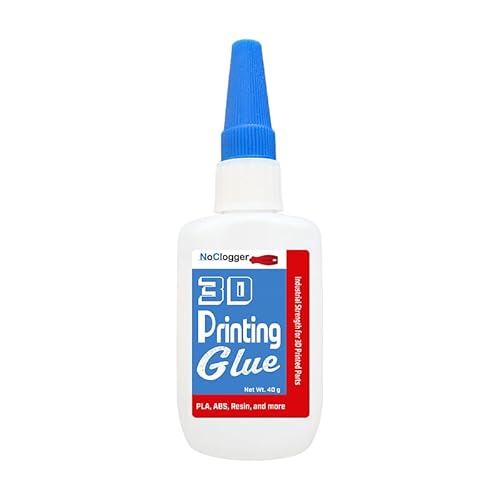
Product summary: NoClogger offers a CA-based adhesive formulated for precise, fast-acting bonds on 3D printed parts. The 40 g squeeze bottle with a fine applicator tip is ideal for small, intricate components where precision matters, such as miniature models and mechanical assemblies.
- Industrial-strength cyanoacrylate formula
- Quick-setting for rapid repairs
- Clean, precision application with a dedicated tip
With its targeted application and strong bonding strength, NoClogger is a reliable option for reinforcing joints and securing delicate features without compromising fine detail on prints.
FUNCRECOL UV Cure Putty
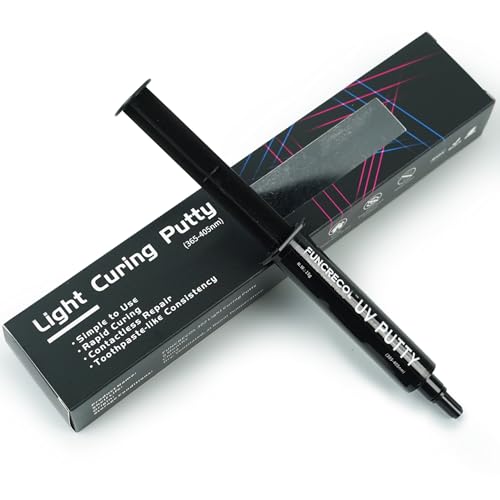
Product summary: This UV-curing putty is designed for quick repairs on resin, plastic, wood, stone, and other surfaces. The putty fills nicks, scratches, and small gaps, curing rapidly under UV light for fast turnaround on model repairs and finishing work.
- Fast curing under UV light (365–405 nm)
- Fills gaps and smooths irregularities
- Sandable and paintable after curing
Ideal for touch-ups on resin models and small 3D printed parts, it reduces downtime between print runs and enables professional-looking repairs without extensive sanding or filler work.
Buying Guide
When choosing finishing, bonding, or repair products for 3D printing, consider the material you print with, the desired finish, and the level of durability needed for the application. Different products serve different roles, from smoothing and sealing to bonding and repairing. Below are key considerations to help you compare options across coatings, adhesives, bed adhesives, and repair putties.
- Material compatibility: Check whether the product works with PLA, ABS, PETG, resin, nylon, or SLS/SLA parts. Some coatings are universal, while glues may be optimized for specific filaments.
- Function and outcome: Decide whether you need smoothing and a glossy finish, a strong mechanical bond, or a quick repair with minimal downtime. XTC-3D is a smoothing coating, while NoClogger and ARKA focus on bonds.
- Curing time and handling: Fast-curing putties and glues accelerate workflows, but require proper ventilation and handling. Consider whether you prefer quick-setting or longer working times for complex assemblies.
- Heat and chemical resistance: For functional parts, bonds and coatings should withstand operating temperatures and environmental exposure. Look for temperature ranges and UV resistance when applicable.
- Application ease: Some products use gels or precision tips for small parts, while others require brushing or dipping. Think about your typical project size and the level of detail you need to achieve.
- Ease of cleanup and removal: Bedding adhesives should be easy to rework, while glues should provide clean stops to avoid damaging prints during removal.
- Shelf life and storage: Some adhesives and coatings have specific storage needs or shorter shelf lives. Proper storage preserves effectiveness over time.
- Safety and ventilation: Many curing agents and solvents emit fumes. Use in a well-ventilated area and follow safety data sheet guidelines, especially with CA glues and solvent-based coatings.
- Cost efficiency: For makerspaces or frequent users, consider the total cost per project, not just the unit price. XXL tubes and larger packages can reduce per-project costs.
In practice, a balanced kit often includes a smoothing coating for surface perfection, a reliable CA glue for small assemblies, a bed adhesive for consistent first layers, and a UV-curing putty for quick fixes. By selecting a combination that covers finishing, bonding, adhesion, and repair, you can improve print quality and save time on post-processing.