Best Slab Flattening Router Bit for Smooth Spoilboard Surfacing
Slab flattening router bits are essential for achieving flat, level spoilboards and working surfaces in large-scale woodworking projects. The right bit combination can speed up surfacing, reduce tear-out, and extend tool life with replaceable carbide inserts. In this guide, five reliable options are highlighted for American shops: from high-wing, heavy-duty designs to economical, replaceable-insert bits. Each choice balances cutting diameter, shank size, insert design, and coatings to tackle softwood, hardwood, and MDF. Whether you’re resurfacing a spoilboard or leveling a slab, these picks offer consistent, professional results.
Below is a brief summary table of the chosen products to help you compare at a glance. Details, pros, and typical use cases follow in individual sections.
| Product | Brand | Shank | Cutting Diameter | Key Feature |
|---|---|---|---|---|
| SICWOOD Slab Flattening Bit | SICWOOD | 1/2″ | 2″ | 6-wing carbide, replaceable inserts |
| BINSTAK Slab Flattening Bit | BINSTAK | 1/2″ | 2″ | 3-wing, anti-kickback, Teflon coating |
| SpeTool Slab Flattening Bit | SpeTool | 1/4″ | 1-1/4″ | 2+2 inserts, ATS coating |
| POWERTEC Slab Flattening Bit | POWERTEC | 1/4″ | 2″ | 1/2″ cutting depth, anti-kickback |
| MAILADA Slab Flattening Bit | MAILADA | 1/4″ | 1-3/8″ | 2+2 inserts, titanium-coated |
SICWOOD Slab Flattening Bit
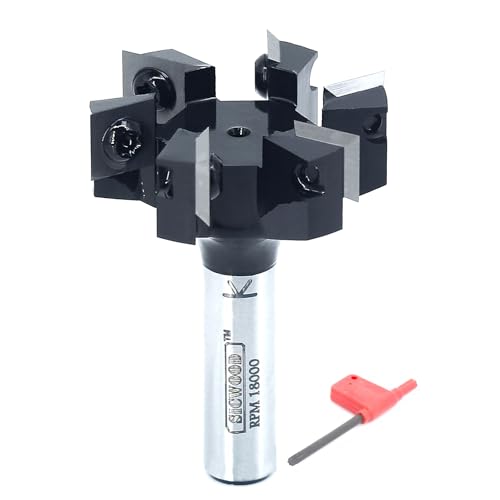
The SICWOOD slab flattening router bit features a 1/2 inch shank and a 2 inch cutting diameter with a 6-wing carbide design. It uses replaceable 4-sided carbide inserts measuring 12x12x1.5 mm and maxes out at 18,000 RPM for fast, clean spoilboard surfacing. The inserts are designed for easy replacement, providing longer tool life and lower running costs compared with single-blade bits. This setup suits precise flattening, flycutting, slab leveling, and rabbeting tasks on CNC machines or manual routers.
Two practical advantages stand out: the six-wing geometry delivers a smoother cut and even surface, while the replaceable carbide inserts reduce downtime and waste. With its robust construction and broad insert availability, this bit is well-suited for ambitious shop projects that require consistent flatness across large work areas. It balances performance with cost efficiency, making it a reliable all-around choice for spoilboard resurfacing.
BINSTAK Slab Flattening Bit

BINSTAK’s slab flattening bit uses a 1/2 inch shank and a 2 inch cutting diameter, with a 1/2 inch cut length. It employs a 3-wing carbide design and a heat-resistant Teflon coating that helps reduce resin buildup and keeps surfaces clean. The bit features an anti-kickback design and solid hardened steel bodies, delivering reliable performance on demanding spoilboard resurfacing tasks. The coating and robust construction make it a practical choice for frequent use in shop environments where durability and ease of cleaning matter.
In practice, this bit is versatile for flattening, resurfacing the top of spoilboards, and trimming or slotting. The combination of 3 wings and a quality coating supports faster stock removal with smoother finishes, while the anti-kickback geometry helps maintain control in larger panels. For shops balancing budget with longevity, this BINSTAK option offers solid value for routine slab flattening work.
SpeTool Slab Flattening Bit

SpeTool’s 2+2 flute slab flattening router bit uses a 1/4 inch shank and a 1-1/4 inch cutting diameter with 10x10x2.2 mm carbide inserts. The ATS coating enhances wear resistance, contributing to longer tool life and smoother operation on softwood, hardwood, and MDF. The two pairs of inserts can be rotated to extend the life of the bit, allowing users to get more value from each tool change. This design is particularly effective for accurate surface leveling and spoilboard resurfacing in busy shops.
The replaceable four-edged inserts are designed to be swapped when dull, rather than replacing the entire bit. This makes SpeTool a practical choice for technicians who run frequent flatting tasks on varied materials. Its relatively small shank and diameter make it suitable for mid-sized projects where precision and control are essential.
POWERTEC Slab Flattening Bit

POWERTEC offers a slab flattening router bit with a 1/4 inch shank, 2 inch cutting diameter, and a 1/2 inch cutting depth. It features a solid hardened steel body and tungsten carbide-tipped cutting edges for durability and precision. The anti-kickback design helps maintain smooth, controlled cuts during spoilboard surfacing, improving safety and finish quality on large surfaces. This bit is well-suited for planing, trimming, dado creation, and creating grooves on spoilboards and flat surfaces where a dependable, everyday-use bit is required.
Designed for professional results in woodworking shops, this POWERTEC bit emphasizes stability and accuracy. Its robust construction and straightforward design make it a reliable staple for regular slab flattening tasks, especially when paired with routers that require dependable 2″ diameter performance and a light-to-medium feed rate.
MAILADA Slab Flattening Bit

MAILADA’s slab flattening bit combines a 1/4 inch shank with a 1-3/8 inch cutting diameter and a 2+2 insert system. It includes titanium-coated carbide inserts and eight inserts total, with a 1/2″ to 1/4″ router collet included for compatibility and convenience. The titanium coating reduces friction and wear, extending tool life on heavy-duty spoilboard surfacing tasks. This setup is geared toward users who value long insert life and lower maintenance costs while achieving consistent flat surfaces on various woods and composites.
With its replaceable 2+2 carbide inserts and titanium coating, this Mailada bit aims to deliver durable performance in demanding environments. The combination of a relatively wide cutting diameter and a compact shank makes it suitable for mid-to-large surface flattening tasks where a balance of speed, control, and insert economy is important for ongoing projects.
Buying Guide
Choosing the right slab flattening router bit involves weighing shank size, cutting diameter, and insert design against your router’s power and the materials you most often work with. Here are key considerations to help you select a bit that fits your shop and projects:
- Shank size and router compatibility: 1/4″ and 1/2″ shanks are most common. Confirm your router’s collet and power capabilities to avoid undersized tools or overload.
- Cutting diameter and surface area: Larger diameters cover more surface but demand more power and precise feed control. Choose based on panel width and desired surface finish.
- Wing/insert design: 2+2, 3-wing, or 6-wing configurations affect cutting aggressiveness and finish quality. Replaceable inserts reduce downtime and cost per job.
- Insert material and coating: Carbid inserts with ATS or titanium coatings offer longer life and smoother cutting by reducing friction and resin buildup.
- Anti-kickback and stability: Anti-kickback designs improve safety and control on large spoilboards, especially when taking deeper passes.
- Materials supported: Ensure the bit is suitable for softwood, hardwood, and MDF if your shop handles diverse projects.
- Maintenance and inserts: Consider how easily inserts are replaced and how readily replacements are available for your preferred brands.
- Speed and feed recommendations: Respect the manufacturer’s max RPM and recommended feeds to maximize tool life and surface quality.
Which bit is best for your shop?
- For fast material removal on large panels: consider 1/2″ shank with 2″ diameter and 6 wings (high surface footage with smooth finish).
- For budget-friendly, frequent use: select a 1/4″ shank option with 1-1/4″ to 1-3/8″ diameter and replaceable inserts.
- For long insert life and reduced resin buildup: look at titanium-coated or ATS-coated carbide inserts with replaceable sides.
In practice, the best choice balances your router’s power, the typical material you work with, and how often you replace inserts. If you frequently surface large spoilboards or slabs, a larger diameter with replaceable inserts and a robust anti-kickback design tends to deliver the most consistent results and lower long-term costs. For maximizing tool life in a busy shop, prioritize inserts that are easy to replace and readily available from your preferred brands.