Best Silicone Sealants for Metal Roofs
Metal roofs demand sealants that move with the metal and resist weathering, UV exposure, and temperature changes. Silicone-based sealants and coatings offer superior flexibility, durability, and reflectivity, helping to extend roof life and reduce energy costs. The following selections highlight proven silicone sealants and coatings designed for metal roofing applications, with a focus on adhesion, ease of application, and long-term performance across typical American climates.
| Product | Brand | Size | Type |
|---|---|---|---|
| Countryman Coatings 4.75 Gal Silicone Roof Coating | Countryman Coatings | 4.75 Gallon | 100% Silicone Roof Coating |
| Countryman Coatings 1 Quart Silicone Roof Coating | Countryman Coatings | 1 Quart | 100% Silicone Roof Coating |
| Liquid Rubber Silicone Roof Coating | Liquid Rubber | 1 Gallon | Silicone Roof Coating |
| GE 5050 Silicone II Aluminum and Metal Sealant | Momentive | 10.3 oz Tube | Silicone Sealant |
| Titebond 61121 Metal Roof Sealant Cartridge | Titebond | 10.1 oz | Sealant (Metal Roof) |
Countryman Coatings 4.75 Gal Silicone Roof Coating

Countryman Coatings’ 4.75-gallon silicone roof coating delivers a rugged, 100% silicone film designed for metal surfaces. It emphasizes restoration and protection of roofs by forming a flexible, watertight layer that adheres to diverse substrates, including aged metals. The formulation aims to resist ponding water, temperature cycling, and UV exposure, helping to extend roof life with minimal maintenance. The coating is suitable for metal roofs and can cover large areas efficiently, reducing the need for frequent reapplications in moderate climates.
Key attributes include durable adhesion to multiple surfaces and resistance to common building materials. The silicone chemistry supports thermal expansion without cracking, making it a practical choice for Kynar-coated metals and other metal substrates. While it is designed for metal roofs, its performance on other surfaces can make it a versatile option for combined projects—such as flashing, edges, and penetrations—where a single product must perform across materials. Regular inspection remains advisable to sustain long-term protection.
Countryman Coatings 1 Quart Silicone Roof Coating

The 1-quart option from Countryman Coatings extends the same 100% silicone performance in a smaller package, ideal for spot repairs, seams, or tight areas on metal roofs. This silicone roof coating adheres to a wide range of surfaces, including metal, modified-bitumen, EPDM, and various built-up roof coverings. It promises strong adhesion without primer in many cases, helping speed up repair projects and reduce downtime. For homeowners or contractors addressing a few leaks, this size provides flexibility without sacrificing silicone’s durability.
With high reflectivity and low vapor transmission, the product can contribute to energy efficiency by reducing heat absorption on sunny days. Its silicone base tolerates outdoor exposure without becoming brittle, which is especially beneficial in regions with hot summers and cold winters. As with larger containers, thorough surface preparation and clean, dry conditions support the best results, particularly when sealing joints, fasteners, or flashing details on metal roofs.
Liquid Rubber Silicone Roof Coating

Liquid Rubber’s silicone roof coating is marketed as a versatile, one-coat solution suitable for flat or sloped metal roofs, among other substrates. It emphasizes UV stability and high elongation, with a claimed 237% elongation to accommodate thermal movement without cracking. The product is designed to be UV-stable and weather-resistant, reducing long-term maintenance needs for metal roofs. Coverage guidance notes applying roughly one gallon per 50 square feet, with a recommendation of one to two layers for effective protection. This option suits projects demanding rapid, seamless sealing across large areas.
In practice, the coating’s silicone base supports flexibility and water resistance, which is advantageous for metal surfaces that expand and contract with temperature swings. The no-primer claim adds appeal for quick applications, though surface prep remains important to ensure consistent adhesion. Consider layering or combining with flashing and seam treatments to address critical leak points on metal roofs in coastal or extreme climates.
GE GE5050 Silicone II Aluminum and Metal Sealant
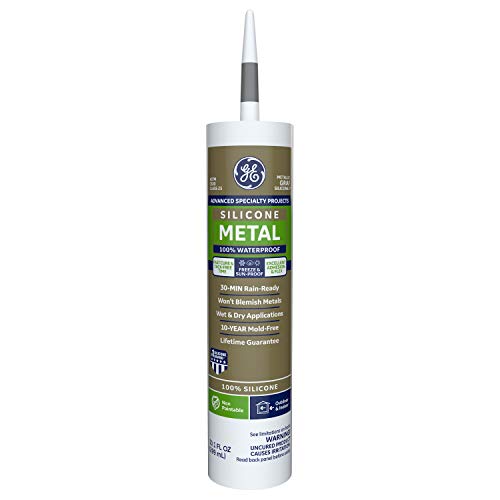
GE GE5050 Silicone II is a silicone-based sealant designed for metal applications, including aluminum and other metals. This 10.3-ounce tube is formulated to deliver reliable sealant performance with good adhesion to metal surfaces, offering a gray, metallic finish. Silicone sealants like GE5050 typically provide robust resistance to weathering, temperature changes, and UV exposure, making them suitable for sealing joints, gaps, and penetrations in metal roofing systems. Applicators should follow manufacturer guidelines for joint movement, cure time, and surface preparation to optimize durability.
Silicone sealants are known for long-term elasticity and moisture resistance, which helps prevent cracking around fasteners and seams. The gray tone helps blend with many metal roofing colors, minimizing visual impact. When choosing silicone sealants for metal roofs, assess compatibility with roof coatings, flashing materials, and any existing sealants to ensure a cohesive, durable sealant system across the roof plane.
Titebond 61121 Metal Roof Sealant Cartridge

Titebond 61121 is marketed as a metal roof sealant cartridge with strong adhesion properties. It claims compatibility with Kynar-coated metals and performance in extreme weather, which makes it a practical choice for challenging outdoor conditions. The product is noted for easy application and broad adhesion to common building materials, facilitating quick sealant repairs on flashing, seams, and penetrations. While the label emphasizes metal roof use, it can also be considered for other exterior sealant tasks where metal compatibility and weather resistance are priorities.
When applying this sealant, surface prep and clean, dry conditions typically yield the best results. The ability to seal in harsh weather adds convenience for urgent repairs after storms or cold snaps. For roof longevity, pair this sealant with compatible primers or coatings where recommended by the manufacturer and monitor cured joints for signs of wear or aging over time.
Buying Guide
Choosing the right silicone-based solution for metal roofs involves evaluating material compatibility, climate, and maintenance goals. Silicone sealants and coatings offer fatigue resistance, UV stability, and flexible seals, but performance varies by substrate and product type. The following considerations help compare options and select the best fit for a given roof project.
- Substrate compatibility: Metal roofs vary (Kynar-coated, galvanized steel, aluminum). Confirm that the silicone product adheres well to the specific metal finish and any existing coatings, paints, or sealants.
- Film thickness and coating vs. sealant: Sealants are typically used for joints and seams, while coatings cover larger surface areas. For long-term roof integrity, a combined approach may be appropriate (coating over sealed seams).
- Weather and cure time: Silicone products should cure under typical outdoor conditions. Some sealants require dry, moderate temperatures, while coatings may tolerate wider ranges. Consider your climate and seasonal window for application.
- Primer requirements: Many silicone coatings are advertised as primer-free, but some surfaces benefit from a compatible primer. Verify surface prep needs to maximize adhesion and durability.
- Reflectivity and energy savings: White or light-colored silicone coatings help reflect solar heat, contributing to cooler roof temperatures and potential energy savings in hot climates.
- Coverage and layering: Coatings often specify coverage rates (for example, one gallon per 50 sq ft with one or two layers). Plan for roof area and the number of coats to achieve the desired protection level.
- Durability and elasticity: Silicone’s flexibility helps manage thermal expansion. Evaluate elongation, UV resistance, and resistance to ponding water for the roof design and climate.
- Color and aesthetic: Gray or white tones can influence appearance and blending with roofing materials. Consider whether color matches or contrasts with existing metal finishes.
- VOC and safety: Review volatile organic compounds (VOCs) and safety data, especially for enclosed spaces or when applying indoors near occupied areas.
- Application method: Some products are designed for rollers, brushes, or spray application. Choose a product with the method that aligns with the project scale and the applicator’s experience.
In choosing among silicone-based metal roof products, weigh the expansion and contraction characteristics of your roof, local weather patterns, and whether you need a coating for large areas or targeted sealing for joints and penetrations. For many homeowners, a combination approach—silicone-based coatings on the main roof surface and silicone sealants at seams and flashing—offers the best balance of longevity, performance, and value across varied American climates.