Best Wood for Knife Handles for Durable DIY Knives
Choosing the right wood for a knife handle is a balance of grip, durability, and aesthetics. For DIY makers and knife enthusiasts, ironwood, ebony, walnut, and other exotic hardwoods offer rich grain patterns, natural oils, and enhanced stability. This guide highlights five top knife handle materials available on Amazon that combine workability with long-lasting performance. Each option provides distinct grain and hardness, so selecting the right wood depends on intended use, climate, and crafting approach. The summary table below helps compare size, material, and potential applications at a glance.
Summary of Chosen Products
| Product | Material | Size | Brand | Typical Use |
|---|---|---|---|---|
| Riakrum Ironwood Knife Handle Scales | Ironwood | 5.12 x 1.77 x 0.51 in | Riakrum | Knife handle scales |
| Walnut Knife Handle Material Blocks | Walnut | 5.1 x 2.3 x 0.5 in | Wislist | Knife handles, turning blanks |
| Sasylvia Ebony Knife Handle Scales | Ebony | 4.7 x 1.6 x 0.4 in | Sasylvia | Knife handles, crafts |
| IECAP Bookmatched Ironwood Scales | Ironwood | 6 x 2 x 0.5 in | IECAP LLC | Knife handles, DIY projects |
| TANEMUDO Ironwood Knife Scales | Ironwood | 5.11 x 1.77 x 0.51 in | TANEMUDO | Knife handles, crafts |
Riakrum Ironwood Knife Handle Scales

The Riakrum set includes four natural ironwood scales sized about 5.12 x 1.77 x 0.51 inches. Ironwood is renowned for density, hardness, and natural oils that help resist warping. Each piece displays a unique grain, so you may receive two scales with different patterns. These scales are intended for knife handle construction but also suit carving crafts, beads, handmade pens, wood decoration, or instrument accessories. The natural oils in ironwood contribute to long-lasting stability when properly finished. Users should plan for shaping, sanding, and final finishing to preserve the wood’s character and performance over time.
Workability is solid but requires sharp tools and careful sanding due to high density. The variety in grain patterns means finishing decisions—such as oiling or applying a finish—can dramatically affect aesthetics. Epoxy or wood adhesive is typically employed to secure scales to blades, with careful clamping during cure. Overall, this pack provides a durable, visually striking option for custom knife handles or broader woodcraft projects where a hard, oil-rich material is advantageous.
Walnut Wood Knife Handle Material Blocks

These walnut wood blanks are cut from whole logs and sized at 5.1 x 2.3 x 0.5 inches, making them versatile for turning blanks, knife handles, or other small woodworking projects. Walnut is valued for its durability, workability, and rich, warm color that deepens with finish. Since the blanks come from natural wood, grain and figure can vary from piece to piece, offering a unique look for each project. The material’s density supports sturdy handle scales with a comfortable, natural grip when properly finished. Finishing steps such as sanding, sealing, and moisture protection help maintain grip and reduce movement over time.
In practice, walnut handles benefit from careful clamping and a stable adhesive setup during assembly. Its moderate hardness makes shaping manageable for hobbyists while still providing long-term wear resistance. Beyond knife handles, the blanks suit crafts, beads, desk accents, or instrument components where a warm, classic wood tone is desired. When selecting walnut, consider your climate and storage to keep color and texture consistent across pieces.
Sasylvia Ebony Knife Handle Scales

These Sasylvia black ebony scales come in a set of four, measuring about 4.7 x 1.6 x 0.4 inches. Ebony is a dense, exotic hardwood known for its deep black color, smooth texture, and strength. The wood is described as solid, delicate, and durable with anti-aging properties, making it well-suited for long-lasting knife handles and high-end crafts. Ebony’s stable composition contributes to resistance against warping when properly finished, though it can be challenging to work due to its hardness. Ebony is often chosen for aesthetic appeal and tactile feel, especially in premium DIY knife projects and decorative wood pieces.
Beyond knife handles, these scales are appropriate for engraving crafts, beads, handmade pens, and wood decorations. When using ebony, ensure proper ventilation and sharp tools, and apply appropriate finishes to preserve its sheen and prevent moisture intrusion. Ebony’s striking appearance can elevate projects ranging from fixed-blade handles to instrument components, but availability and price considerations may vary by source. Proper storage is recommended to minimize surface checks and maintain color integrity over time.
IECAP Bookmatched Ironwood Knife Scales

IECAP LLC’s bookmatched ironwood scales feature mirror-image grain patterns crafted from prized ironwood. The set is sized at 6″ x 2″ x 1/2″ and sold as a pair, ideal for custom knife handles, gun grips, and tool grips. Ironwood is renowned for extreme hardness and natural oils that resist warping, cracking, and moisture, promoting a durable, long-lasting grip. The bookmatched design provides a symmetrical visual appeal that complements high-end blade work or artistic woodworking projects. The thicker profile supports ergonomic grips and is compatible with fixed-blade knives, pocket knives, sword handles, and other multi-purpose woodcrafts.
When planning use, consider pairing these scales with a matching tang or blade geometry and selecting a suitable adhesive and clamping approach to ensure stable performance. Finishing options can range from oil finishes to protective sealants that maintain color and texture. The combination of durability and aesthetic symmetry makes this set a strong choice for a premium build where both function and appearance matter.
Tanemudo Ironwood Knife Handle Scales
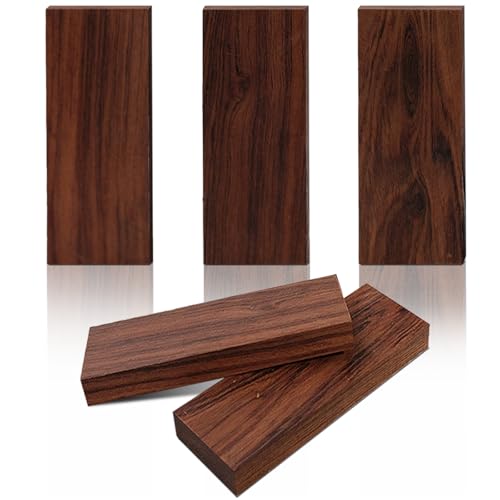
The Tanemudo set includes five pieces of ironwood scales measuring about 5.11 x 1.77 x 0.51 inches. Like other ironwood options, these scales emphasize natural grain variety—each piece may show different textures and patterns. The five-piece quantity provides greater flexibility for knife projects or multiple builds, making it suitable for hobbyists and professional makers alike. Ironwood’s inherent hardness and oil content contribute to durable, comfortable handles when properly machined, sanded, and finished. These scales are versatile for knife handles, carving projects, jewelry components, or wood decorations where a sturdy grip is desirable.
As with any dense hardwood, ensure sharp tooling and careful stabilization during shaping. Finishing with appropriate oils or sealants helps preserve color and reduce moisture-related changes. The larger quantity can support batch projects or replacements over time, and the natural character of ironwood adds a premium look to DIY blades and crafted items.
Buying Guide
Material Properties and Suitability
Wood choice for knife handles hinges on hardness, oil content, and stability. Ironwood is among the densest and most stable hardwoods, offering excellent resistance to warping and moisture when properly finished. Ebony provides a deep, uniform color with strong durability but may be challenging to source and work due to its hardness. Walnut offers a balance of workability, beauty, and durability with warm tones that age gracefully. Consider the blade type, climate, and storage conditions when selecting material; higher oil content can influence finishing choices and adhesion.
Grain Pattern and Bookmatching
Bookmatched scales feature mirrored grain patterns, creating symmetrical aesthetics ideal for premium builds. This technique enhances visual appeal in custom knife handles and can align with the knife’s geometry for a balanced look. If bookmatched pieces are unavailable, expect natural grain variation across scales. When aiming for a consistent appearance, select matched pairs from the same batch and plan grain direction with the blade’s tang and scale geometry in mind.
Size, Fit, And Knife Compatibility
Scale dimensions matter for blade tang compatibility, grip ergonomics, and mounting method. Common sizes such as 6″ x 2″ x 1/2″ or 5.11″ x 1.77″ x 0.51″ fit many standard fixed-blade and production knife templates. Verify tang thickness, screw count, and handle geometry before machining. If material is thicker than the existing handle, plan for thinning processes, which may affect grain alignment. Thin or thick scales influence grip feel and control, especially during heavy use or precision work.
Finish, Stability, And Maintenance
Applying a durable finish protects wood from moisture, oils, and wear. Natural ironwood and ebony respond well to oil-based finishes, polyurethane, or wax blends, depending on user preference and tool compatibility. Stabilization may be beneficial for woods prone to movement under humidity. Regular maintenance—cleaning, re-oiling, and inspecting for cracks or warping—helps preserve grip stability and appearance over time.
Availability, Value, And Sourcing
Exotic woods like ironwood and ebony can vary in availability and price. When possible, source from reputable suppliers that provide clear origin and sustainability information. Evaluate the quantity offered (single pieces vs sets) to match project scope, whether you’re building one knife handle or stocking a workshop for multiple builds. Review packaging and shipping practices to ensure pieces arrive free of cracks or warping, which can compromise performance.
Applications Beyond Knife Handles
Besides knife handles, these woods are suitable for carving crafts, beads, handmade pens, wood decorations, and instrument accessories. The same properties that benefit handles—hardness, stability, and grain beauty—make these woods attractive for small-scale woodworking projects where a premium look and long-lasting performance are desired. Always tailor grain direction and finishing strategy to the intended use to maximize structural integrity and aesthetics.