Best Driveway Motion Sensor Systems for Property Security
Driveway motion sensors offer a proactive layer of protection by detecting movement at the perimeter and alerting you to visits from vehicles, pedestrians, or wildlife. This guide highlights five top driveway motion sensor systems that balance long-range coverage, weather resistance, and straightforward installation. Each product is linked to Amazon for easy access, with concise notes on what makes it suitable for different property layouts. Use the summary table below for a quick apples-to-apples comparison, then dive into each option to see which one fits your needs.
| Product | Brand | Range | Power | Notable Feature |
|---|---|---|---|---|
| eMACROS 1/2 Mile Solar Wireless Driveway Alarm | eMACROS | Up to 1500 ft | Solar sensor; receiver adapter note | Expandable to multiple sensors |
| 1byone Driveway Alarm With 36 Melodies | 1byone | Up to 1000 ft | Plug-in receiver | 36 chimes; multiple alert options |
| Wuloo Solar Driveway Alarm | Wuloo | About 1800 ft | Solar-powered sensor; rechargeable | Receiver doubles as clock/alarm |
| Betterlink 1/2 Mile Solar Driveway Alarm System | Betterlink | Up to 1/2 mile | Solar-powered sensor | IP65 weatherproof; up to 16 sensors |
| Bistee Wireless Driveway Alarm | Bistee | Up to 600 ft | Plug-in receiver | Two sensors included; long-range for smaller properties |
eMACROS Solar Driveway Alarm System

The eMACROS driveway alarm emphasizes long-range wireless performance with a claimed reach up to 1500 feet in typical conditions. The system is marketed as solar-powered at the sensor, with a receiver that requires an external adapter. It supports expansion to multiple sensors and unlimited receivers, enabling full perimeter coverage across yards, driveways, gates, or accessory structures. The PIR-style motion detection targets humans, vehicles, and larger animals, while the weather-resistant design helps it endure outdoor exposure. A quick-start setup keeps installation simple, and the expandable architecture makes it suitable for larger properties or commercial applications.
Key considerations include the need for a 5V 1A adapter for the receiver and ensuring your property has a suitable mounting surface to capture the best signal without interference. In environments with heavy foliage, additional sensors can help differentiate alarm zones. For property managers, the ability to scale the system without buying a new hub can be a cost-effective perk. While the product page highlights wireless performance, verify local terrain and potential obstacles that can affect the 1500-foot range, such as dense buildings or trees.
1byone Driveway Alarm With 36 Melodies
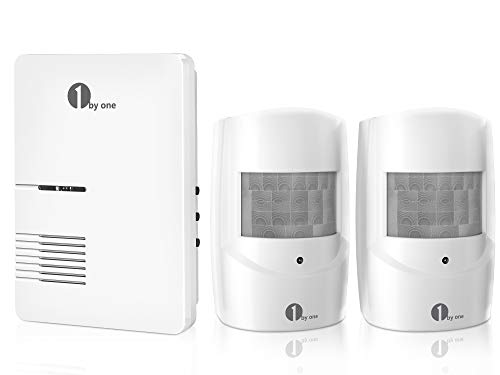
This 1byone system positions itself as a flexible long-range alert solution with a plug-in receiver and two weatherproof PIR motion detectors. The range to the receiver can reach up to 1000 feet, while each detector covers a 24-foot detection zone, suitable for driveways, porches, gates, and pool areas. Users can choose from 36 chime options and three alert modes (Sound, LED Flash, or both) with multiple volume levels (25-80 dB). The combination of 36 chimes and multiple alert styles makes this setup versatile for homes, small businesses, and office settings where differentiation between zones is helpful.
Considerations include the need to locate the receiver indoors near power, potential interference in crowded RF environments, and ensuring the PIR sensors remain unobstructed for accurate detection. The system’s generous chime library supports customizing guest notifications or deterring intruders with a loud, distinct alert. For families with children, the LED alert option can provide visual cues in addition to sound.
Driveway Alarm Wireless Outside, 1byone Motion Sensor Alarm

This 1byone model presents a straightforward, long-range doorbell-like experience with a 1000-foot communication span between sensors and receiver. It includes two weatherproof PIR motion detectors and a single receiver, making it a compact option for smaller perimeters or medium-sized homes. The device supports two work modes—doorbell and alarm—and emphasizes practical alerts rather than advanced customization. The key appeal is a reliable, easy-to-install system that provides immediate perimeter awareness for driveways, gates, and entryways without complex configuration.
Users should evaluate whether the 24-foot detection range per sensor aligns with property layouts, particularly in areas with hedges or parked vehicles that could obscure sensor views. The ability to reuse this setup as a remote doorbell can be advantageous for distinguishing between visitors and intruders. For larger properties, plan for adding additional sensors or expanding to multiple receivers if needed.
eMACROS 1/2 Mile Long Range Solar Wireless Driveway Alarm System
Expanded coverage is a core selling point for this eMACROS system, featuring solar-powered sensors designed to extend perimeter awareness across larger properties. The package includes a receiver that requires an external adapter, which is a common arrangement for solar-security ecosystems. The system supports multiple sensors and unlimited receivers, enabling flexible placement around driveways, gates, and outbuildings. Detection targets include humans, cars, and large animals, with a focus on minimizing false alarms thanks to reliable PIR-based sensing and robust wireless technology.
When considering this system, evaluate your local sunlight availability to ensure the solar sensors stay charged, and confirm the installation plan accommodates multiple sensors without interference. The ability to scale without a full replacement can be a major advantage for growing properties or business estates.
Wireless Driveway Alarm With 600ft Range

This Bistee system offers a practical balance of range and simplicity with two motion detectors and a single receiver, delivering up to 600 feet of wireless range. The setup suits medium-sized driveways or perimeters where easy installation and reliable alerts are a priority. The motion sensors detect heat and movement via Passive Infrared (PIR) technology, and the plug-in receiver delivers immediate audible alerts when activity is detected. The compact, weather-resistant design helps ensure stable operation in varying conditions.
Prospective buyers should consider whether 600 feet meets their property layout or if additional sensors are needed to cover all entry points. For users seeking more expansive coverage, pairing with another system or selecting a model with expandable sensor count could provide the desired perimeter protection. The plug-in receiver keeps power management straightforward but may require proximity to an outlet.
Buying Guide
- Range and terrain: Measure your property layout to determine the necessary wireless range. Open spaces typically allow longer ranges (up to 1500–1800 ft), while dense foliage, metal structures, or hills can reduce reach. Consider models that allow multiple sensors to blanket a larger area.
- Sensor technology: Most systems use Passive Infrared (PIR) sensors, which detect heat from people and vehicles. Some include microwave or dual-technology sensors to reduce false alarms. If you have frequent weather changes or heavy vegetation, dual-tech sensors may perform better.
- Power options and expandability: Solar-powered sensors reduce maintenance but require adequate sun exposure. Plug-in receivers are easy to power but anchored indoors. Look for systems that support adding sensors (and possibly additional receivers) to scale coverage without replacing components.
- Weather resistance and durability: IP ratings (like IP65 or IP44) indicate weatherproofing. For outdoor placements, choose sensors with sturdy housings and weather seals to withstand rain, snow, and humidity.
- Alerts and customization: Determine whether you prefer audible alerts, LED indicators, or both. Some models offer multiple chimes and volume levels to differentiate between zones or locations (driveway, gate, porch). If you need integration with other security devices, verify compatibility or extensibility.
- Installation and maintenance: Favor kits that include mounting hardware, clear setup guides, and straightforward battery or solar maintenance. Consider how easy it is to reposition sensors if your property layout changes.
- Reliability and interference resistance: Look for wireless protocols like FHSS or frequency-hopping, which help avoid interference from other devices. A system with tested performance in various environments is typically more dependable.
- Cost vs. value: While solar options tend to cost more upfront, they can reduce long-term maintenance. Assess how many sensors you need, how easy it is to expand, and whether a model offers a good balance of range, durability, and alert options for your property size.