Best Battery Operated Carbon Monoxide Detectors for Home Safety
Choosing a reliable battery operated carbon monoxide detector is essential for every home. This guide highlights five highly regarded options, each powered by batteries to ensure continuous CO monitoring during power outages. The models shown prioritize trusted sensor technology, clear indicators, and simple testing so families can respond quickly to potential danger. Whether you need a compact unit for a bedroom, a versatile 2-in-1 detector for living areas, or a long-life option for hallways, these picks provide solid protection and straightforward maintenance.
A quick table below summarizes the five product choices, helping you compare power options, standout features, and installation considerations at a glance. All selections in this guide operate on battery power, ensuring continued protection even when electrical power is unavailable.
| Product | Brand | Battery Type | Notable Feature |
|---|---|---|---|
| CO400 Carbon Monoxide Detector | First Alert | Replaceable Batteries | Advanced electrochemical CO sensor |
| Kidde Battery Powered CO Detector | Kidde | 2 AA Batteries | LED indicators; operates during power failures |
| BRK CO250 Battery Operated CO Detector | First Alert | 9-Volt Battery | Two silence features; high-quality electrochemical sensor |
| Fleaks Funly CO Alarm With Display | Fleaks Funly | Battery | Electrochemical sensor; digital LCD display |
| X-Sense 2-in-1 CO & Smoke Detector | X-Sense | 10-Year Battery | Dual detection; basic standalone unit |
First Alert CO400 Battery CO Detector
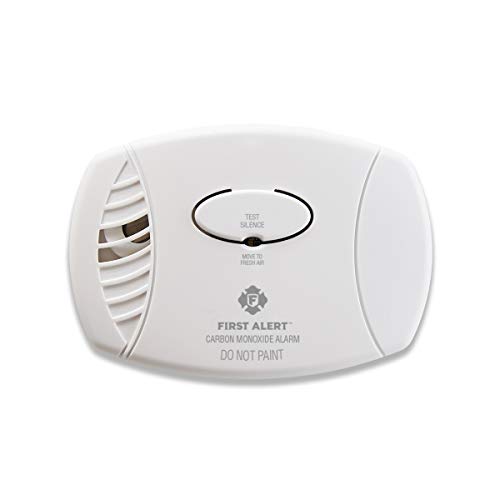
The First Alert CO400 relies on an advanced electrochemical sensor to detect carbon monoxide with accuracy and speed. This battery powered detector provides continuous monitoring, even during power outages, delivering peace of mind in bedrooms, hallways, and living spaces. An audible alarm—typically around 85 decibels—activates when CO levels reach dangerous thresholds. The unit is designed for easy installation on walls or ceilings and features user-friendly battery replacement. Routine testing is straightforward, and the detector’s status indicators help track battery life and sensor health. Regular testing and timely battery changes are essential for maintaining reliable protection in every room where people sleep or spend time.
Kidde Battery Powered CO Detector LEDs
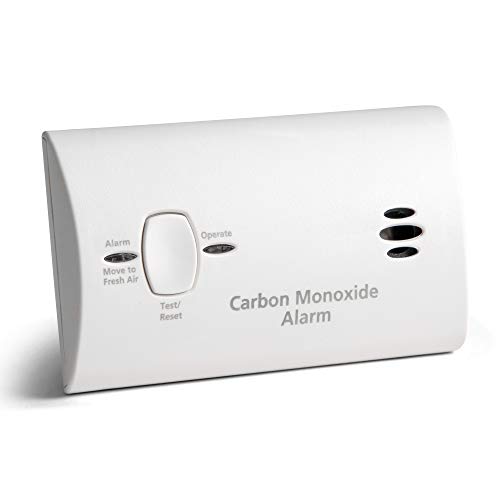
Kidde’s battery powered carbon monoxide detector uses an electrochemical sensor to provide accurate CO detection while operating on two AA batteries. It can be mounted on a wall or placed on a tabletop, offering flexible placement in bedrooms, living rooms, or hallways. A green LED indicates power status, while an 85-decibel alarm and a red LED indicate the presence of CO. The unit is designed to function during power outages and includes a low battery indicator to prompt timely battery replacement. The combination of simple installation and clear indicators makes routine checks straightforward for households seeking dependable CO monitoring.
First Alert CO250 Battery CO Alarm

The BRK CO250 from First Alert uses the highest-quality electrochemical CO sensor technology to deliver reliable detection. It runs on a 9-volt battery and includes two silent features to quiet the alarm and the low-battery chirp when needed. This model is designed for straightforward installation in typical living areas and bedrooms, offering dependable protection without requiring electrical wiring. The device emphasizes clear audible alerts and simple maintenance, making it a practical choice for homes seeking a robust, battery-powered CO detector with straightforward controls and minimal setup.
Fleaks Funly CO Alarm With Display

Fleaks Funly presents a battery operated carbon monoxide detector with a highly sensitive electrochemical sensor for accurate, real-time readings. A prominent 85 dB alarm ensures immediate attention, complemented by a vivid red LED indicator for CO alerts. The device features a 3-digit LCD screen that shows current CO concentration, along with status indicators such as battery level and fault codes. This model’s digital display and alert system help users interpret CO levels quickly, while its battery power provides reliable protection during outages. The unit is well-suited for bedrooms, kitchens, and dens where quick interpretation of readings matters most.
X-Sense 2-in-1 CO & Smoke Detector SC06

The X-Sense SC06 is a 2-in-1 detector that covers both carbon monoxide and smoke detection on a long-lasting power source. It is a battery-operated unit designed for up to 10 years of operation, with a sealed battery that reduces maintenance needs. The SC06 is a basic standalone detector that does not support wireless interconnection, which makes it simple to install and use in single rooms or smaller spaces. For households prioritizing extended battery life and straightforward operation without network setup, this detector offers reliable protection against two critical threats in a single unit. Note that for interconnection capabilities, look for the SC06-W model instead.
Buying Guide
Several factors influence the best choice among battery operated carbon monoxide detectors. This guide highlights key considerations to help you compare models and match them to your home layout and safety priorities.
Battery life and power options
Most battery powered CO detectors use replaceable batteries (often AA or a 9-volt). Some models, like X-Sense SC06, use a sealed, long-life battery designed to last up to 10 years. Consider whether you prefer the simplicity of a sealed long-life battery or the potential cost savings of replaceable batteries. For bedrooms or spaces with odd power flows, a battery-first device reduces the risk of losing protection during outages.
Sensor technology and accuracy
Electrochemical sensors are the standard for reliable CO detection and are present in all reviewed models. A detector’s sensor quality affects how quickly and accurately it detects CO levels, especially at lower ppm ranges. Some units pair electrochemical sensing with digital displays that show current CO concentration, which can help with quick assessments of indoor air quality.
Single-threat vs dual-threat detectors
Decide whether you want a dedicated CO detector or a 2-in-1 device that also detects smoke. 2-in-1 detectors offer convenience and space-saving advantages, but some users prefer separate CO detectors for more precise CO detection and optimized placement in bedrooms or hallways. Evaluate your home layout and the rooms where detectors will be installed to determine the best fit.
Indicators, testing, and maintenance
Look for clear audible alarms (typically 85 dB or higher) and visible LEDs that indicate power and CO presence. A dedicated test button is essential for routine checks. Some models include a low-battery indicator or end-of-life chirp to signal when replacement is needed. Regular testing and timely battery replacement are critical for maintaining reliable protection.
Placement and interconnection
Follow manufacturer guidelines for wall or ceiling placement. CO detectors should be installed on each level of the home, near sleeping areas, and away from cooking appliances that could cause nuisance alarms. If you want networked protection, ensure the model supports interconnection and check compatibility with your home setup. Note that some models, like SC06, are standalone and do not interconnect without a base station or a different model variant.
Certifications and safety standards
Choose detectors that meet recognized safety standards, such as UL 2034 for CO alarms. Certifications help ensure consistent testing and performance across environments. Some models in this list explicitly reference compliance features, which can be an indicator of reliability and long-term usability in American homes.
Maintenance schedule and replacement timelines
Maintain consistent testing intervals, replace batteries promptly, and heed end-of-life alerts. For detectors with long-life batteries, plan for replacement in the recommended time frame to preserve performance. For 2-in-1 detectors, remember to test both CO and smoke functions regularly to ensure comprehensive protection.
Across these options, you’ll find a balance between long-life battery solutions and easier, more frequent battery changes. If you prefer a simple, straightforward setup with clear readings, a model with a digital display and LED indicators can offer quick, at-a-glance assessments. If you maximize protection with minimal maintenance, a 10-year sealed-battery detector provides long-term convenience. In any case, ensure detectors are installed and tested according to local regulations and manufacturer guidelines to maintain household safety.