Best Woodworking Dust Collectors for a Clean, Quiet Shop
A well-designed dust collection system is essential for any woodworking shop. It protects lungs, extends tool life, and keeps finishing areas free of fine sawdust. The best dust collectors for woodworking balance airflow, filtration, and practicality for different workshop sizes. This guide highlights five reliable options that cover wall-mount, cyclone, and canister styles, with capacities from 550 CFM to 1,300 CFM. Use the summary below to compare core specs at a glance, then dive into detailed product sections to find the right match for your shop space and woodworking needs.
| Product | Brand | CFM / Rating | Type | Notable Feature |
|---|---|---|---|---|
| WEN DC1300 1300 CFM | WEN | 1300 CFM | Portable/Cyclone-style (dual inlets) | 50-gallon bag, mobile base |
| Shop Fox W1826 | Shop Fox | 1 HP motor | Wall-mount | 4″ intake, dust window |
| POWERTEC DC5371 | POWERTEC | 560 CFM | Wall-mount | 1 micron bag, compact |
| Bucktool DC30A-1 | Bucktool | 550 CFM | Wall-mount | Remote, 2-micron bag |
| DEWALT DXVCS002 | DEWALT | Separator with 6 gal tank | Cyclone separator | 99.5% debris capture |
WEN DC1300 1300 CFM Dust Collector

The WEN DC1300 delivers up to 1,300 CFM to support multiple tools at once, thanks to dual 4-inch inlets. Its vertical 50-gallon collection bag offers generous dust storage and straightforward disposal, while a mobile base enables flexible placement as your shop layout evolves. This model is well-suited for mid-sized shops that need strong performance without a heavy footprint.
Key considerations include how many machines you plan to run simultaneously and the distance you’ll route ducting. The DC1300’s portable design supports temporary setups and easy relocation, making it a versatile centerpiece for a growing shop. For best results, pair it with proper ducting and ensure your hoses and accessories fit standard 4-inch ports.
Shop Fox W1826 Wall Dust Collector
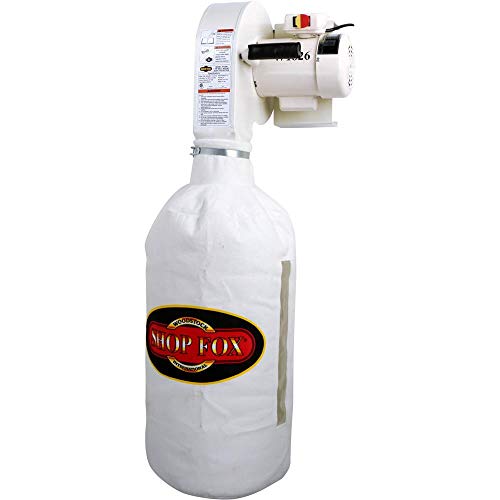
The Shop Fox W1826 uses a 1-horsepower motor and can be configured for 120V or 240V operation, offering flexibility in power supply. It comes prewired at 120V with a 7-amp draw on that setting and 3.5 amps at 240V, making it adaptable to different shop electrical setups. A window allows quick monitoring of dust levels in the bag, and a bottom zipper simplifies disposal. With a single 4-inch intake, it’s ideal for smaller shops needing a space-saving solution that still delivers solid performance.
Operational clarity and ease of use are central to this model—monitors help you avoid bag overfill, while the compact footprint is easier to place near the woodworking stations you use most often. When planning installation, verify your preferred voltage and ensure adequate clearances for safe operation and maintenance access.
POWERTEC 1 HP Wall Mount Dust Collector

The POWERTEC DC5371 offers 1 HP of power with a compact 560 CFM airflow in a wall-mount form factor. It includes a reusable 1-micron dust bag and features a clear window to gauge dust loading, plus a convenient disposal zipper for quick bag changes. This setup suits small to mid-sized shops where a fixed wall installation keeps the floor clear and workflow uncluttered while still delivering reliable dust collection performance.
Key advantages include simple maintenance and a smaller physical footprint compared with freestand units. When integrating into a workshop, consider the location of the 4-inch intake and ensure you have accessible paths for hose routing, as well as a stable mounting surface for long-term use.
BUCKTOOL 1HP Wall-Mount Dust Collector

The Bucktool DC30A-1 brings a 1 HP induction motor to a wall-mount design with a 550 CFM airflow. It includes a remote control for convenient operation and a 2-micron dust bag for capturing finer particles. The fully enclosed motor housing helps reduce noise and protects internal components, making this unit suitable for hobbyists and small shops seeking a quiet, durable dust collection option with easy access to controls.
Consider how the remote control integrates with your workflow—placing the unit where you typically start dust-producing tasks can streamline operations. Additionally, verify bag replacement availability and the ease of bag changes to minimize downtime during projects requiring continuous dust capture.
DEWALT Dust Separator DXVCS002

DEWALT’s dust separator DXVCS002 acts as a cyclone pre-separator that captures about 99.5% of debris before it reaches the shop vacuum. This reduces suction loss and extends the life of your vacuum’s filters and bags. It features a six-gallon poly tank and accepts 1-7/8″ or 2-1/2″ ports, making it compatible with a wide range of vacuums and tools. A stable four-caster base provides mobility around the workshop for easy repositioning.
For users who already own a shop vacuum or want to maximize the life of their vacuum system, a separator like this can offer significant long-term value. It’s particularly effective in mixed-material environments where both wood dust and other debris may pass through the system, helping maintain consistent suction and airflow.
Buying Guide
Key purchase considerations
- Airflow needs (CFM and static pressure): Larger workshops or tools with longer duct runs typically benefit from higher CFM ratings and good duct design.
- System type: Decide between stand-alone dust collectors, wall-mount units, or cyclone/separator configurations based on space and workflow.
- Filtration and bags: Micron ratings (1–2 microns) affect how finely dust is captured and how often bags must be replaced.
- Port size compatibility: Most woodworking tools use 4-inch ports; ensure the collector’s inlet matches your hoses and tool ports.
- Mobility and footprint: Wall-mounts save floor space; portable units offer flexibility in evolving layouts.
- Maintenance and noise: Consider motor type, enclosure design, and ease of bag changes to minimize downtime and noise impact.
What to consider for different workshop sizes
- Small hobby shops: A compact wall-mount or a lightweight portable unit with a 550–700 CFM range can meet basic needs while saving space.
- Medium workshops: Look for 900–1,300 CFM units or dual-inlet configurations to support multiple machines simultaneously.
- Large, professional shops: Invest in high-CFM collectors with robust ducting, cyclone pre-separators, and easy scalability for future tools.
Filtration and maintenance depth
- Bag vs. canister filtration: Bags are common and affordable; canisters with fine micron filtration offer deeper dust capture but may require more maintenance.
- Separation benefits: Cyclones and separators reduce the load on vacuums and improve overall system efficiency by removing debris before reaching the vacuum.
Installation and compatibility notes
- Ensure electrical requirements align with your space’s outlets and circuits (120V vs 240V options).
- Plan hose routing to minimize bends and pressure losses; shorter, straighter runs improve performance.
- Verify ports and adapters are compatible with your existing tools and hoses, typically 4 inches in woodworking setups.
Value and durability considerations
- Durable construction and motor quality affect long-term reliability and maintenance costs.
- Warranty length and availability of replacement bags, filters, and parts influence total cost of ownership.