Best Insulated Leather Work Gloves for Cold Weather
Protective gloves made of leather with built-in insulation are essential for winter tasks on job sites and DIY projects. The following selection highlights five top-rated insulated leather work gloves available on Amazon, balancing warmth, durability, dexterity, and water resistance. Each option uses genuine cowhide or full-grain leather and an insulating lining to keep hands warm without bulk. Read on to compare features and find the best fit for construction, heavy labor, or weatherproof outdoor work.
| Product | Brand | Key Feature |
|---|---|---|
| Wells Lamont 1108L Insulated Leather Gloves | Wells Lamont | 100% grain cowhide; 100-gram Thinsulate; fleece lining |
| Wells Lamont 1080L Insulated Split Cowhide Gloves | Wells Lamont | Split cowhide; abrasion and puncture resistance; insulated |
| DLY Insulated Winter Leather Work Gloves | DLY | Cowhide; Warm Thinsulate lining; water-resistant |
| Toolant Slip-On Insulated Leather Gloves | Toolant | 100% full-grain cowhide; water-resistant; 100g Thinsulate |
| SLARMOR Winter Leather Work Gloves | SLARMOR | Full-grain cowhide; 100g Thinsulate; adjustable wrist |
Wells Lamont 1108L Insulated Leather Gloves

The Wells Lamont 1108L glove blends durable leather with reliable warmth. Crafted from 100% grain cowhide, it delivers strong abrasion and puncture resistance suitable for harsh winter work. The interior features 100-gram 3M Thinsulate insulation paired with a soft fleece lining, providing warmth without adding bulk. An ergonomic Gunn cut design enhances dexterity, keeping fingers agile during grating, fastening, or handling tools. This glove is well-suited for construction, landscaping, and outdoor maintenance where warmth and grip are essential in cold weather.
Size options include Large (1108L), which supports a comfortable, snug fit for dexterous precision. The combination of tough leather and insulated lining means reliable performance in routine winter tasks, though users should note that the gloves may be less waterproof than models with dedicated waterproof membranes. Regular care—conditioning the leather and avoiding prolonged water exposure—helps preserve flexibility and grip over time.
Wells Lamont 1080L Insulated Split Cowhide Gloves

The Wells Lamont 1080L emphasizes abrasion resistance through 100% split cowhide construction. The design targets durability in tough winter conditions, delivering a robust outer layer that withstands rough handling, joist work, or heavy-duty tasks. Although the feature list highlights split cowhide’s resilience, the glove’s insulated nature remains evidenced by its winter-ready branding. This option is well-suited for users prioritizing long glove life and reliable protection during cold-weather projects where leather integrity is key.
From a practical standpoint, expect strong grip and flexibility from the split leather while maintaining warmth from the insulated interior. The glove is designed for daily wear in construction, automotive, and general winter maintenance. As with any leather glove, care involves keeping the material clean and dry, conditioning occasionally to maintain softness and prevent cracking, especially after exposure to moisture or cold temperatures.
DLY Insulated Winter Leather Work Gloves
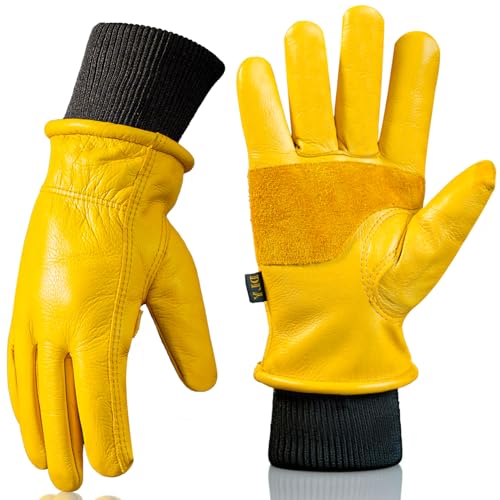
DLY’s insulated leather gloves are built for warmth and weather resistance. They use high-quality cowhide for wear resistance and puncture protection, paired with Warm Thinsulate insulation to keep hands warm without bulk. A waterproof membrane on the surface helps repel moisture, keeping hands dry during wet winter tasks, while the elastic cuff at the wrist ensures a secure fit that minimizes cold air intrusion. These features make the DLY gloves a strong pick for outdoor labor, unpredictable weather, and tasks requiring dry hands and reliable warmth.
The gloves are designed for practical all-day use, with a focus on comfort during long shifts. The combination of insulation and water resistance offers a balanced solution for workers facing cold, damp environments. Potential limitations include the need for occasional drying after wet exposure and proper leather care to maintain flexibility and grip over time.
Toolant Slip-On Insulated Leather Gloves
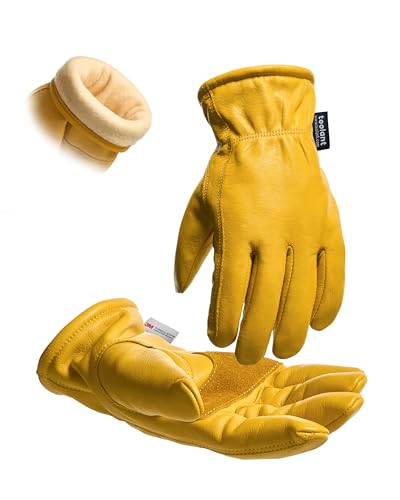
Toolant’s Slip-On gloves blend speed and warmth with a flexible design. They use 100% full-grain cowhide finished with water resistance and a 100-gram Warm Thinsulate lining to trap heat without bulk. A reinforced leather palm patch and a three-layer construction provide enhanced abrasion resistance for demanding tasks while preserving dexterity. The ergonomic keystone thumb and Gunn cut design support natural hand movements, making these gloves suitable for repetitive gripping, tool handling, and assembly work in cold conditions.
The slip-on style offers quick donning and removal, which can be advantageous on busy job sites. They are best used where warmth is needed alongside frequent glove changes or quick access to tools. Regular leather maintenance and proper drying after wet use will help sustain grip and glove longevity over time.
SLARMOR Winter Leather Work Gloves

SLARMOR’s Winter Leather Work Gloves feature 100% full-grain cowhide and a 100-gram Thinsulate lining for warmth without bulk. The reinforced palm patch heightens durability and grip, while the Gunn cut and Keystone Thumb design reduce pressure points and boost comfort during extended wear. An adjustable hook-and-loop wrist closure helps seal out wind and debris, making these gloves a practical choice for outdoor work, construction, and winter maintenance tasks that demand both warmth and reliable grip.
These gloves balance warmth, protection, and dexterity in a relatively lightweight package. Care involves keeping leather clean and conditioning as needed to preserve flexibility. While great for dry and moderately damp conditions, they perform best when kept dry or protected from prolonged water exposure.
Buying Guide
Choosing insulated leather work gloves involves balancing warmth, durability, protection, and fit. The gloves above illustrate different approaches, from full-grain to split leather and a range of insulation levels. The right pair depends on your typical climate, tasks, and how much dexterity you need.
Insulation And Warmth
Warmth is primarily driven by insulation, often 100-gram Thinsulate in winter leather gloves. Heavier insulation adds warmth but can reduce tactile feel and flexibility. For tasks requiring fine grip, gloves with 100g insulation and a supple leather surface, like the SLARMOR line, can offer a favorable balance. For heavy-duty cold-weather work, consider gloves with robust insulation and a snug fit to minimize heat loss through gaps.
Leather Type And Durability
Leather type matters: full-grain cowhide delivers superior abrasion resistance and durability, ideal for heavy use. Split cowhide can offer greater flexibility and cost savings but may wear faster under tough conditions. When selecting, assess the glove’s palm reinforcement and stitching, especially in high-wear areas. Full-grain options typically perform better for long-term protection, while split leather may suffice for lighter or mid-range tasks.
Weather Resistance
A waterproof membrane or water-repellent finish helps keep hands dry in wet conditions. Some gloves provide weatherproofing through treated leather and internal liners, while others rely on outer leather and internal insulation alone. If you expect frequent rain or snow, prioritize gloves with a waterproof or water-resistant surface and a tight cuff to reduce moisture ingress.
Fit, Dexterity, And Cuffs
Fit and dexterity are influenced by cut design and closure. Gunn cut with a Keystone Thumb fosters flexibility and reduces pressure on the palm, improving grip during extended use. Elastic cuffs seal in warmth, while hook-and-loop closures provide adjustable wrists that block wind and debris. Consider your typical tasks: if you need precision control, prioritize gloves with ergonomic cuts and snug cuffs.
Maintenance And Care
Leather gloves require occasional conditioning to preserve suppleness and extend life. After exposure to moisture, air-dry away from heat sources and apply leather conditioner per product guidelines. Insulation performance can degrade with repeated wetting or heavy use, so choose gloves with removable linings or manageable care routines if you operate in progressively damp environments.
Choosing For Your Use Case
Compare your common tasks: heavy demolition or construction with high abrasion demands versus lighter outdoor work with emphasis on warmth and dexterity. If water exposure is frequent, prioritize a waterproof membrane or water-repellent leather. If dexterity is critical, select gloves with a Gunn cut and optimized palm patches. Availability of sizes and color or brand preferences may also guide your final choice.
Quick Comparison
| Product | Leather | Insulation | Water Resistance | Best For |
|---|---|---|---|---|
| Wells Lamont 1108L | Full-grain cowhide | 100g Thinsulate | Fleece-lined with limited waterproofing | Moderate warmth and dexterity |
| Wells Lamont 1080L | Split cowhide | Insulated (title indicates insulation) | Limited membrane noted | Durable winter protection |
| DLY | Cowhide | Warm Thinsulate | Water-resistant membrane | Warmth in wet environments |
| Toolant Slip-On | Full-grain cowhide | 100g Thinsulate | Water-resistant finish | Quick-dit and warmth with durability |
| SLARMOR | Full-grain cowhide | 100g Thinsulate | Adjustable wrist; weather-sealing potential | Warmth, grip, and dexterity |