Best Travel Carbon Monoxide Detectors for Safe Adventures
Carbon monoxide (CO) hazards can appear anywhere, including hotels, cabins, and RVs. For travelers and campers, a portable CO detector provides an essential layer of safety, warning you to dangerous gas levels even when you’re away from home. The following five detectors are designed for travel and portable use, combining battery power, compact size, and user-friendly alerts. Each option below prioritizes reliability, quick alerts, and easy setup so you can focus on your trip. Use this guide to compare key features and choose a detector that fits your itinerary and accommodation style.
Quick product overview
| Product | Type | Best For |
|---|---|---|
| X-Sense XC0C-SR Portable CO Detector | Battery-powered, replaceable AA batteries | Travelers who want a compact, multi-surface placement option |
| GasDoc DS-399 Portable CO Detector | Rechargeable, handheld | Long trips and outdoor stays where charging is feasible |
| PRIMBARBER Travel 3-in-1 CO Monitor | Portable, 3-in-1 (CO + temperature + humidity) | Versatile environments like tents, RVs, and hotel rooms |
| Seektain Travel Plug-in CO Monitor | Plug-in, 4-in-1 (CO + temperature + humidity + gas) | RV and hotel setups with access to a power outlet |
| WESHLGD KH106 3-in-1 CO Detector | Plug-in, 3-in-1 (CO + temperature + humidity) | Compact travel setups requiring wall-mounted or plug-in use |
X-Sense XC0C-SR Portable CO Detector

The X-Sense XC0C-SR is a compact, battery-powered CO detector designed for travelers. Its key feature is a long sensor life with replaceable AA batteries. The device is small enough to slip into a bag or suitcase, making it ideal for hotel rooms, rental cabins, and tents. Users can place it on a desk, shelf, or bedside table, and the product includes wall-mount screws for flexible installation. The model emphasizes reliability with a 10-year sensor lifespan, paired with AA batteries that can last several years under typical use. The result is a travel companion that won’t tether you to a single location or require complicated wiring.
From a safety perspective, the XC0C-SR emphasizes portability and simplicity. While some travelers may prefer a display to monitor current CO levels, this model focuses on dependable alarm performance and a compact footprint. The device supports quick setup and does not require professional installation, which is especially beneficial when staying in unfamiliar accommodations. If you value a lightweight, easy-to-pack detector with multi-surface placement options and long-term sensor durability, this model aligns well with demanding travel schedules.
GasDoc DS-399 Carbon Monoxide Detector

The GasDoc DS-399 is a compact, rechargeable CO detector designed for travel and outdoor use. It offers 0–1000 PPM CO detection with the option to set custom alarm thresholds for earlier warnings, which can be crucial when in unfamiliar environments. The device also tracks ambient temperature and humidity to provide context for CO readings, helping travelers assess air quality in different locations. A built-in 1000 mAh battery supports up to 168 hours of continuous operation on a full charge, making it a strong choice for longer trips where power access may be limited. Its handheld form factor enhances portability for camping, hiking, and road trips.
In terms of usability, the DS-399 emphasizes quick hand-use and straightforward charging via Type-C. The combination of a robust CO range, environmental data, and long battery life suits travelers who need dependable protection without frequent battery changes. While it may require charging between uses, the rechargeable design reduces ongoing costs and waste compared with disposable batteries. This model is a practical option for those who want a travel-focused detector with extended runtime and real-time environmental context.
PRIMBARBER Travel 3-in-1 CO Detector

The PRIMBARBER 3-in-1 portable detector is built for travelers who want more data at a glance. It combines CO monitoring with temperature and humidity sensing and uses a 43-hole design to enhance detection accuracy. The device displays readings on a compact display and uses a 0–500 PPM CO range, with a one-second refresh rate to keep information current. The 3-in-1 approach helps travelers monitor air quality in varied environments—hotels, tents, and RVs—where weather and ventilation can influence CO levels. The unit is palm-sized and can be carried easily in luggage or attached to a bag with a lanyard or clip, making it well-suited to on-the-go safety monitoring.
Key strengths include rapid response, real-time environmental readings, and straightforward operation. The product supports simple setup and usage without complex configuration, aligning with travelers who need dependable, fast alerts in dynamic travel environments. As a cautionary note, users should verify battery availability and ensure the device is regular tested to maximize reliability during trips.
Seektain Travel CO Detector Plug In
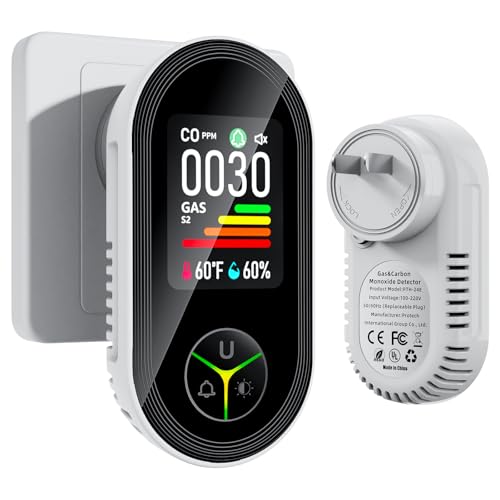
The Seektain plug-in CO detector is designed for travelers who have ready access to a power outlet, such as hotel rooms, RVs with shore power, or rental accommodations. This 4-in-1 device provides CO monitoring along with temperature, humidity, and natural gas (gas detection) readings. It’s a plug-in unit that presents readings on a digital display and triggers an audible alarm when CO rises above 150 PPM or when natural gas hits its 15% LEL threshold. The plug-in form factor reduces the need for replacement batteries, though it does require a powered outlet to function. This model is especially advantageous for travelers who regularly stay in one place for several days and want continuous monitoring without swapping batteries.
In practice, the Seektain detector combines broad functionality with a straightforward plug-in experience. It’s suitable for hotel rooms, camper setups with electrical access, and small living spaces where multiple environmental factors matter. While not as portable as battery-powered units, its comprehensive sensing helps travelers keep a closer eye on overall air quality in new environments.
WESHLGD KH106 3-in-1 CO Detector

WESHLGD KH106 offers a compact 3-in-1 solution for travel and camping. It combines CO detection with temperature and humidity sensing in a plug-in wall-mountable form. The device uses an imported electrochemical sensor for reliable CO readings, with audible and visual alarms that activate when CO levels rise past a safe threshold. The plug-and-play design makes it suitable for quick setup in hotel rooms, cabins, or RVs where wall outlets are accessible. The compact form factor is ideal for travelers who want ongoing, passive monitoring without frequent battery changes, while retaining a simple user experience.
From a safety perspective, the KH106 emphasizes dependable sensor technology and a straightforward alarm system. Its 0–1000 PPM CO range is robust for portable monitoring, though travelers should verify outlet availability and consider how a plug-in solution fits their typical travel accommodations. For those who prefer a compact, multi-parameter detector that doesn’t rely on battery changes, this model offers a reliable option for on-the-road monitoring.
Buying Guide: Key Considerations for Travel CO Detectors
When choosing a travel CO detector, consider how you’ll use it on the road, in hotels, or in camping setups. The most important factors are power source, sensing technology, alarm features, and ease of use. Below are the major dimensions travelers should weigh when selecting a model:
- Power source and runtime: Battery-powered detectors offer portability and independence from outlets, which is ideal for tents and remote locations. Plug-in models work well where power is readily available, such as hotel rooms and RVs with shore power. Some devices include rechargeable batteries for longer trips but may require charging between uses.
- Sensor type and lifespan: Most travel CO detectors use electrochemical sensors for accuracy and stability. Look for models with long sensor lifespans or replaceable batteries to minimize ongoing maintenance. A detector labeled with a multi-year sensor life helps reduce replacement frequency on extended trips.
- CO detection range and response time: A typical CO range extends to 1000 PPM, with fast response times (often within seconds). For travel, quick alerts are crucial in unfamiliar spaces where ventilation may be unpredictable.
- Multi-parameter sensing: Some models add temperature and humidity measurements, and even gas detection in 4-in-1 units. These features provide additional context for air quality and can be helpful in tents, cabins, and RVs where environmental conditions vary.
- Display and alerts: An easy-to-read display helps you monitor ambient conditions, while loud alarms (often 85 dB or higher) and visual indicators quickly warn occupants. Consider whether the device includes peak values, memory functions, or alerts that persist after CO levels drop.
- Portability and mounting options: For travelers, compact size and light weight matter. Wall-mount options, desk placement, and clip-on hooks enhance placement flexibility in different spaces.
- Durability and certifications: Look for devices with robust enclosures that withstand travel wear and tear. While certifications differ by region, a reliable detector should meet basic safety standards and have consistent performance in varied environments.
- Ease of use and maintenance: A detector that is easy to set up, calibrate, and replace batteries will be more reliable during trips. Some models offer simple one-button testing and battery replacement without tools.
- Price and value: While prices vary, prioritize models with longer lifespan, reputable sensor technology, and travel-friendly features. A well-chosen detector reduces risk and offers greater peace of mind on the road.
For travelers, the best approach is to balance portability with reliable sensing and straightforward operation. Battery-powered devices excel when you’ll be away from outlets, while plug-in detectors offer continuous monitoring where power is available. If you frequently sleep in unfamiliar spaces, a detector with a loud alarm and clear visual indicators adds an extra layer of safety. Finally, consider whether you prefer a single-purpose CO monitor or a 3-in-1 or 4-in-1 device that also provides temperature and humidity readings to help interpret CO data in different environments.