Best Blades and Tools for Cutting Cast Iron Pipe
Cutting cast iron pipe requires the right blade or cutter designed to handle abrasive metal without dulling quickly. This guide highlights five top picks that cover a range of cutting approaches—from diamond grit blades to dedicated pipe cutters and cut-off wheels—so you can choose the option that best fits your project, whether you’re trimming small-diameter run lines or tackling larger sewer pipes. Each product below is optimized for cast iron, with notes on durability, speed, and practical use in tight spaces or challenging environments.
| Product | Brand | Type | Notable Benefit |
|---|---|---|---|
| Diablo DS0930DGX | Diablo | Diamond Grit Recip Saw Blade | Up to 6X life vs standard blades |
| BOSCH RCB9DG | Bosch | Diamond-Grit Edge Blade | Faster cuts with longer life |
| ANTENGDATOOL 4-1/2″ | ANTENGDATOOL | Diamond Cut Off Wheel | 30X longer life, high durability |
| Steel Dragon Tools H4 74227 | Steel Dragon Tools | Hinged Pipe Cutter | Cuts cast iron and ductile iron with a full-closed frame |
| RIDGID 42878 | RIDGID | Powered Soil Pipe Cutter | Dual-powered; handles up to 8″ pipe with impact driver |
Diablo 9 Inch Diamond Grit Reciprocating Blade

The Diablo DS0930DGX is built with a diamond grit edge designed for tough materials, including cast iron. The blade’s reinforced body helps resist heat buildup and warping during heavy cuts, making it suitable for sewer line work and other cast iron applications. A thin kerf design reduces material removal time, increasing efficiency in the field. This blade excels when used with compatible reciprocating saws, delivering consistent performance in abrasive metals where quick, clean cuts matter.
Key features include a diamond grit edge that can extend blade life up to six times longer than standard blades, a thin kerf for faster progression, and a reinforced body that stands up to repeated, aggressive cuts. For professionals or seasoned DIYers facing cast iron, this blade balances longevity with cutting speed.
Bosch 9 Inch Diamond-Grit Edge Recip Saw Blade

Bosch’s RCB9DG blade uses a vacuum-brazed diamond grit edge optimized for cutting cast iron, masonry, and other abrasive materials. The design aims to deliver faster, more controlled cuts with improved longevity compared to carbide blades. In challenging installations—such as basement or utility runs where cast iron is common—this blade can maintain performance under heat buildup and dust common to metal cutting tasks.
Associated benefits include up to three times longer life than carbide grit blades and a grit chemistry tailored for heavy-duty metal and masonry work. The blade’s rigidity and edge durability help maintain accuracy through tough cuts, making it a reliable choice for professional plumbers and pipe-fitters dealing with iron pipe.
ANTENGDATOOL 4-1/2 Inch Diamond Cut Off Wheel

The ANTENGDATOOL cut off wheel is built for metal cutting with a diamond coating. Vacuum brazed diamond technology provides significantly longer life—claimed to be 30 times longer than standard bonded wheels—allowing 1000 or more cuts before wheel replacement. The wheel’s solid steel body reduces breakage risk, improving safety and uptime when cutting through cast iron pipes in garages or crawlspaces.
With a 7/8 inch arbor, this wheel is suitable for many angle grinders and cut-off tools, enabling rapid material removal while preserving the pipe’s inner diameter. The combination of durability and broad compatibility makes it a practical option for professionals performing frequent cast iron severing tasks.
Steel Dragon Tools H4 Hinged Pipe Cutter

The Steel Dragon Tools H4 Hinged Pipe Cutter is designed for cast iron and ductile iron piping, featuring a full-closed frame that supports stable cutting with reduced effort. The 2″ to 4″ capacity makes it ideal for residential or small commercial runs. This cutter relies on compatible cutter wheels (H4 wheels) to deliver clean, consistent cuts with less chance of deforming the pipe’s outer diameter during touchy cuts.
Key benefits include a robust frame for durability in tough materials, compatibility with H4I 03122 cutter wheels, and a focus on efficiency. This tool is well-suited for technicians who need a reliable manual option for precise pipe work where space is limited or overhead access is constrained.
RIDGID 238-P Powered Soil Pipe Cutter
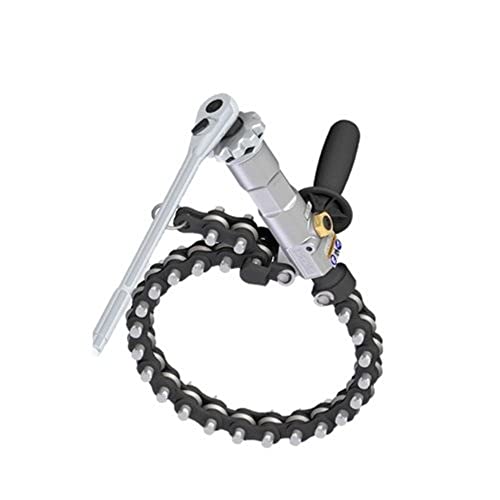
The RIDGID 238-P is a dual-powered soil pipe cutter designed for versatility in challenging installation environments. It can cut up to 8-inch pipe when used with an impact driver (minimum 200 ft-lbs) or 4-inch pipe manually with the included ratchet. Its compact, lightweight design helps it fit into tight overhead spaces or below-grade work areas, and it can be mounted in difficult locations where manual cutting would be impractical.
In practice, the tool provides flexibility for crews working on older homes or tight utility trenches, enabling faster progress on pipe removal and replacement tasks. The ability to choose between power-assisted and manual cutting supports a range of job-site scenarios while maintaining control and precision in cast iron piping projects.
Buying Guide
Choosing the right blade or cutter for cast iron pipe depends on pipe size, environment, and tool compatibility. Diamond grit blades and diamond cut-off wheels generally offer longer life and greater durability on abrasive metals like cast iron, but require compatible tools and safe operation. Pipe cutters provide clean, controlled cuts with less heat generation, especially when working with larger diameters or in cramped spaces. Below are key considerations to help you decide which option fits your project best.
- Pipe size and material: Larger pipes or thicker cast iron require more robust blades or a powered cutter. Confirm the maximum capacity of cutters and the intended pipe type (cast iron vs ductile iron).
- Tool compatibility: Reciprocating saw blades require a compatible saw; cut-off wheels fit angle grinders or dedicated cutting tools. Ensure arbor size and shank compatibility before purchasing.
- Cut quality and speed: Diamond grit blades and diamond cut-off wheels tend to deliver faster cuts with longer life on abrasive metals, but can be more expensive upfront. Manual pipe cutters offer precise, clean cuts with less heat in sensitive installations.
- Durability and safety: Diamond tools are engineered to resist heat buildup and edge wear; ensure you wear PPE such as eye protection and gloves, and secure the pipe to prevent slipping during cutting.
- Maintenance and replacement costs: Diamond blades and wheels require occasional replacement; consider available replacements and warranty terms for long-term projects.
- Environment and access: Overhead cutting or below-grade tasks may favor compact, lighter tools or pipe cutters with a narrow profile to navigate tight spaces.
- Cost versus performance: While diamond blades offer longevity, their cost might be higher. For intermittent use, a high-quality cut-off wheel paired with a grinder may be more economical.
- Brand reliability and compatibility: Established brands provide known performance, replacement parts, and customer support. Review compatibility with your existing tools before buying.
In summary, for frequent, heavy-duty cast iron cutting, a powered pipe cutter or diamond blade combination often yields the best balance of speed and durability. For precise, smaller cuts or tight spaces, a high-quality cut-off wheel or specialty pipe cutter may be more practical. Assess your project scope, tool access, and safety considerations to select the best option for your task.