Best Right Angle Die Grinders for Precision Metalworking
Right-angle die grinders excel at reaching tight spots and reshaping metal with speed and control. This guide highlights five top options from reputable brands, chosen for balance, durability, and practical features. Whether you need light handheld work, heavy deburring, or precision polishing, these tools cover pneumatic and cordless choices to fit different setups. Below you’ll find a quick product overview, followed by in-depth sections for each grinder and a buying guide to help you compare power, ergonomics, accessories, and maintenance.
| Product | Brand | Main Feature |
|---|---|---|
| Ingersoll Rand 301B | Ingersoll Rand | Lightweight, 21,000 RPM, 0.25 HP |
| Ingersoll Rand 3101G | Ingersoll Rand | 20,000 RPM, 1/3 HP, Ergonomic |
| SHALL Right Angle Grinder Kit | SHALL | Complete kit, 1/4″ & 1/8″ collets |
| Milwaukee M12 FUEL Right Angle Grinder | Milwaukee | 0.3 HP, 3-mode RPM Control |
| VEVOR Air Die Grinder | VEVOR | 20,000 RPM, Ball-bearing, 24 discs |
Ingersoll Rand 301B Right Angle Die Grinder

The Ingersoll Rand 301B is a compact air-powered grinder designed for tight spaces. Weighing about 1.02 lbs, it pairs a 0.25 HP motor with a 1/4-inch collet and delivers up to 21,000 RPM. Its ball-bearing construction helps balance the tool and reduce vibration during extended use, while the aluminum housing keeps the unit light yet durable. A self-locking throttle enhances safety, making it a reliable option for overhead tasks and precision deburring in automotive and metalworking projects.
With a focus on control in awkward positions, the 301B offers rapid material removal without the bulk of larger electric models. The combination of high RPM and nimble weight makes it suitable for smoothing welds, grinding small contours, and cleaning tight edges on sheet metal and components. When paired with a proper air supply and fittings, this grinder can perform consistently in professional settings and DIY shops alike, especially where access is constrained by space.
Ingersoll Rand 3101G Right-Angle Die Grinder

The Ingersoll Rand 3101G Edge Series is built for durability and extended use. It runs a 1/3 HP motor at up to 20,000 RPM and uses a 1/4-inch collet, making it compatible with common accessory sizes. A rear exhaust design helps direct spent air away from the work area, while rugged ball bearings and a compact, lightweight profile (about 1.3 lbs) minimize fatigue during long sessions. An ergonomic grip reduces vibration and enhances comfort when grinding in confined spaces.
Designed for access where straight grinders struggle, the 3101G’s angled head improves reach around weld seams and inside corners. The tool’s balance, combined with a safe, self-locking throttle, supports precise material removal and deburring tasks on automotive parts, machinery components, and metal fabrications. The model suits professionals who require reliable performance without sacrificing maneuverability in tight work envelopes.
SHALL Right Angle Die Grinder Kit

SHALL’s Right Angle Die Grinder Kit provides a complete, ready-to-use grinding package. The pneumatic grinder reaches 20,000 RPM and ships with two collets (1/4″ and 1/8″), plus 24 sanding discs, a base, air connector, lubricant, and chuck keys. Operating at 90 psi with an air consumption around 113 l/min, it’s designed for versatile metal finishing, deburring, and rust removal. The kit’s 1/4″ and 1/8″ clamping capacity and 3/8″ hose compatibility expand its range of compatible accessories and projects.
This kit is well-suited for hobbyists and professionals who want immediate capability straight out of the box. The broad assortment of discs and lubricants reduces the need for additional purchases, while the dual-collet system accommodates various accessory sizes. For tasks that demand reach and precision in tight spaces, the SHALL grinder offers a practical, feature-rich carrying solution that balances ease of use with reliable performance.
Milwaukee M12 FUEL Right Angle Grinder
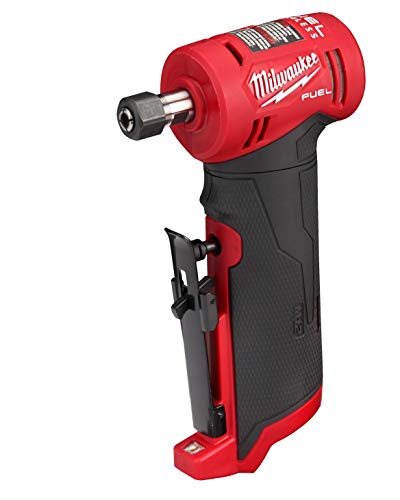
The Milwaukee M12 FUEL Right Angle Grinder delivers cordless convenience with a 0.3 HP motor output and POWERSTATE brushless technology for power, runtime, and longevity. It offers three-mode RPM control, enabling users to tailor speed to the application and material. Being a tool-only solution, it relies on Milwaukee’s M12 battery ecosystem, which provides flexibility for mobile work sites and garages without constant access to outlets.
With a compact footprint and compatible 1/4″ accessories, this grinder is suitable for grinding, shaping, deburring, and edge work in tight areas where cords would be cumbersome. Operators should consider battery life and charge management during longer tasks, but the cordless format can significantly improve workflow in crowded shops or field settings where power outlets are scarce.
Milwaukee M12 FUEL 1/4″ Right Angle Die Grinder Tool

This Milwaukee M12 FUEL variant emphasizes brushless power and compact design for tight spots. It includes POWERSTATE Brushless Motor Technology to deliver sustained performance, plus a shadowless LED work light and a spindle lock for easy accessory changes with one wrench. The tool’s 1/4″ collet matches common accessories, enabling efficient grinding, deburring, and polishing across metal and composite materials.
As a cordless option, it pairs well with the M12 battery system for on-demand power in mobile or cluttered work environments. Users should evaluate battery type and capacity to maintain consistent RPM during higher-load tasks, but the combination of portability and robust motor design makes this grinder a strong choice for in-shop and on-site projects requiring agile access.
VEVOR 1/4 Inch Right Angle Die Grinder

VEVOR’s air die grinder combines 20,000 RPM performance with a robust ball-bearing construction and an aluminum housing for durability. The 1/4″ high-precision collet accepts standard accessories, and the kit includes 24 sanding discs, making it a versatile option for grinding, polishing, deburring, and rust removal. Operating at 90 PSI with a 3.5 CFM air flow, it pairs with typical shop compressors for reliable, steady power across a wide range of tasks.
Designed for automotive work, metal fabrication, and woodworking projects, this grinder emphasizes value and adaptability. The durable build and accessory assortment support a broad spectrum of tasks, from shaping welds to finishing edges. As with other pneumatic grinders, maintaining a stable air supply and proper lubrication will help maximize longevity and performance over time.
Buying Guide
Power Source And Performance
- Pneumatic grinders run on compressed air, offering light weight, instant on/off, and high RPMs without electrical cords. They excel in workshop setups with robust compressors but require a dedicated air supply and regular lubrication.
- Cordless grinders rely on batteries for mobility. They provide excellent reach in crowded spaces and on-site work, but run-time depends on battery capacity and charging cycles. Look for models with efficient motors and multiple RPM modes for versatility.
Speed, Torque, And Control
- RPM ranges around 20,000–21,000 are common for metal finishing tasks; higher RPMs remove material faster but can increase heat and chatter. Consider a unit with variable or multi-mode RPM control to adapt to different materials and disc types.
- Torque balance is important—heavier models with robust housings resist vibration and fatigue during long sessions. Ball-bearing constructions generally improve balance and longevity.
Ergonomics, Weight, And Handling
- Weight and balance influence comfort, especially for overhead or long-duration work. Lighter tools with ergonomic grips reduce operator fatigue and improve control in tight spaces.
- Rear exhaust, guard design, and operator visibility can affect dust management and precision. Test grip and noise levels when possible to ensure suitability for your typical workflow.
Collets, Accessories, And Compatibility
- Many right-angle grinders use 1/4″ collets, but some kits include 1/8″ as well. Check compatibility with common sanding discs, grinding wheels, and polishing accessories you already own.
- Consider whether a kit includes discs, lubricants, chuck keys, and spare collets. A comprehensive package reduces additional purchases and accelerates project timelines.
Air And Maintenance Requirements
- Pneumatic tools require a reliable air compressor with adequate CFM at the operating PSI. Regular lubrication helps prevent gear wear and prolongs life.
- Cordless tools necessitate battery care, including proper charging, storage, and compatible accessories. Periodic maintenance and cleaning extend motor life and performance.
Budget And Value
- Consider total cost of ownership, including spare parts, accessories, and replacement bits. Bundled kits often provide better value for beginners or those building a new workshop footprint.
- Durability and warranty coverage vary by brand. Prioritize tools with proven reliability and accessible service options for ongoing use in professional settings.
Quick Comparison At A Glance
| Product | Power Source | Max RPM | Weight | |
|---|---|---|---|---|
| Ingersoll Rand 301B | Pneumatic | 21,000 | 1.02 lbs | Lightweight with safety throttle |
| Ingersoll Rand 3101G | Pneumatic | 20,000 | 1.3 lbs | Ergonomic grip, rear exhaust |
| SHALL Kit | Pneumatic | 20,000 | Variable | Complete kit with two collets and 24 discs |
| Milwaukee M12 FUEL | Cordless | Variable (3-mode) | Tool-only (battery required) | POWERSTATE brushless motor |
| VEVOR 1/4″ Grinder | Pneumatic | 20,000 | Variable | Aluminum housing; 24 discs included |