Best Window Film to Block Sun Heat for a Cooler Home
Window films that block sun heat can dramatically reduce indoor temperatures, protect furnishings from UV fading, and improve daily comfort. The right film balances heat rejection with light transmission, privacy, and easy installation. This guide highlights five top options designed to block infrared heat and UV rays, helping you choose a solution that fits your home, window type, and lifestyle. Each pick is evaluated for energy savings, glare reduction, and long-term durability to help you make an informed decision.
| Product | Brand | UV Blocking | IR Blocking | Privacy Type |
|---|---|---|---|---|
| Coavas Heat Blocking Window Film | Coavas | 95% | 85% | One-way privacy with daytime mirror |
| Coavas Daytime Mirror Privacy Film | Coavas | 88% | 90% | Daytime privacy with reflective exterior |
| Savvy Choice Anti-Glare Window Film | Savvy Choice | 93% | 85% | Daytime one-way privacy |
| Haton One Way Privacy Window Film | Haton | 90% | 85% | Static cling, see-out not in |
| rabbitgoo Blackout Window Film | rabbitgoo | 100% | Not specified | Full blackout |
Note: The table above consolidates the films’ reported UV and IR blocking capabilities and privacy approaches. Actual performance can vary with window type, orientation, and installation quality. If you want maximum daytime privacy with notable heat reduction, reflective films are a strong option. For complete darkness and sleep-related needs, blackout films deliver the strongest light blocking while still offering easy DIY installation.
Coavas Heat Blocking Window Film

Coavas’ heat-blocking film applies a reflective surface that rejects up to 85% of infrared rays, stabilizing indoor temperatures and easing air-conditioning load. It offers strong UV protection, blocking around 95% of UV rays to preserve furnishings and reduce glare. The film enables daytime privacy through its mirror-like exterior while still allowing visible light to filter in. Dimensions are generous for large panes (17.7 by 78.7 inches), making it suitable for sliding doors, office windows, and bathroom doors. Installation is straightforward, with a focus on a clean glass surface and careful alignment.
Energy savings claims indicate HVAC workload reductions of up to about 30%, depending on climate and window exposure. The film’s heat rejection can help maintain comfortable indoor temperatures, especially during peak sun hours. It is marketed as a static cling option in some configurations, simplifying removal or repositioning without adhesive residue. For households seeking improved privacy during the day without sacrificing natural light, this option provides a balanced approach to heat control and glare reduction.
Coavas Daytime Mirror Privacy Window Film

This Coavas film emphasizes daytime privacy with a reflective mirror effect that hides interiors when daylight is strong outside. The company notes 85–95% privacy during daylight hours, which can be a significant privacy upgrade for street-facing rooms. At night or on overcast days, the mirror effect can diminish, allowing visibility from inside to outside; closing curtains is advised then for privacy. The film uses durable PET material with a protective backing offering enhanced impact resistance, described as five times tougher than standard PVC films. UV blocking and heat control are also claimed, delivering cooler interiors and reduced sun damage.
-installation notes: two-person handling may help prevent misalignment or bubbles during application. The product blocks a high portion of UV rays (approximately 88%) and infrared radiation (about 90%), contributing to interior protection and energy savings. The result is a balanced option for homeowners who want daytime privacy with a reflective look and reliable UV/heat mitigation, while still enabling natural daylight when interior lighting is on and outside visibility is reduced.
Savvy Choice Anti-Glare Privacy Film
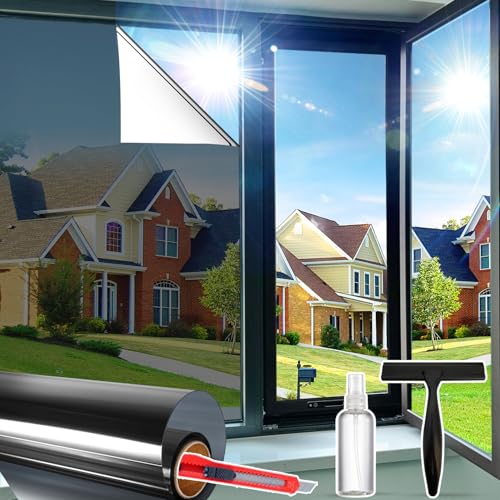
Savvy Choice markets a daytime one-way privacy feature with a reflective look that helps keep interiors private when outside lighting is brighter. The film blocks about 93% of UV rays and around 85% of infrared radiation, which helps protect furnishings from fading and reduces heat ingress. It aims to balance natural light with sun control to keep rooms comfortable while maintaining visibility from inside. The packaging and tube Tools are included to assist installation, reflecting a user-friendly DIY approach. Removal is straightforward, making it suitable for renters or spaces needing temporary privacy or seasonal changes.
This option emphasizes energy savings by improving insulation and enabling quicker achievement of comfortable temperatures, particularly in sun-exposed rooms. The one-way privacy works best during the day when exterior brightness is higher, with diminishing mirror effects at night. Room glare is reduced, which can be beneficial for screens and reading areas. For buyers who want daytime privacy without heavy darkness or a full blackout, Savvy Choice offers a strong compromise with credible UV and heat-blocking performance.
Haton One Way Privacy Window Film

Haton’s one-way privacy film uses a reflective mirror effect to reduce visibility from outside during daylight hours, promoting interior privacy without heavy blinds or curtains. The film blocks up to 90% of UV rays and about 85% of infrared radiation, contributing to skin protection and interior preservation. It is designed as a static cling product, meaning no glue is involved, which simplifies installation and removal. The product is marketed for use on doors and windows, including glass surfaces in homes and offices. It provides a balance of heat reduction and daylight visibility, suitable for areas where privacy is important but light transmission should remain open.
Durability and reuse are highlighted by its adhesive-free design and simple application with water. When interior lighting is strong, the film offers clear privacy from outside; at night, interior lighting can reveal interior spaces unless curtains are drawn. This makes it a versatile choice for shared living spaces, offices, or rooms with high sun exposure where privacy is needed mainly during daylight hours.
rabbitgoo Blackout Window Film
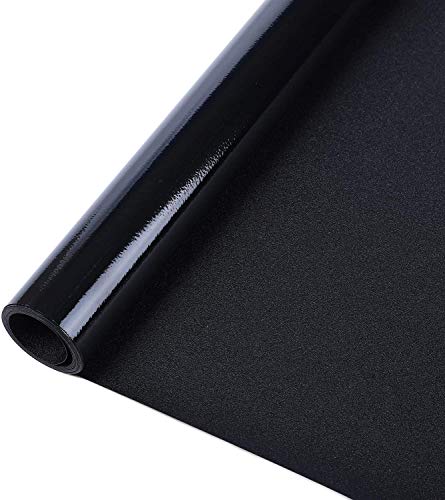
rabbitgoo’s blackout film is designed for complete light blockage, making it ideal for shift workers, nurseries, or rooms where daytime sleep is essential. The film blocks 100% of UV rays, protecting furnishings and skin from sun damage and reducing fading. It emphasizes privacy with a high-quality blackout appearance that minimizes outside visibility. The installation uses a static cling method, avoiding sticky residues and adhesives. This option is best for rooms where total darkness is a priority and where a strong interior privacy solution is needed regardless of the time of day.
While blackout materials inherently reduce natural light, they are effective for creating deeper room temperatures control by significantly limiting solar gain. The film is reusable and easy to remove, which can be advantageous for renters or temporary setups. Care should be taken with double-pane or certain window configurations; some users report cracking risks on older or unusual pane constructions, so test a small area first and follow window manufacturer guidelines for best results.
Buying Guide: Key Considerations For Selecting Window Film To Block Sun Heat
When choosing a window film to block sun heat, consider how you balance privacy, daylight, and energy savings. Here are the main dimensions to guide your decision:
- Heat and UV blocking: Uva/IR performance directly affects interior comfort. Films offering high infrared (IR) rejection and UV blocking protect furnishings and reduce cooling loads. If you live in a hot climate with intense sun, prioritize films with IR and UV percentages in the upper ranges.
- Privacy needs: Reflective daytime privacy offers visibility control without sacrificing natural light, while blackout films maximize darkness. Decide whether you need day-only privacy or around-the-clock privacy, and whether glare reduction matters for TVs and computer screens.
- Light transmission and aesthetics: Visible light transmission (VLT) affects room brightness and color perception. Higher VLT means more natural light, while lower VLT yields darker rooms. Choose a finish (mirror, matte, or blackout) that complements your décor.
- Installation type: Adhesive-backed films can be more permanent and durable, but require cleaner surfaces and more effort to remove. Static cling options are easier to install and remove but may be less durable in humid or dusty environments. Follow product-specific guidelines for best results.
- Window type compatibility: Some films perform best on single-pane windows, others on double- or triple-pane glass. Check for edge conditions, safety ratings, and any cautions about applying to double-pane or risk of cracking in extreme temperature variations.
- Durability and reuse: PET-based films and explosion-proof or impact-resistant variants offer stronger protection and longer service life. Consider whether you want a film you can reposition seasonally or reuse across different rooms.
- Installation tools and guidance: Some films come with tools or templates to simplify alignment and trimming. Adequate preparation—clean surfaces, dry conditions, and careful measurement—yields the best results and reduces air bubbles.
- Size and cut-to-fit options: Ensure you have the right dimensions or can trim to fit your windows. Larger panes may require multiple strips or careful seam management to maintain a uniform look.
In practice, a day-to-day solution might involve a reflective film for daytime privacy and heat control, paired with lightweight curtains to modulate brightness after sunset. For bedrooms or media rooms where darkness is essential, a blackout option provides stronger temperature control and sleep quality, while still allowing removal if you relocate. Always start with a test area on a small, unobtrusive pane to verify adhesion, appearance, and privacy levels before applying to larger windows.