Best Belt Sanders for Woodworking: Top Picks for Every Shop
Choosing the right belt sander can dramatically improve finish quality and project speed for woodworking. This guide highlights five top options that balance power, control, and durability, based on common workshop needs—from hobbyist benches to more demanding carpentry tasks. Each entry includes key features to help you compare performance, dust management, belt life, and versatility.
| Product | Brand | Key Strength | Power |
|---|---|---|---|
| WEN 6502T | WEN | Two-in-one belt and disc; solid cast iron base | 4×36 in belt / 6 in disc |
| SKIL 7510-01 | Skil | Pressure control; dust filtration | 6 A |
| Makita 9403 | Makita | Low noise; robust dust protection | 4×24 in |
| Metabo HPT SB8V2 | Metabo HPT | High torque; variable speed | 3×21 in |
| DEWALT DCW220B | DEWALT | Cordless convenience; strong dust handling | Brushless motor |
This article covers five models that consistently perform well in real-world shop environments. Each entry provides a concise overview of what makes the sander suitable for woodworking—whether you prioritize belt life, dust control, or versatility across different projects. Note that prices are not included, and product links point to official listings for convenience and accurate specifications.
WEN Benchtop Belt And Disc Sander: 6502T Overview
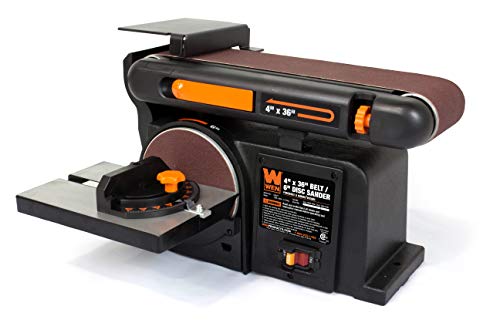
The WEN 6502T combines a 4-by-36 inch belt with a 6-by-6 inch disc in a sturdy cast-iron base. The belt tilts from 0 to 90 degrees, enabling precise work on bevels and edge contours. This two-in-one configuration makes it a compact option for smaller shops that want a single machine for both material shaping and surface finish. The cast-iron base helps dampen vibration, which improves control during high-pressure sanding. Belt tracking is straightforward, and the unit supports a range of belt grits for different tasks.
SKIL 6 Amp 3×18 Belt Sander: Precision And Dust Control

The SKIL 7510-01 delivers 6.0 A of power for fast material removal on wood surfaces. A notable feature is pressure control technology that warns when excessive pressure is applied, helping maintain a consistent finish and preventing gouges. The sander also includes micro-filtration to capture fine dust, which aids in cleaner work environments and reduces airborne particles. The compact form and built-in dust filtration make it a practical choice for users prioritizing dust management as part of a comprehensive sanding workflow.
Jellas 3×21-Inch Belt Sander: Versatile 2-in-1 Tool
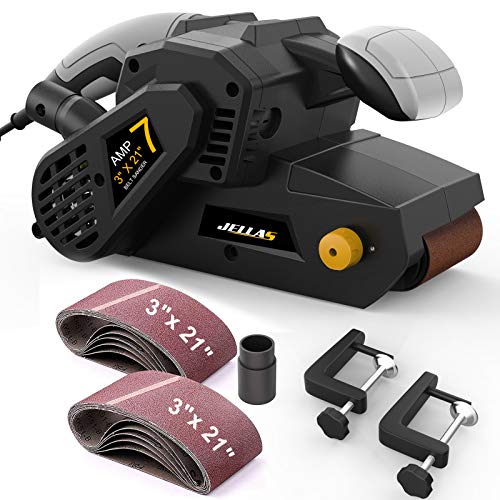
Jellas offers a 7-Amp, 3″ x 21″ belt alongside a 2-in-1 bench option. The variable-speed control provides a six-dial range from approximately 120 to 400 rpm, enabling matched performance for different woods and finish requirements. A pair of metal clamps allows the belt sander to be mounted as a bench unit, expanding versatility for tabletop operations. The package includes a variety of sanding belts (grits from 40 to 180) to support multiple project stages, which helps reduce downtime switching grits.
Makita 9403 Belt Sander: Quiet Power And Durability

Makita’s 9403 stands out for its relatively low noise level at 84 dB and a 4″ wide belt that can achieve rapid material removal. A key feature is the labyrinth construction that seals and protects the motor and bearings from dust and debris, extending tool life in dusty shop conditions. The belt speed and ergonomics are well-suited for surface preparation, edge work, and leveling tasks on larger panels. This model is often favored by woodworkers focusing on long-term reliability and smoother operation during extended sanding sessions.
Metabo HPT SB8V2 Belt Sander: High Torque And Versatility

The Metabo HPT SB8V2 features a robust 9-amp motor and a variable-speed dial at the base of the handle. The powerful motor provides forcible sanding capability for tougher stock, while adjustable speed supports a range of wood types and finishes. A practical inclusion is a dust bag to capture debris during operation. The SB8V2 is a strong option for workshops that require reliable form-and-fit sanding on larger projects, from cabinet face frames to wide boards, without compromising control.
CRAFTSMAN 7 Amp Belt Sander: Aggressive Yet Controllable

Craftsman’s 3×21-inch belt sander emphasizes close sanding near adjoining surfaces with an angled belt design. It offers a fast material removal rate (up to 800 fpm) and a tool-free belt release for quick belt changes, minimizing downtime during projects that require frequent belt swaps. The design supports straightforward operation and consistent removal rates, which is valuable for tasks like smoothing joints, edges, and panel transitions. For users who need efficient setup and predictable performance, this unit provides a practical balance of speed and control.
DEWALT 20V Max Belt Sander: Cordless Convenience

DEWALT’s 20V Max belt sander is a cordless option that uses a brushless motor for efficiency and runtime. The tool is designed to deliver strong performance on large sanding jobs while reducing cable clutter in the workshop. The sander supports compatibility with a dust collection system (sold separately) through a tool-free airlock interface, helping reduce dust exposure. The cordless design suits projects away from outlet access or for rapid job-site touchups, though battery life and availability may vary by usage.
WEN 6321 Belt Sander: Lightweight Yet Capable
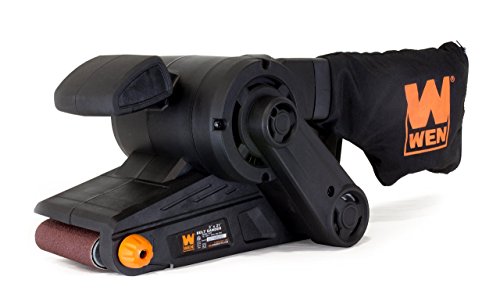
The WEN 6321 is a compact, 7-amp belt sander designed for comfortable operation over extended periods. It delivers belt speeds that support controlled material removal, and its detachable dust bag helps simplify cleanup after use. While lighter than some floor-standing models, the 6321 remains capable for typical woodworking tasks such as surface leveling, edging, and prep sanding. Its portability and reasonable price point make it a common starter choice for hobbyists and small shops.
Buying Guide: Key Purchase Considerations
- Power and speed: Look for motors with at least 6 A for bench models and consider units with variable speed to match the project material and finish requirements.
- Belt and disc versatility: Two-in-one machines save space, but ensure both belt and disc sizes meet your typical projects. A tilting belt helps with bevels and complex edges.
- Dust management: Dust extraction compatibility and integrated dust bags reduce cleanup time and improve visibility. Micro-filtration systems also help with finer dust control.
- Weight and stability: A cast-iron base or heavy chassis minimizes vibration for smoother finishes and more accurate shaping.
- Maintenance and durability: Look for labyrinth seals, protective housings, and robust bearings to extend tool life in dusty shop environments.
- Portability and layout: Corded models are common for consistency, while cordless options offer mobility. Consider your workshop layout and power access.
- Accessories and belts: A set of varied grit belts improves readiness for different tasks, from rough stock removal to fine finishing.
- Warranty and support: A multi-year warranty or reputable service availability can protect investment in higher-use tools.