Best Knife Sharpening Jigs for Bench Grinders: Precision and Versatility
Sharpening knives, chisels, and plane irons with a bench grinder becomes safer and more precise when you use a purpose-built sharpening jig. The following selections focus on stability, adjustable angles, and compatibility with 6″ and 8″ grinders. Each option helps you maintain consistent bevels, reduce overheating, and improve edge geometry for kitchen knives, woodworking tools, and carving implements.
Summary of chosen products:
| Product | Brand | Key Benefit | Image |
|---|---|---|---|
| Adjustable Replacement Tool Rest Sharpening Jig | Peachtree Woodworking Supply | Pivoting and flat slides for versatile honing | 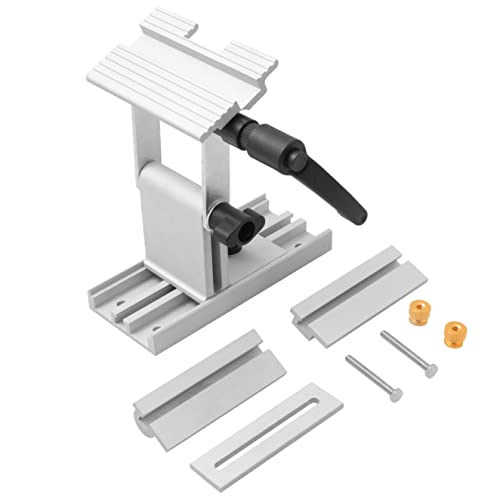 |
| Knife Jig, 85°-115° Adjustable | VEVOR | Precise angle control with secure clamping |  |
Note: The selection emphasizes compatibility with 6″ and 8″ bench grinders, straightforward adjustment, and reliable material construction for long-term use.
Peachtree Adjustable Tool Rest Sharpening Jig
The Peachtree Adjustable Replacement Tool Rest Sharpening Jig provides both pivoting and flat miter slides to position blades, turning tools, and chisels with clarity. Its solid aluminum construction yields smooth, side-to-side sliding during sharpening, and the plate offsets for short chisels accommodate Japanese and Western blades. It is designed to mount on most 6″ or 8″ bench grinders and many belt sanders. The setup is straightforward, and the jig can be removed by loosening a single wing knob for freehand grinding if desired. (Grinder not included.)
VEVOR Belt Grinder Knife Jig: 85°-115° Adjustable
This VEVOR knife sharpening jig offers precise angle adjustment from 85° to 115° with a dedicated dial, providing accurate bevels for kitchen, outdoor, and craft blades. Its wear-resistant aluminum alloy construction keeps weight down while maintaining durability. A robust clamping system with multiple threaded holes and locking bolts ensures blades stay firmly in place, reducing the risk of slips. Compatible with belt sanders, bench grinders, and sharpening machines, it supports safe, repeatable sharpening across a range of tools.
VEVOR Vari-Grind Pro Sharpening Kit

The VEVOR Multi-Grind sharpening system includes a platform, long support arm, and a fingernail gouge jig, enabling multiple sharpening methods for 6″ and 8″ bench grinders (grinder not included). The long arm’s V-pocket provides a stable base for precise angle maintenance, while the fingernail and other jigs accommodate chisels, gouges, and plane irons. This kit is designed to broaden sharpening options beyond a single jig approach, delivering versatility for woodworkers and knife makers alike.
VEVOR 6″/8″ Bench Grinder Tool Rest With Flat Miter

VEVOR’s tool rest offers wide compatibility with 6″ and 8″ grinders and commonly used sanders or angle grinders. It accepts blades up to 2.5 inches wide and uses a flat miter slide to stabilize blades during sharpening. The design emphasizes smooth forward and backward sliding, along with height adjustment via two ratchet handles. Locking controls secure the jig in place, enabling repeatable bevels across a variety of tools. This option is especially useful when you need dependable blade control on a bench grinder setup.
KFMK Bench Grinder Mounting Set

The KFMK mounting set provides a height-adjustable and depth-adjustable framework designed to hold Tormek, KFMK, and compatible sharpening systems on a bench grinder. It offers versatility for different grinder heights and angles, aiming to support a stable sharpening workflow. This option is suitable for users expanding a sharpening system across multiple grinder arrangements, ensuring compatibility with existing jigs and accessories.
Belt Grinder Knife Jig Long Sharpening Locator
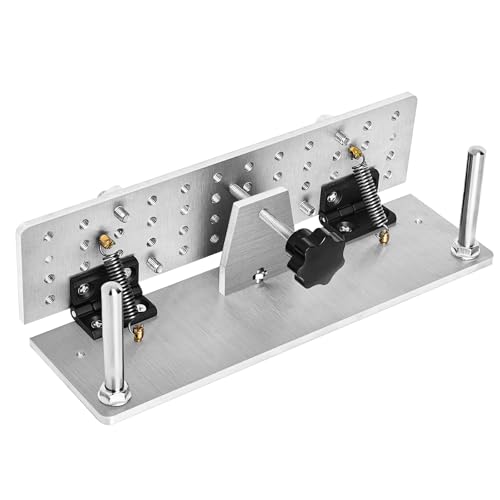
This long knife bevel jig from Beststamp is built with a durable aluminum alloy frame, offering adjustable angle control via a locking knob and turnbuckle. It includes two sizes (large and small) to accommodate different blade lengths and thicknesses, with a skid-like ABS bottom plate for smooth motion on a bench rest. It emphasizes precision in clamping and angle adjustments for consistent beveling on belt grinders and similar machines.
KFMK Wet Sharpening Accessory Kit

The KFMK Wet Sharpening Accessory Kit includes four jigs—short knife, long knife, scissors, and axe—designed to work with Tormek, Wen, KFMK, Bucktool, Jet, and bench grinders. The kit provides a comprehensive approach to sharpening a wide array of blades with precision, while the wet grinding process helps prevent overheating and edge damage during sharpening sessions. This option is suitable for users who want a full sharpening toolkit compatible with multiple systems.
OneChoi Belt Grinder Knife Jig
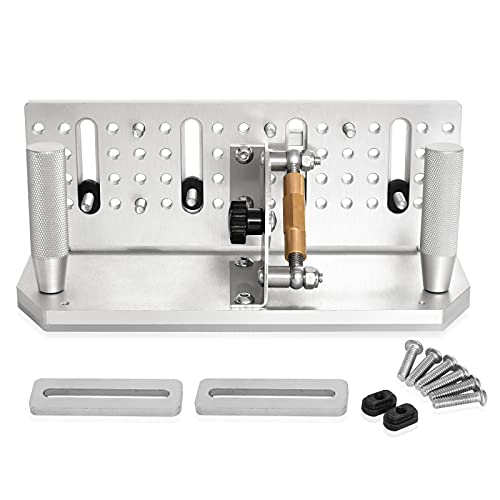
The OneChoi knife jig offers a 9-3/4 inch length with adjustable angle from -5° to 25°. It uses dual press plates and 52 tapped mounting holes for secure knife clamping at various heights. The design emphasizes stable blade holding and precision alignment for beveling, making it a practical tool for knife makers who rely on belt sanders or bench grinders as their primary sharpening machines.
Buying Guide: Key Considerations For Knife Sharpening Jigs On Bench Grinders
- Compatibility: Confirm the jig supports your grinder size (6″ or 8″) and whether it works with related tools like belt sanders and other sharpening systems.
- Angle Control: Look for adjustable angles, with clear detents or dial indicators. A wide range (e.g., -5° to 115°) helps sharpen different blade styles without overheating the edge.
- Clamping Stability: A secure clamp system and multiple mounting points reduce blade wobble. Consider jigs with locking bolts, ratchet handles, and multiple holes for versatility.
- Material and Durability: Aluminum or alloy frames offer light weight and resistance to corrosion, while solid construction provides smoother sliding and longer life.
- Ease Of Setup: Favor designs that mount quickly, fold away, or remove easily for freehand grinding. Simpler setups save time and maintain consistency in repeated sessions.
- Blade Width And Thickness: Ensure the jig accommodates the blade dimensions you typically sharpen. Some models specify maximum blade width (e.g., 2.5 inches) and thickness limits.
- Wet vs. Dry Sharpening: Wet sharpening options help prevent heat buildup, while dry setups can be faster for certain blades. Consider your typical workflow and blade material.
- Expandability: If you plan to sharpen a variety of tools (chisels, gouges, axes, scissors), a multi-jig system or a kit with additional jigs may provide long-term value.
Usage Scenarios And Performance Considerations
- Kitchen Knives: Narrow-angle bevels require precise angle control and stable clamping to avoid uneven edges.
- Woodworking Tools: Chisels and plane irons benefit from robust slides and off-set plates for short blades and improved visibility during sharpening.
- Professional vs DIY: For frequent use, prioritize durability, repeatability, and compatibility with your existing grinding setup.
- Safety: A secure jig reduces blade slippage during sharpening, lowering the risk of injury. Always wear safety gear and follow manufacturer guidelines.
Across these options, the common thread is reliable angle control, solid mounting, and tool-specific adaptability. Whether you’re maintaining kitchen blades or refining woodworking chisels, selecting a jig with sturdy construction and broad compatibility will contribute to consistent bevels and safer sharpening workflows.