Best Portable Hole Punches for Steel: Top Tools to Create Clean Holes
When you need precise holes through steel or other metals, a portable punch can save time and effort. This guide highlights five dependable options designed to punch through metal, including sheet steel, with varying power sources and die sets. Each pick balances portability, durability, and versatility to help you choose the right tool for workshops, fabrication jobs, or DIY projects.
| Product | Brand | Key Strength |
|---|---|---|
| Neiko 02612A Hand Held Power Punch and Sheet Metal Hole Punch Kit | NEIKO | Chrome vanadium steel punches, up to 16 gauge, quick-change dies |
| Happybuy CH-70 Hydraulic Hole Punching Tool | Happybuy | 35T force, multiple dies, high-accuracy positioning |
| 1400W Electric Hydraulic Hole Puncher (MHP-20) | DEFIPRO | 22-ton punch force, fast punching, wide material compatibility |
| Hand Held Power Punch Sheet Metal Hole Punch Kit Compound Leverage | WINTOOLS | 7 sizes, compound leverage for cleaner holes |
| Desktop Leather Belt Hole Puncher Tool | PRO-MASTER SMART & SIMPLE | Desktop design, six hole sizes, easy one-handed use |
Neiko 02612A Hand Held Power Punch Kit

The Neiko 02612A offers a compact, all-metal construction suitable for punching through sheet metals up to 16 gauge. It uses precision machined chrome vanadium steel punches and dies hardened to 52 hardness, delivering clean holes in steel, brass, or plastic sheets. The kit includes seven quick-change punches and dies (ranging from 3/32 to 9/32 inches), enabling flexible hole sizes without tools. This tool is designed for durability and portability in field or shop settings.
Happybuy CH-70 Hydraulic Hole Punching Tool

The CH-70 hydraulic punch delivers 35 tons of force with a 4.3-inch throat depth. Die sets include four sizes, plus high-carbon tungsten steel dies for durability. It supports punching through iron plate, copper, aluminum, and stainless steel within specified thicknesses. The tool is built on a durable alloy steel frame and is designed to connect to a hydraulic pump (not included) for consistent, precision punching with reduced operator effort.
1400W Electric Hydraulic Hole Puncher (MHP-20)
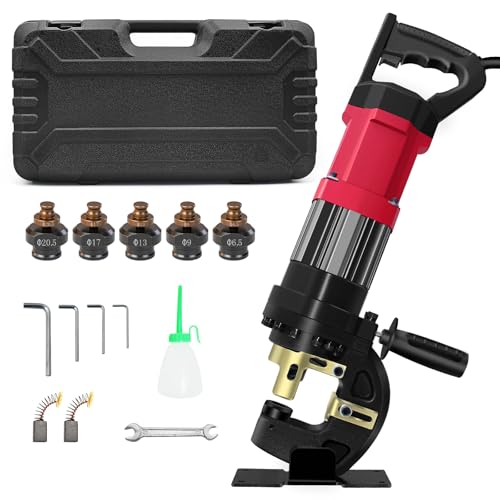
This electric-powered hydraulic punch achieves rapid punching with a 22-ton force, enabling holes in steel and other metals within a range up to 0.315 inches in thickness (3mm–8mm). It also accommodates angle iron and various metal plates. The device supports two operation modes for flexible use—stationary punching or maneuvering with an auxiliary handle for angled work. A heavy-duty forged body adds long-term reliability for professional environments.
Hand Held Power Punch Sheet Metal Kit With Compound Leverage

This tool emphasizes compound leverage to punch clean holes in sheet metal up to 14 gauge. It offers seven hole sizes including 3/32″, 1/8″, 5/32″, 3/16″, 7/32″, 1/4″, and 9/32″. The design focuses on accuracy and ease of use, making it suitable for metalworking projects where quick, repeatable holes are needed in aluminum, brass, or mild steel.
Desktop Leather Belt Hole Puncher Tool

While primarily designed for leather, this desktop punch offers a compact, stable platform for making clean holes with six preset sizes. It is built for one-handed operation and precise alignment, making it a convenient option for leatherworking, belts, and crafts. For steel-focused tasks, this tool is better suited as a supplementary option when metal is not involved directly.
Buying Guide
- Material compatibility: For steel punching, prioritize tools rated for metal thickness and types (steel, iron, aluminum, copper). Check maximum punch thickness and the range of hole sizes offered by dies.
- Power source: Manual punchers are portable and simple, hydraulic units deliver higher force for tougher metals, and electric hydraulic machines balance speed with power for higher-volume work.
- Die availability: A broad selection of dies enables precise hole sizing. Quick-change or interchangeable dies save time on multi-hole projects.
- Durability and build quality: Look for solid frames, hardened dies, and corrosion-resistant components. A robust tool reduces wear and maintenance needs.
- Portability and ergonomics: For field work, choose tools with comfortable grips, manageable weight, and a design that minimizes operator fatigue during extended use.
- Safety features: Consider mechanisms that prevent accidental plunges, provide stable work surfaces, and protect users during punching.
- Cost of ownership: Include the price of dies, spare parts, and potential maintenance when comparing models. A higher upfront cost can pay off with longer service life in busy shops.
- Application scope: If you need both metal and non-metal punching, select a versatile model with a broad material range or plan to pair a dedicated steel punch with a complementary tool for other materials.