Best Professional Sanders for Woodworking: Top Picks
Choosing the right sander can dramatically improve finish quality and efficiency on wood projects. The following picks highlight professional-grade corded sanders that balance power, dust control, and versatility. Each model is well-suited for detailed work, large surface prep, and edge finishing, helping American woodworkers achieve smooth, professional results.
The table below summarizes five selected models, focusing on power, dust management, and key strengths for woodworking tasks.
| Product | Power | Dust Management | Special Feature |
|---|---|---|---|
| SKIL SR232301 Corded Detail Sander | 1.2 A, 13,500 OPM | Micro-filter dust box with 1-1/4″ port | 4-in-1 with 3 detail attachments |
| SKIL SR211601 5” Random Orbital Sander | 2.8 A, 13,000 OPM | Cyclone dust container | Variable speed control |
| DEWALT DWE6411 1/4 Sheet Sander | 2.3 A, 14,000 OPM | Improved paper clamp retention | Rubber overmold grip |
| BOSCH ROS20VSC Palm Sander | 2.5 A, 7,500–12,000 OPM | Dust control with bag and perforated pad | Pad dampening for swirl-free finish |
| WEN 6307 Variable Speed Detailing File Sander | 1080–1800 FPM belt | Detachable dust box | 45–50° range of belt pivot |
Below are sections detailing each model’s capabilities, intended use, and what to consider when shopping for a professional wood sander.
SKIL SR232301 Corded Detail Sander
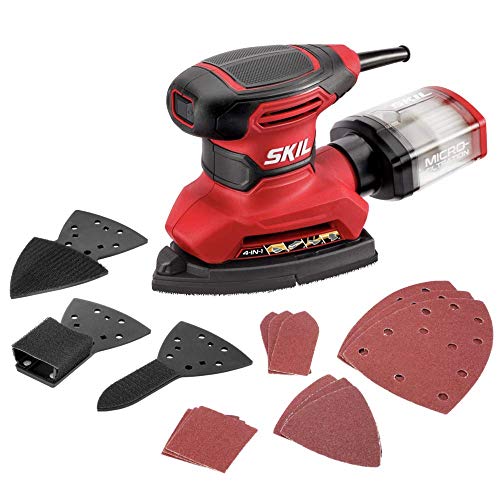
The SKIL SR232301 is a compact 4-in-1 detail sander designed for tight spots, corners, and contour work. It runs on a 1.2-amp motor delivering up to 13,500 orbits per minute, providing a close-to-finish surface on wood. The kit includes three detail attachments for precise finishing on irregular shapes without swapping tools. A micro-filtration dust system and a 1-1/4″ dust port help manage debris, reducing cleanup time and improving air quality in the workshop. This model suits trim work, cabinetry touch-ups, and projects requiring high control in small areas.
SKIL SR211601 5” Random Orbital Sander

The SKIL SR211601 offers a 5-inch random orbital sanding solution with a 2.8-amp motor and up to 13,000 OPM. Its cyclonic “X-flow” dust container is designed for easy emptying, reducing downtime during large prep tasks. The sander provides variable speed control to match the sanding task to the material, helping avoid gouges on softer woods or tear-out on harder species. This model balances power and dust management for furniture finishing, cabinet refinishing, and general surface prep on flats and curved surfaces alike.
DEWALT DWE6411 1/4 Sheet Sander

The DEWALT DWE6411 is a 1/4 sheet sander with a 2.3-amp motor and a top speed of 14,000 OPM, designed for smooth, controlled finishing. An improved paper clamp helps retain sheets securely, reducing interruptions during long sessions. The rubber overmold grip provides comfortable handling, aiding stability and reducing user fatigue on extended refinishing projects. It suits cabinet doors, tabletops, and detailed smoothing tasks where consistent sandpaper contact matters.
BOSCH ROS20VSC Palm Sander
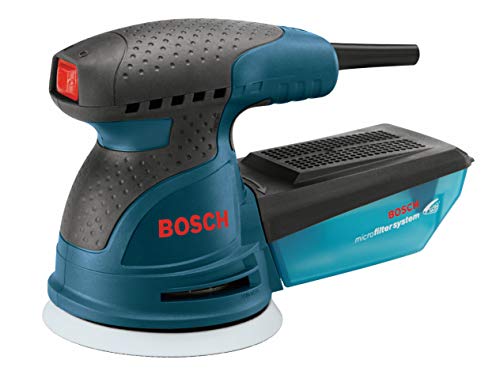
The Bosch ROS20VSC is a 2.5-amp palm sander with a 5-inch pad and a variable speed range of no-load 7,500–12,000 OPM. It features a pad-dampening system to reduce swirl marks on flat and contoured surfaces, making it well-suited for furniture surfaces and cabinetry. The hook-and-loop disc attachment system enables quick disc changes, while the dust collection setup helps maintain cleaner work areas during finishing tasks. This sander is a solid choice for achieving consistent, edge-to-edge finishes on medium to large wood surfaces.
WEN 6307 Variable Speed Detailing File Sander
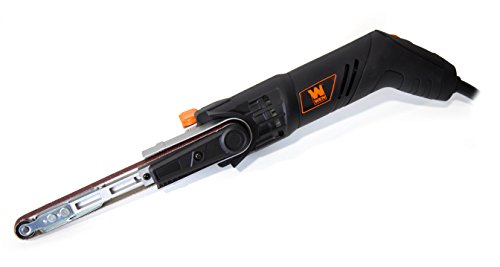
The WEN 6307 is a variable-speed detailing file sander designed for precision work on wood edges, curves, and small profiles. It uses a 1/2-by-18″ belt with a belt speed range of 1080 to 1800 feet per minute and an auto-tracking belt system that requires no manual belt tensioning. The pivot feature (up to 50–55 degrees) expands its reach for angled surfaces, while the included dust box helps manage debris. This model is beneficial for trim work, fine shaping, and projects needing accurate contouring on hard-to-reach areas.
Buying Guide: Key Considerations For Professional Wood Sanders
- Workspace and project type: For cabinet finishing and trim work, detail sanders and palm sanders excel. For large flat surfaces, a random orbital sander offers faster material removal with a good finish.
- Power and speed range: Higher amperage and broader speed control improve versatility across woods with different hardness. Variable speed helps prevent burn marks on soft woods.
- Dust management: Effective dust collection minimizes airborne particulates and keeps work areas clean. Look for built-in micro-filtration, cyclone systems, or compatible vacuum ports.
- Attachment system: Quick-change or hook-and-loop discs simplify disc changes. Secure clamps reduce paper detachment during aggressive passes.
- Ergonomics and control: A comfortable grip, balanced weight, and reduced vibration contribute to longer, more precise sessions, especially on long projects.
- Abrasive compatibility: Ensure the sander accepts common grits (e.g., 60–120 for leveling, 180–220 for finishing) and that the disc type matches your workpiece (aluminum oxide, silicon carbide, etc.).
- Durability and maintenance: Look for durable housings, a reliable dust-sealing design, and replaceable parts that extend life in demanding shop environments.
- Noise and heat: Some models run quieter and manage heat better during continuous use, which helps in workshop safety and comfort.
When selecting a professional sander, consider the balance between power, precision, and dust management. For general woodworking tasks, a combination of a random orbital sander and a detail sander covers most finishing needs. For larger projects or trim-heavy work, versatile belt and detailing tools round out a productive setup. The models listed above provide a spectrum of options across budget and task requirements, aiding in achieving professional-quality wood finishes.