Best Leather Sewing Machines for Durable Projects
Leather projects demand sewing machines with strong motors, sturdy frames, and reliable stitch control. This guide highlights five top-rated heavy‑duty machines that perform well with leather, canvas, denim, and thick fabrics. Each option combines power, durability, and user‑friendly features to help you tackle wallets, bags, belts, and small leather goods with confidence. The selections focus on versatility, threading reliability, and long‑term durability, while offering a range of price points and bundle options to fit different workshop setups.
| Product | Key Benefit | Ideal For |
|---|---|---|
| SINGER Special Edition Super Bundle | Vintage‑Inspired Heavy Duty 500 Classic | Heavy‑duty metal frame, robust motor, 23 stitches | Leather projects with a case included |
| SINGER Heavy Duty 500 Classic Sewing Machine | 50% more power, built for denim, canvas, multiple layers | Thick fabrics and durable seams |
| IOENC Industrial Heavy Duty Leather Sewing Machine | Industrial speed and 11.81″ arm for large items | Leather, bags, tents, heavy repairs |
| SINGER Heavy Duty 4423 Meltwater Blue | 1000+ stitches per minute, strong motor for thick fabrics | High‑volume leather and heavy fabrics |
| SINGER Heavy Duty 4432 Black | 110 stitches, 1100 SPM, reliable piercing power | Professional results on leather and more |
SINGER Special Edition 500 Classic Bundle
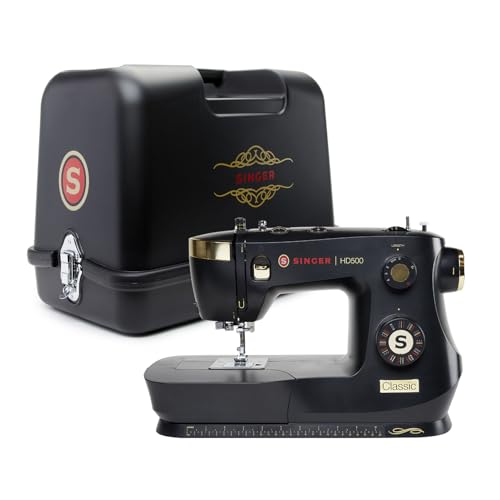
The SINGER Special Edition Super Bundle pairs the HD500 Classic sewing machine with a matching hard carrying case for portable storage and transport. The vintage‑inspired black finish with gold accents blends style with substance, offering a sturdy metal frame and a high‑performance motor capable of handling leather, heavy fabrics, and dense seams. It ships with a wide accessory set designed to cover a broad range of stitching needs, including a 1‑step buttonhole and LED lighting for precise leather stitching. This bundle emphasizes durability, long‑term reliability, and practical value for leather crafters.
Key features include a heavy‑duty metal frame that stabilizes stitches and minimizes vibration, and a motor engineered for strong piercing power across fabrics. With 23 built‑in stitches and 110 applications, users can choose utility, decorative, and stretch stitches while maintaining control over stitch length and width. The bundle approach is well-suited for leather projects that require consistent results across multiple layers, expanding options for wallets, belts, and small leather goods.
In practice, leather projects benefit from the HD500’s straightforward needle threader and clear visibility on the bobbin area. The machine’s stability improves seam integrity on tougher materials, and the included case makes it easier to protect and transport the unit between workspaces or shows. While not a dedicated leather machine, the HD500 Classic provides the essential power and stitch options to handle many leather applications with confidence.
SINGER Heavy Duty 500 Classic Sewing Machine

The SINGER HD500 Classic integrates a higher‑power motor with robust piercing capability, enabling reliable stitching through denim, leather layers, and multiple fabrics. The vintage‑inspired styling complements a workshop while providing modern enhancements such as a built‑in needle threader, one‑step buttonhole, and LED lighting for precision work on leather projects. The adjustable stitch length and width help tailor stitches to the material’s thickness, supporting clean, professional results on leather seams and topstitching.
Designed for durability, this model uses a full metal frame to stabilize stitching under heavy loads. The combination of strong motor strength and a generous set of stitches offers flexibility for wallets, belts, and small leather accessories. For leather crafters who value both aesthetics and performance, the HD500 Classic presents a reliable, long‑term option with a straightforward learning curve and broad compatibility with a wide range of threads and needles.
Performance notes: the motor focus on piercing power ensures consistent stitches when passing through multiple layers. Stitch customization assists with decorative edge finishes and topstitching. While it supports leather work, it is also well suited to general sewing, garments, and home décor projects, making it a versatile centerpiece for a leather workshop.
IOENC Industrial Heavy Duty Leather Sewing Machine
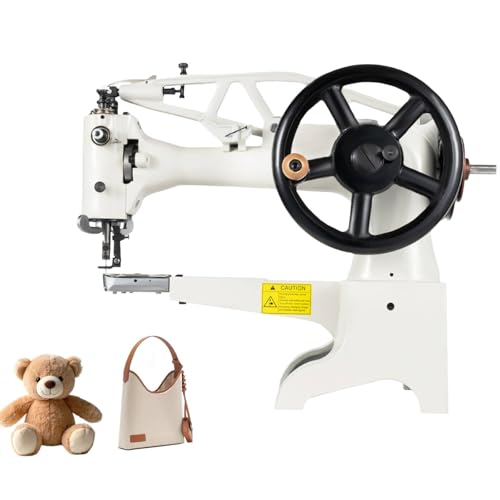
This industrial model is designed for heavy leather projects, offering a dedicated extended arm (11.81 inches) that accommodates large items such as bags and tents. The machine supports multiple thread types, including nylon, cotton, and silk threads, making it versatile for leather repairs and stitching with unique textures. A cast iron construction combined with a sprayed shell delivers corrosion resistance and consistent performance under demanding workloads.
With a top speed of up to 500 stitches per minute and a wide adjustable stitch length (1.7mm–5.1mm), it tackles thick leather and multi‑layer tasks efficiently. The 360° rotating feed mechanism minimizes fabric repositioning, while the dual‑position handwheel and two‑speed pulley provide precise control for delicate leather work and heavy assembly. This model targets professional repair shops and serious hobbyists who need industrial strength in a more compact home workshop footprint.
Buying tips: confirm needle type compatibility (DP*17 needles are common for leather), consider thread choices suitable for leather, and evaluate the availability of compatible presser feet for edge finishing, topstitching, and reinforced seams. This IOENC machine excels where speed, arm length, and stability matter most for leather projects and larger fabric items.
SINGER Heavy Duty 4423 Meltwater Blue

The SINGER 4423 Heavy Duty stands out with a high‑speed motor delivering up to 1,100 stitches per minute, making it suitable for leather projects that require faster completion without sacrificing stitch quality. The machine features a full metal frame for stability, a robust piercing power, and 97 stitch options to cover a broad spectrum of tasks, including basic seams, decorative stitches, and a one‑step buttonhole. Its versatility makes it a practical choice for leather craft, upholstery, and long seams in bags or belts.
Leather projects benefit from the 4423’s resilience when sewing through thicker materials, and the machine’s clear guidance on stitch selection helps maintain consistency across projects. The combination of power, speed, and durability supports practical leather work with reliable results, while remaining accessible for hobbyists transitioning to more demanding applications. The 4423 provides a balance of performance and price that appeals to many leather‑focused sewing enthusiasts.
SINGER Heavy Duty 4432 High Speed Black

The 4432 model emphasizes extra high sewing speed with 1,100 stitches per minute, making it efficient for leather projects that demand rapid progress on long seams. The machine combines a strong motor with 110 stitch applications, providing versatility for leather, denim, and heavier textiles. A full metal frame ensures stability and durability, while the 1‑step buttonhole and LED light illuminate work areas for precise leather detailing and topstitching. The 4432 is designed for consistency and reliability across frequent leather use.
What to consider when choosing among these options: assess your leather project types (belts, wallets, bags, repairs), the thickness of leather you plan to sew, required stitch variety, and whether you need speed for volume work or steadier control for fine detailing. Also consider the availability of compatible presser feet (edge/lining, walking feet, zipper feet) and needle types that suit leather stitching. For workshop portability, examine whether a bundled case or light weight helps you move the machine between spaces without compromising rigidity.
Buying Guide: Key Purchase Considerations For Leather Sewing
- Motor power and piercing capability: Leather and multi‑layer fabrics demand strong motors that can handle thickness without skipping stitches.
- Metal frame and build quality: A rigid frame reduces vibration and improves stitch consistency on thick materials.
- Stitch options and adjustability: A mix of utility, decorative, and topstitch stitches with adjustable length/width supports leather finishing and customization.
- Needle and presser foot compatibility: Look for leather‑friendly needles and a range of presser feet such as edge, dual feed, and walking feet for even feeding and clean seams.
- Arm reach and bed space: A longer arm (or spacious bed) helps when sewing large leather pieces like bags or tents.
- Maintenance and availability of parts: Ensure easy access to needles, bobbins, and service support to sustain long‑term performance.
- Price and bundles: Bundles with cases, extension tables, or accessory kits can offer better value for leather work and workshop setup.
- Ergonomics and lighting: LED lighting and an ergonomic design reduce eye strain and improve accuracy during detailed leather stitching.
Across these options, choose a model that aligns with your typical leather projects, workspace, and workflow. Consider starting with a capable all‑around heavy‑duty machine if you’re new to leather sewing, then upgrade to a more specialized industrial or higher‑torque model as your projects evolve. Safety, stability, and consistent results should guide the final decision for long‑term leather crafting success.