Best Epoxy and Adhesives for Knife Handles
Choosing the right glue for a knife handle is essential for long-term durability and safe use. For a strong, durable bond, epoxy systems are favored, especially for metal-to-wood or metal-to-metal interfaces. This guide highlights five top Amazon options that knife makers and hobbyists trust, including two robust knife-handle epoxies, plus practical tools that support careful application and assembly.
Below is a concise summary table of the chosen products, followed by in-depth sections for each item.
| Product | Brand | Type | Key Benefit |
|---|---|---|---|
| Forge Bond Knife Handle Epoxy Adhesive | FGCI | Epoxy Adhesive | 1:1 mix; supports full/hidden tang |
| Provspro Knife Handle Epoxy | provspro | Epoxy Adhesive | Two-part system; 24-hour cure; strong bond |
| Sargas Wood Knife Making Kit | Rusted Ox | Woodworking Kit (with Glue) | Includes wood glue and tools |
| GoGoPanda Hot Glue Gun Kit | GoGoPanda | Hot Glue Gun & Sticks | Fast fixtures; diverse accessories |
| Putty Knife Set For Glue Spreading | FOCMKEAS | Tool Set | Spreads glue and epoxy evenly |
Forge Bond Knife Handle Epoxy Adhesive

Forge Bond Knife Handle Epoxy Adhesive from FGCI is a versatile two-part epoxy designed for knife handles. It bonds effectively to non-ferrous metals, carbon steel, and stainless steel, delivering a durable, impact-resistant bond suitable for both full tang and hidden tang configurations. The product uses a 1:1 mix ratio by volume, simplifying preparation and reducing setup time for projects of any scale.
The epoxy supports a range of tang styles, including push tang, hidden tang, and rat-tail tangs, ensuring compatibility with most common knife-build designs. Its formulation emphasizes high elongation, which allows for a flexible yet rugged bond that resists fracture under impact. This makes it a dependable choice for field-use knives and custom handles that endure real-world stress.
Key considerations include: a straightforward 1:1 mix, strong adhesion to metal substrates, and excellent mechanical performance after cure. Surface prep—degrease and light sanding—helps maximize bond strength. Users should combine proper mixing with careful clamping during cure for best results. The epoxy’s durability supports long-term handle integrity without excessive brittleness, making it a go-to option for both novices and experienced knife makers.
Provspro Knife Handle Epoxy

Provspro Knife Handle Epoxy is a high-performance two-part epoxy resin kit designed specifically for knife handles. It adheres well to non-ferrous metals, carbon steels, and stainless steels, forming a long-lasting bond that supports demanding applications. The A & B components mix to create a robust, clear resin suitable for precision knife builds and repairs.
With its 24-hour cure profile, this epoxy offers a reliable window for shaping and finishing once the bond has set. The system provides strong rigidity while maintaining enough elongation to absorb stresses from use, minimizing the risk of cracking at the joint. This balance makes it effective for both professional and hobby knife projects where a clean, high-strength bond is required.
Applications emphasis include handle construction and repair, where a secure bond is essential. Users should ensure thorough surface prep and accurate mixing to achieve optimal bonding. The kit’s clarity helps with aesthetic outcomes, letting the natural materials of a wood or composite handle show through after curing. Overall, Provspro stands out for durability, ease of use, and dependable hard-wearing performance.
Sargas Wood Knife Making Kit
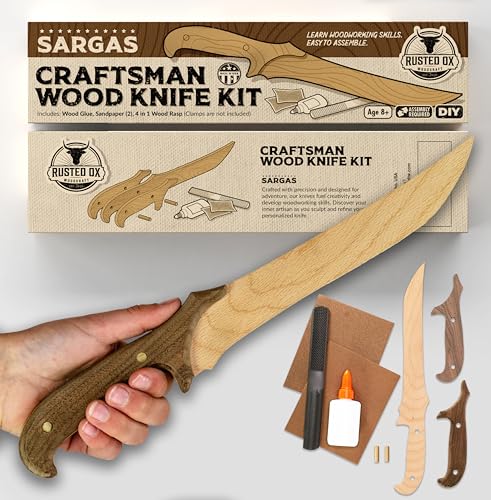
Sargas Wood Knife Making Kit for Kids & Adults from Rusted Ox is a comprehensive project that enables makers to craft a classic wooden knife. The kit includes a 1/4-inch thick beech wooden blade, two walnut handles, two dowel pins, and essential finishing tools. It also features a 4-in-1 hand rasp and sandpaper sheets to help achieve a polished result. The kit includes wood glue and a how-to video, making it accessible for beginners while still engaging for experienced builders.
Designed and made in the USA, this kit emphasizes traditional woodworking skills and careful assembly. The included wood glue helps secure components during assembly, while the dowel pins and handles require alignment for a sturdy final product. This option is ideal for educational projects, demonstrations, or crafting a durable wooden knife with hands-on learning.
Users should follow best practices for wood gluing and clamping. While not an epoxy, the included glue is suitable for wooden components in this kit and pairs well with sanding and finishing steps. The result is a solid, handmade wooden knife that demonstrates craftsmanship and proper technique for beginners and hobbyists alike.
GoGoPanda Hot Glue Gun Kit

GoGoPanda Hot Glue Gun Kit provides a complete package for quick fixtures and prototyping. The kit includes a 40W hot glue gun, 16 color sticks, 32 sticks total, and a variety of accessories such as carving knife heads and tweezers, along with an electrostatic wristband. The gun preheats in about 200 seconds, enabling rapid workflow for crafts and rapid demonstrations of knife handle concepts.
Hot glue offers fast set times, which is advantageous for temporary assemblies, prototyping, or testing fit before committing to a stronger bond. It is not always suitable for permanent, load-bearing knife handles, especially under heavy use or moisture exposure, but it excels in quick-fixture scenarios, alignment checks, and concealing gaps during interim steps. The included accessories expand its utility beyond glue application.
When using hot glue for knife handles, allow proper ventilation and avoid prolonged contact with skin. For final, finished handles, epoxy remains the preferred long-term bonding method. The GoGoPanda kit serves well for testing ideas, practicing techniques, and making quick prototypes before committing to more durable epoxies or composites.
Putty Knife Set For Glue Spreading

Putty Knife, 2 Pieces 1 Inch Metal Scraper is a practical tool for spreading glue, epoxy, and filler compounds evenly across a joint surface. The blades are flexible and made from quality carbon steel, allowing smooth distribution without tearing the substrate. The wooden handles provide a comfortable grip, facilitating precise control during assembly and finish work.
While not an adhesive themselves, putty knives are an essential companion for knife-handle projects. They help level epoxy fillets, press filler into gaps, and spread glues cleanly along the bond line. The included 1-inch blade size is suitable for smaller handles or detailed work, and the kit’s dual-pack offers a budget-friendly option for hobbyists who regularly work on knife-handling tasks.
Buying Guide
When selecting glues and related tools for knife handles, consider strength, compatibility, curing behavior, and finish options. The right choice depends on whether you’re building a new handle, repairing a damaged one, or prototyping ideas. Below are key considerations and practical comparisons to help you decide what to buy and how to use it effectively.
- Adhesive type and bond strength: Epoxy resins typically offer the strongest, most durable bonds for metal-to-wood or metal-to-metal interfaces. They can fill gaps and resist impact, making them ideal for full tang and hidden tang builds. Hot glue provides rapid fixtures but generally cannot match epoxy in long-term strength.
- Material compatibility: Ensure the adhesive adheres well to the specific substrates involved (carbon steel, stainless steel, aluminum, wood, micarta, G10, and composites). Some epoxies bond poorly to certain plastics or oily surfaces unless properly prepped.
- Cure time and work time: Epoxies usually require clamping and longer cure times, but they yield tougher bonds. Hot glue cures quickly, allowing rapid iteration and testing but may need reinforcement for final assemblies.
- Surface preparation: Degreasing, light abrasion, and dust removal improve adhesion. For metal surfaces, a light scuff with fine grit sandpaper and an alcohol wipe help maximize bond strength.
- Tang type and fit: Full tang, hidden tang, push tang, and rat-tail tang each demand different preparation. Proper joint geometry and clamping are essential for a reliable bond.
- Safety and ventilation: Use gloves, eye protection, and good ventilation when mixing epoxy. Store epoxy components as directed and follow safety data sheets for handling and curing.
- Application tools: Spreading tools, like putty knives, help create clean fillets and fill gaps. Measuring cups and mixing sticks ensure accurate ratios for two-part systems.
- Finish and aesthetics: Epoxy cures clear and can be sanded and polished for a seamless look. Some epoxies may amber over time; selecting a clear formulation helps preserve appearance.
- Prototyping vs. production: For prototypes, hot glue and temporary fixtures are useful. For production-ready handles, prioritize strong, gap-filling epoxies and robust surface prep.
- Cost and availability: While epoxy systems are typically pricier than hot glues, their longevity and strength often justify the expense for knife handles that see heavy use.
Comparing Glue Types For Knife Handles
| Glue Type | Best Use | Strength | Working Time |
|---|---|---|---|
| Epoxy (two-part) | Knifes with metal and wood parts | High | Moderate |
| Hot glue | Prototyping and quick fixtures | Moderate | Short |
| Wood glue | Wood-to-wood joints in handles | Medium-High | Moderate |
In practice, combining a strong adhesive like epoxy with careful surface prep and proper clamping yields the most durable knife handles. Use hot glue primarily for rapid prototyping or temporary alignments, then replace with a full epoxy bond for the final build. Tools such as putty knives support even application and finishing, reducing the risk of gaps or runs that could compromise the joint.