Best Dustless Sander for Wood: Top Picks for Clean, Efficient Finishing
Finding a dustless sander for wood helps protect your workspace and improves finish quality. This guide spotlights reliable models with built-in dust collection or easy dust management, highlighting how they perform on different surfaces—from delicate trims to flat panels. Each product below includes essential features to help you compare performance, controllability, and cleanup potential so you can choose the right sander for your projects.
Summary of chosen products
| Product | Brand | Key Benefit | Link |
|---|---|---|---|
| SKIL 5” Random Orbital Sander with Cyclonic Dust Box SR211601 | Skil | Strong motor, cyclone dust box, variable speed | Product Link |
| SKIL Corded Multi-Function Detail Sander SR232301 | Skil | 4-in-1 versatility with micro-filter dust box | Product Link |
| BLACK+DECKER Orbital Sander BDERO100 | BLACK+DECKER | Swirl-free finish, high OPm, lightweight | Product Link |
| BOSCH ROS20VSC Palm Sander | Bosch | Pad dampening for swirl-free finish, easy disc attachment | Product Link |
| DEWALT DWE6411 1/4 Sheet Sander | DEWALT | Compact, powerful 14,000 OPM, improved paper clamp | Product Link |
SKIL 5” Random Orbital Sander SR211601

The SKIL SR211601 operates with a 2.8-amp motor delivering up to 13,000 orbits per minute, enabling smooth finishes across a range of wood surfaces. A cyclonic, easy-to-empty dust box helps reduce cleanup time by collecting most dust before it becomes airborne. Variable speed control provides the right balance of aggression and control for soft woods, hard woods, and delicate veneers. This sander is designed for homeowners and hobbyists who want a straightforward, effective dust management solution.
SKIL Corded Multi-Function Detail Sander SR232301
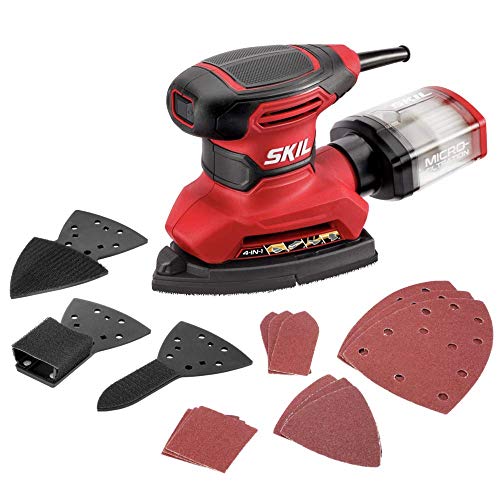
This 4-in-1 detail sander brings versatility to tight spots, corners, and contours with three additional detail attachments included. It runs on a 1.2-amp motor at up to 13,500 orbits per minute for smooth finishing on trim, cabinetry, and curved surfaces. The micro-filtration system and a 1-1/4″ dust port provide options for vacuum-based dust control, contributing to a cleaner work area when sanding intricate profiles or large flat panels.
BLACK+DECKER Orbital Sander BDERO100

The BDERO100 combines a 2.0-amp motor with 12,000 OPM for a swift, swirl-free finish. It is lightweight and compact, making it suitable for tight spaces and overhead tasks. The tool’s design emphasizes comfortable control and easy handling during longer sanding sessions while maintaining effective dust management with its dust bag. It’s a practical option for general wood finishing and small craft projects where portability matters.
BOSCH ROS20VSC Palm Sander
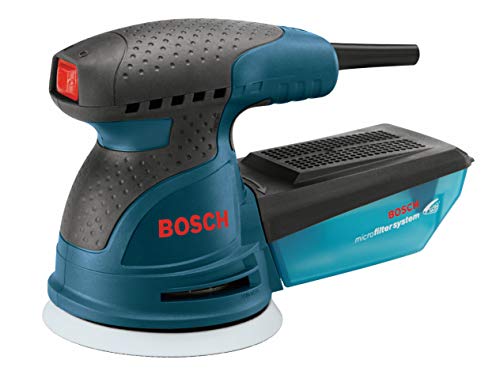
Bosch’s ROS20VSC features pad dampening to minimize swirl marks on flat and contoured surfaces, enhancing finish quality on wood furniture and cabinetry. The Hook-and-Loop disc attachment makes changing sanding pads quick and secure, while a 2.5-amp motor supports a broad speed range. The variable speed control, with no-load OPM ranging from 7,500 to 12,000, allows users to tailor the tempo to each project, improving efficiency and dust management when paired with a vacuum.
DEWALT DWE6411 1/4 Sheet Sander

DEWALT’s DWE6411 1/4 sheet sander offers a robust 2.3-amp motor that yields up to 14,000 OPM for fast material removal. Its improved paper clamp helps retain sandpaper even under heavy pressure, while a rubber overmold texture provides comfortable, secure handling. This model is recognized for delivering consistent performance on medium-duty tasks and is well-suited to carpentry and finishing work where dust management is important when used with a vacuum.
Buying Guide: Key Considerations For Dustless Wood Sanding
- Dust collection type: Look for built-in dust boxes, micro-filtration systems, or vacuum-port compatibility. A well-sealed dust path reduces cleanup time and improves visibility on the work surface.
- Pad size and orbit pattern: 5″ sanding discs versus 4″ can influence finish quality and access. Random orbital designs help minimize swirl marks on flat and contoured surfaces, while some models offer 5″ and 6″ interchangeable pads for versatility.
- Power and speed control: Amperage and no-load OPM indicate sanding aggressiveness. Variable speeds let you match the tool to soft woods, hardwoods, or delicate veneer without burning or gouging.
- Ergonomics and weight: For extended projects, a lightweight model with a comfortable grip reduces fatigue and improves control, especially in overhead or vertical tasks.
- Dust management options: Consider micro-filtration, cyclonic dust collection, and easy-to-empty containers. A reliable dust system keeps your workshop cleaner and protects breathing zones.
- Maintenance and consumables: Availability and cost of replacement pads, sheets, and filters affect long-term usability. Simple pad changes and secure clamps help maintain consistent results.
- Intended use and durability: Choose a model designed for your typical workload, whether cabinet refinishing, trim work, or DIY projects. Brushless motors can offer longer life and efficiency on longer jobs.
- Compatibility with accessories: Check whether a sander supports common discs, dust hoses, and attachments to expand its usefulness across tasks.
In selecting a dustless sander for wood, weigh the balance between dust control, finishing quality, and user comfort. The five models above cover a spectrum from compact detail sanders to larger orbital formats, each with dust management features designed to keep your workspace cleaner while delivering a quality finish.