Best Mini Lathe Chuck Guide: Top Picks for Versatile Woodworking and Metalwork
Choosing the right chuck for a mini lathe accelerates projects from bowls to spindles and beyond. This guide highlights five reliable options that balance grip, durability, and compatibility with common mini lathes. Each product includes essential features to help you compare how they perform on wood and metal tasks. Read on for practical insights and buying considerations to match your workshop needs.
Product Comparison At A Glance
| Product | Brand | Jaw Type | Jaw Capacity | Thread/Compat |
|---|---|---|---|---|
| VINWOX 4INCH 4-Jaw Self-Centering Wood Lathe Chuck | VINWOX | 4-Jaw | 1.5″–3″ (internal) | 1″ x 8TPI / 3/4″ x 16TPI adapter |
| ArtyMaster 2 Inch Mini 3-Jaw Self-Centering Chuck | ARTYMASTER | 3-Jaw | 3–42mm (0.12–1.65″) | M18x1.5mm thread |
| VINWOX 3-3/4 Inch 4-Jaw Self-Centering Chuck | VINWOX | 4-Jaw | 1.5″–2.875″ | 1″ x 8TPI / 3/4″ x 16TPI adapter |
| VEVOR 4-Jaw Lathe Chuck, 3 Inch | VEVOR | 4-Jaw | 0.1″–3.15″ | Internal/External, HT300 |
| K11-100 4” 3 Jaw Self-Centering Lathe Chuck | Dauchlime | 3-Jaw | 2–30mm internal; 30–90mm external | Compatible with 7×14 mini lathes |
Note: All products are designed for mini lathes and include various mounting and sizing options. The table summarizes key specs to help you compare grip range, compatibility, and adaptability for different project types.
VINWOX 4 Inch 4-Jaw Self-Centering Wood Lathe Chuck
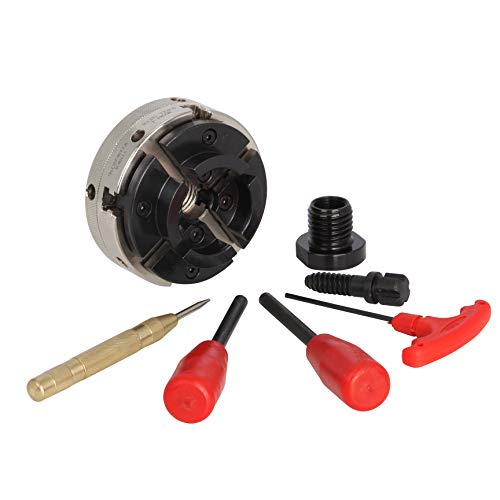
The VINWOX model is a versatile 4-jaw chuck designed for 1″ x 8TPI or 3/4″ x 16TPI spindle threads, with a 2″ round jaw set and a 4-jaw configuration for balanced holding on bowls, vases, and spindles. It ships with a screw chuck and a tightening lever set, plus adapters to broaden compatibility. The unit supports workpieces from about 1.5″ to 3″ internally and 2″ to 3-5/8″ externally, making it a solid option for medium-sized mini lathes. The nickel-coated body helps resist corrosion and wear in busy shop environments.
Key considerations include ensuring spindle thread compatibility before purchase, as mismatches can prevent secure mounting. This chuck is especially suitable for users expanding their wood-turning repertoire with bowls and cups, while offering enough grip to handle light to medium-duty tasks.
ArtyMaster 2 Inch Mini 3-Jaw Self-Centering Chuck

ArtyMaster’s 2-inch mini chuck focuses on quick, one-handed operation with a robust three-jaw self-centering design. It’s machined from high-strength steel using CNC processes for accuracy and durability, offering repeatable clamping within its 3–42 mm clamping range. The chuck is ideal for small bowls, pens, spindles, and other compact wood-turning tasks where precise alignment matters. The 0.4″ connector variant fits compatible Mini lathes and CNC setups, making it a practical add-on for hobbyists and makers pursuing tighter tolerances.
Users should verify thread compatibility with their specific lathe spindle, as misalignments can hinder performance. This chuck suits craftsmen seeking reliable, compact holding power without sacrificing precision in delicate projects.
VINWOX 3-3/4 Inch 4-Jaw Self-Centering Chuck

This VINWOX 3-3/4 inch four-jaw chuck extends the holding range for mid-sized mini lathes. It includes a 2″ dovetail jaw set and an adapter to convert between common spindle threads (1″ x 8TPI and 3/4″ x 16TPI). The kit comes with necessary tightening tools and a screw chuck for added support on challenging shapes. It’s well-suited for bowls, cups, and curved pieces requiring secure, even grip along multiple radii.
As with similar chucks, verify spindle thread compatibility before ordering. Its larger internal grip helps accommodate slightly bigger workpieces, increasing the versatility of your turning setup.
VEVOR 4-Jaw Lathe Chuck, 3 Inch

VEVOR’s 4-jaw chuck for mini lathes emphasizes rigidity and adaptability with HT300 cast iron construction and reversible jaw design. The 3-inch form factor provides a compact yet powerful clamping range, capable of gripping shapes from 0.1 to 3.15 inches in diameter. The short column connection is engineered for precision and ease of use, reducing setup time between tasks. Internal and external jaw configurations enable holding irregular shapes, from bowls to spindles, with a reliable center alignment.
Consider the clamping range and jaw configuration when selecting this option, as the right jaw setup can dramatically cut workpiece preparation time on quick-turn projects.
K11-100 4” 3-Jaw Self-Centering Lathe Chuck

The K11-100 is designed for 7×14 mini lathes and CNC-ready setups, offering a precise 3-jaw self-centering mechanism with ±0.02 mm repeat accuracy. Its jaws accept internal clamping from 2–30 mm and external clamping from 30–90 mm, suitable for a wide range of small-to-medium workpieces up to 100 mm in diameter. Construction uses hardened steel and cast iron to deliver durability under repeated loading. This unit emphasizes industrial-grade reliability in compact footprints, making it a solid choice for versatile workshops needing a dependable all-round chuck.
Buying Guide
Key purchase considerations for mini lathe chucks include compatibility, clamping range, and jaw configuration. Here are common perspectives to help you evaluate options.
- Thread compatibility: Many chucks are designed for 1″ x 8TPI or 3/4″ x 16TPI spindles. Verify your lathe’s spindle thread and ensure adapters are included or available.
- Jaw configuration: 3-jaw chucks offer quick centering for symmetric pieces like pens and spindles, while 4-jaw chucks provide independent jaw control for irregular shapes such as bowls and lids. Assess the typical projects you undertake to pick the right balance of speed and versatility.
- Material and durability: HT300 cast iron and nickel-coated bodies offer corrosion resistance and long life under routine turning. Consider your shop environment and maintenance needs when choosing.
- Jaw range and grip: A wider internal grip allows handling larger blanks, but may require more setup. Check the minimum and maximum diameters to ensure compatibility with your project sizes.
- Adapters and accessories: Some kits include adapters, screws, and center punches. These extras expand compatibility across different lathe models, preserving investment value over time.
- One-hand operation vs. multi-step setups: Some chucks enable quick one-handed operation for repetitive tasks, while others favor adjustable, precise control for complex shapes. Choose based on your workflow and skill level.
- Price-to-performance: Higher-priced chucks often deliver better tolerances and longer service life. Weigh the expected project load against budget to identify the best long-term value.
In summary, selecting the right mini lathe chuck hinges on spindle compatibility, the range of workpieces you plan to turn, and how you prioritize precision versus speed. The five options highlighted combine dependable construction with practical versatility, helping you extend your lathe’s capabilities across wood and light metal tasks.