Best Stud Finder for Plaster Walls: Accurate Wall Scanning for Safer Drilling
Choosing the right stud finder is essential when drilling through plaster walls, which often hide pipes, wiring, and uneven backing. This guide reviews top options designed to detect studs and live wires behind plaster, OSB, and drywall. Each product offers unique sensor technology, display clarity, and ease of use for DIY tasks or professional projects. Below is a concise comparison, followed by in-depth product sections and a practical buying guide to help you pick the best tool for your walls.
| Product | Brand | Key Benefit |
|---|---|---|
| ProSensor M210 | Franklin Sensors | 13 sensors for center/edge detection including live wire meter |
| 5-in-1 Wall Scanner | JAXWQ | Microprocessor chip, center/edge, live AC detection, bright LCD |
| StudBuddy Magnetic | The StudBuddy | Battery-free, no-calibration, simple drywall and wood detection |
| ProSensor M150/X990 | Franklin Sensors | 9 sensors with live wire detection, quick one-mode scanning |
| Walabot DIY 2 | WALABOT | Visual wall scanning for wood/metal studs, pipes, and wires |
Franklin Sensors ProSensor M210 Stud Finder
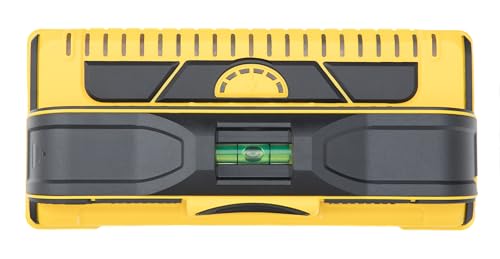
The Franklin ProSensor M210 uses 13 patented sensors to locate studs with high accuracy, a feature especially beneficial for plaster walls where regressed studs or irregular thickness can complicate drilling. The device provides a live wire meter for safety, reducing the risk of hitting electrical lines during wall work. Its wide LED display shows the center and edges of a stud concurrently, helping users mark precise drilling points and avoid misaligned anchors. This model is designed to be robust for professional use and suitable for DIY projects where plaster backing adds complexity.
Key features include robust accuracy from multiple sensing points, real-time live wire detection, and a comprehensive display that clarifies stud geometry. The M210 supports faster scanning and makes it easier to plan fastener placement, particularly when working with plaster walls that may have lath behind the plaster. While it excels in speed and depth awareness, users should still verify with multiple scans when dealing with older plaster surfaces to confirm stud locations.
5-in-1 Wall Scanner By JAXWQ

This 5-in-1 wall scanner uses an intelligent microprocessor chip and a bright LCD to locate edges and centers of studs, joists, pipes, and live AC wires behind walls, floors, and ceilings. The device emphasizes rapid, accurate detection to save time on projects that involve plaster or layered walls. A high-visibility display, alongside audio alerts, helps users locate studs quickly in low-light environments. It is positioned as a versatile tool for homeowners, DIY enthusiasts, and professionals who frequently install shelves, cabinets, or heavy fixtures.
Its advantages include clear feedback from both visual and audible cues, which is helpful when plaster walls obscure typical stud patterns. The receiver’s sensitivity allows for consistent location even on thicker wall sections, and the built-in alerts aid in safe drilling by highlighting live wires. Some users appreciate the readability of the LCD in dim work areas, while others may note a learning curve for interpreting readings in complex wall configurations. Overall, it balances feature depth with user-friendly operation for plaster installation tasks.
The Original StudBuddy Magnetic Stud Finder

The StudBuddy offers a simple, battery-free approach using a powerful magnet to locate screws in studs. It is a favorite for quick checks and light-duty projects on drywall and wood where plaster is not heavily reinforced. The device is proudly made in the USA and emphasizes straightforward operation without calibration or electronics. For plaster walls, where backing can vary, StudBuddy provides a reliable secondary cue if metal fasteners are accessible within the wall surface.
Limitations to consider include its reliance on exposed screws. If studs are not secured by typical screws or if the wall composition has unconventional backing, the magnetic signal may be less predictable. However, for quick hanging tasks, picture frames, or lightweight fixtures on plaster walls, StudBuddy offers a dependable, maintenance-free option that requires no batteries or setup time, making it a practical companion tool in a toolbox alongside more advanced electronic stud finders.
Franklin Sensors ProSensor M150/X990
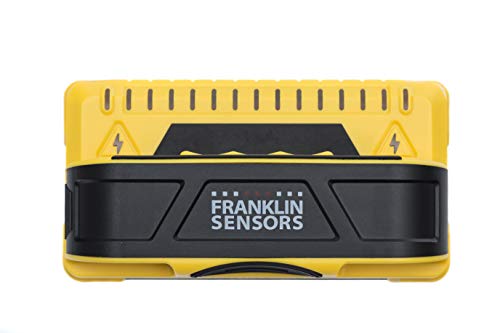
The ProSensor M150/X990 features nine sensors to improve accuracy over traditional single-sensor devices. It offers an intuitive one-mode scanning process that adapts to varying depths, materials, and textures, and requires no calibration. Users can start scanning anywhere, including directly over a stud, which reduces the need to backtrack if initial readings are uncertain. LEDs illuminate the detected stud area, ensuring the tool clearly shows the center, edges, and pattern of studs, including double studs or irregular configurations.
In plaster walls, the nine-sensor configuration helps mitigate false readings caused by wall layering and irregular backing. The device emphasizes reliability and straightforward operation, which can reduce setup time and improve accuracy for users who frequently work with older construction. When studying plaster walls, it’s wise to verify with a secondary method if project-critical anchors are planned, but the M150/X990 provides a strong balance of precision and ease of use for typical wall-hanging tasks.
Franklin Sensors ProSensor MAX

The ProSensor MAX expands depth capability to 2.5 inches with 13 sensors, matching needs for thicker plaster walls or layered constructions. It displays both the center and edges of studs and can detect through multiple layers of drywall, OSB, and even lath-and-plaster configurations common in older homes. The scanning process requires no calibration, and the device supports starting from any point on the wall, which is convenient for quick layouts or when working on large surfaces.
Two detection modes further enhance versatility: standard scanning and a through-wall mode that can reveal studs behind additional layers. This makes the MAX a strong choice for plaster walls with varying thicknesses or older construction features. While the sensor array provides strong accuracy, users should still cross-check critical installations to ensure precise anchoring, particularly in high-load applications where misjudging stud centers could affect performance.
Walabot DIY 2 Visual Stud Finder

Walabot DIY 2 goes beyond traditional stud finders by visually identifying the center of wooden or metal studs, tracking pipes and wires, and connecting to a phone for enhanced visualization. It uses advanced sensing to see into walls rather than rely on a beeping signal, providing a more concrete map of what lies behind plaster, OSB, and drywall. This is especially useful for complex installations or renovations where accuracy is critical and wall compositions vary significantly.
The Walabot approach suits tech-savvy users who want a more interactive experience and the ability to inspect behind multiple layers. It may require more setup and proficiency with its app interface, but it offers powerful insights for plaster walls and other challenging substrates. When precision is essential, Walabot can reduce guesswork by presenting a visual representation of studs, pipes, and live wires before drilling.
Buying Guide: Plaster Wall Purchase Considerations
- Wall composition and depth: Plaster walls can offset simple readings; prioritize models with multiple sensors or through-wall capabilities to account for depth variations.
- Live wire detection: For renovations, a detector with live electrical awareness reduces the risk of drilling into live wiring. This is particularly valuable in older homes with less-visible wiring.
- Display clarity: A bright LCD with clear center/edge indicators helps in dim rooms or spaces with limited lighting, common in basements or closets.
- Calibration and ease of use: Tools that require no calibration save time and reduce user error, especially for quick mounting tasks.
- Through-wall capabilities: If you encounter layers such as plaster over lath or OSB, consider devices with deeper detection ranges or specific through-layer modes.
- Power source: Magnetic or battery-powered devices have different maintenance considerations. Mag-only tools are battery-free but may be less versatile in complex walls.
- Application scope: For occasional hanging, a magnetic stud finder suffices; for heavy shelves or cabinets, a multi-sensor or visual system provides greater assurance.
- Cost versus benefit: Higher sensor counts and advanced visualization improve accuracy but come at a higher price. Balance your typical projects with budget considerations.
- Durability and country of origin: For frequent use on construction projects, pick models designed for professional environments and, if important to you, domestic manufacturing or USA-made products.
- Additional features: Look for simultaneous center/edge display, audio alerts, and user-friendly interfaces that suit your level of comfort with hand tools and electronics.
In summary, plaster walls pose unique challenges, but a careful choice among multi-sensor, through-wall, or visual scanning tools can significantly improve drilling accuracy and safety. The listed options provide a spectrum of approaches—from magnetic simplicity to advanced visual mapping—so users can select a tool that aligns with wall type, project scope, and personal preference.