Best Jig for Hand Drill: Precision Guides for Clean, Accurate Holes
Hand drill jigs and guides have become essential tools for woodworkers seeking repeatable, accurate holes without a full drill press. This article highlights five top jigs that fit a range of projects—from cabinet hardware to deck railings—so you can choose the right guide for straight drilling, angled work, or pocket-hole precision. Each option offers sturdy construction, compatibility with common drill bits, and angle presets to simplify complex layouts. Read on to compare features, build quality, and how each jig can improve your workflow.
Summary of selected products
| Product | Brand | Key Benefit | Angle Range |
|---|---|---|---|
| Milescraft 1318 DrillMate | Adjustable drilling guide for angled or straight holes; edge drilling | 45°–90° | |
| Milescraft 1312 Drill Block | Sturdy block with standard imperial sizes; built-in centerlines | 0°–90° | |
| Kreg K4 Pocket Hole Jig | Kreg | Fast, strong pocket-hole joinery; adjustable drill guide | N/A (pocket holes) |
| Rockler Drill Guide | Rockler | Portable drill press feel; adjustable 0–60° angle with protractor | 0°–60° |
| VASTHOME 30/45/90° Angle Jig | VASTHOME | Four-bit/size options; quick switching between angles | 30°, 45°, 90° |
Milescraft 1318 DrillMate — Portable Drilling Guide

The Milescraft DrillMate is designed for both straight and angled drilling on edge work or round stock. It attaches to most 3/8″ and 1/2″ cordless drills, making it compatible with a wide range of household and workshop drills. A 3/8″ capacity chuck with key is included, expanding versatility for different bit sizes. Angle settings include 45°, 60°, 75°, and 90°, enabling precise angled drilling on various projects such as stair components or furniture joins. This jig emphasizes portable, on-site usability while providing reliable alignment readouts to reduce drift during drilling.
Features to note include its ability to attach securely to common drill bodies, a robust chuck included for immediate use, and multiple angle readouts that support both straightforward drilling and more complex angled layouts. The compact design helps with maneuverability in tight spaces, making it a good pick for DIYers who need a dependable guide without a full shop setup.
Milescraft 1312 Drill Block — Handheld Drilling Guide

The Drill Block from Milescraft is a handheld drilling guide with hardened steel, designed to handle common imperial sizes: 1/8″, 3/16″, 1/4″, 5/16″, 3/8″, and 1/2″. It provides built-in vertical and horizontal centerlines for accurate alignment, aiding both straight drilling and angled work when needed. Non-slip feet stabilize the block, preventing slipping or marring the work surface. This tool is particularly useful for repetitive corner drilling or guided placements on cabinetry, shelving, and straightforward framing tasks.
With a focus on durability and repeatable accuracy, the Drill Block’s rigid guides help maintain consistent hole location and depth. Its straightforward design makes it a practical choice for beginners and seasoned woodworkers alike who want a reliable, low-profile guide that can be mounted or held in hand for vertical drilling tasks on various project surfaces.
Kreg K4 Pocket Hole Jig
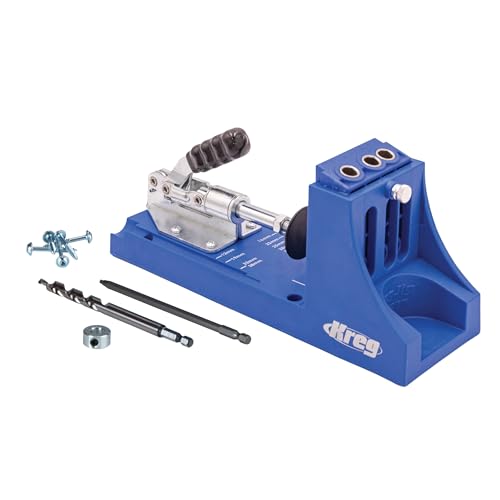
The Kreg K4 Pocket Hole Jig is a classic choice for creating strong pocket-hole joints. It features a 3-hole drill guide that provides precise setup for materials ranging from 1/2″ to 1 1/2″ thick. Known for its durability and time-tested design, the K4 offers reliable repeatability and ease of use for joinery projects, cabinetry, and furniture building. The jig’s adjustable guides simplify aligning drilling positions, while its well-regarded system reduces wood split-out and makes fastening joints faster and more consistent.
While primarily focused on pocket-hole joints, the K4’s proven performance makes it a staple in both DIY workshops and professional shops. It is particularly valued for its balance of accuracy, ease of use, and compatibility with a range of drill bits and stock thicknesses. Users typically appreciate the repeatable results that come from a well-tuned pocket-hole jig and guide system.
Rockler Drill Guide — Portable Hand Drill Adapter
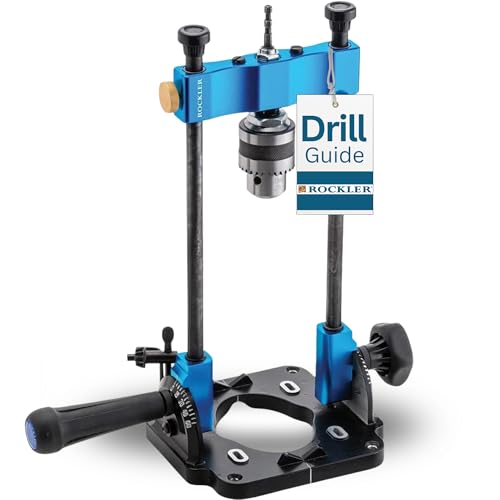
The Rockler Drill Guide offers the portability of a hand drill with the feel of a mini drill press. It accepts optional accessories like a Self-Centering Drill Vise for enhanced stability, or you can buy the two together as a bundle for more precise work. The guide supports angles from 0° to 60°, letting users drill at varying orientations while maintaining consistent depth with a built-in depth stop. This is ideal for installing shelf pins, hardware mounting, or drilling through multiple pieces at a verified angle.
What sets the Rockler guide apart is its focus on smooth operation and minimal play, delivering a steadier, more controllable drilling experience. The setup emphasizes accuracy in small shops where full-sized equipment is impractical, enabling repeatable results without compromising portability.
VASTHOME 30/45/90° Angle Drill Guide Jig

The VASTHOME angle drill guide is designed for versatility in woodworking projects that involve stair posts, deck rails, or cable railings. It features preset 30°, 45°, and 90° angles and includes four drill bits sized 3/8″, 5/16″, 1/4″, and 3/16″. Built from sturdy materials, this jig offers reliable alignment and quick angle switching, which is especially helpful for repetitive tasks or complex joinery where consistent hole placement is critical. The system is designed to withstand regular use in workshop settings and on job sites alike.
In practice, this jig suits projects requiring both strict vertical drilling and accurate angled holes. The four-bit set and durable construction provide a practical balance of affordability and capability for hobbyists and professional woodworkers tackling railing, furniture, and structural details.
Buying Guide: How to Choose a Hand Drill Jig
- Purpose and project needs: Identify whether you need straight drilling, angled drilling, pocket-hole joinery, or a combination. Pocket-hole jigs excel at fast, strong joints, while angled guides help with stair rails and posts.
- Angle range and presets: Consider how many angles you’ll require and whether your jig offers easy presets (30°, 45°, 90°, etc.) or a full protractor readout for precise settings.
- Material and durability: Look for hardened steel or aluminum blocks for longevity. Non-slip feet and clamps reduce movement and marring during drilling.
- Drill compatibility: Ensure the jig accepts common drill sizes (3/8″, 1/2″) or matches the drill you already own. Chuck compatibility can influence bit choices.
- Portability vs. stability: Lightweight handheld guides are great for on-site work, but consider models with a stable base or optional vise attachments for complex tasks.
- Depth control: A depth stop or consistent depth guides improve repeatability for shelving, hinge lines, or drawer components.
- Budget and value: Compare build quality, included bits, and compatibility with other shop tools. A slightly higher upfront cost can yield longer-term reliability and fewer reworks.
- Maintenance: Regularly inspect guides for wear, clean away sawdust, and check alignment references to preserve accuracy over time.
When selecting a jig, consider not only the immediate task but also how it fits into your broader project workflow. A versatile, well-built guide can reduce misdrills, save time, and improve the overall quality of your woodworking projects—from cabinetry to outdoor railings.