Best Wet Saw Blade Options for Marble Tile Projects
When cutting marble tile, a high-quality wet saw blade can reduce chipping, extend blade life, and improve precision. This guide highlights five top-performing wet/dry diamond blades designed for marble and other stone surfaces, with practical insights on what makes each blade a strong choice for American DIYers and pros.
Summary table of selected products:
| Product | Brand | Size | Type | Key Feature |
|---|---|---|---|---|
| 7″ Continuous Rim Premium Diamond Blade | QEP | 7 inches | Wet or Dry Cutting | Continuous rim minimizes chipping; suitable for marble tile |
| 7″ Diamond Blade (Super Thin) | GoYonder | 7 inches | Wet or Dry Cutting | X teeth rim edge for fast, smooth cuts |
| 10″ Continuous Rim Premium Diamond Blade | QEP | 10 inches | Wet or Dry Cutting | Broad versatility for tile, marble, and stone |
| 10″ Diamond Tile Blade | ZORUNNA | 10 inches | Wet or Dry Cutting | Ultra-thin X-teeth design for precision and speed |
| 10 Inch Diamond Saw Blade for Porcelain/Granite | SHDIATOOL | 10 inches | Dry or Wet Cutting | Super thin X Turbo segments for chip-free cuts |
QEP 7″ Continuous Rim Premium Diamond Blade

The QEP 7″ driver features a continuous rim designed to minimize chipping during wet or dry cuts of marble tile and other stone. Its 0.625-inch arbor fits common grinders, and the blade is engineered for clean, precise finishes on ceramic, porcelain, and marble surfaces. The compact 7″ size makes it a practical choice for smaller tile projects and detailed work around fixtures.
GoYonder 7″ Diamond Blade for Marble and Porcelain

GoYonder’s 7″ blade emphasizes a thin profile with X teeth rim edge to deliver fast, smooth cuts with reduced chipping. It’s designed to fit most handheld angle grinders and supports wet or dry operation. The blade accepts dual arbor sizes (5/8″ or 7/8″), allowing compatibility with a wide range of tools, which is helpful for marble installations that demand precision without overheating the material.
QEP 10″ Continuous Rim Premium Diamond Blade

This larger 10″ blade from QEP expands the cutting envelope for marble and ceramic tile installations. Its continuous rim helps minimize chipping, making it suitable for long, straight cuts across larger marble slabs or tiles. The blade maintains a 0.625-inch arbor, aligning with standard wet saw configurations and many professional tile saws for efficient, consistent results.
ZORUNNA Diamond Tile Saw Blade — 10″

ZORUNNA’s 10″ blade uses an ultra-thin X-teeth turbo mesh rim to deliver precise porcelain, ceramic, granite, and marble cuts with reduced chipping. It supports both wet and dry cutting and accommodates multiple arbors, offering flexibility for various angle grinders or saws. The design emphasizes low vibration and improved safety in operation.
SHDIATOOL 10 Inch Diamond Blade

SHDIATOOL’s 10″ blade is designed for cutting porcelain, tile, ceramic, granite, and marble with options for both dry and wet cutting. It features a 10mm diamond height and 1.8mm segment thickness, optimized for faster, smoother cuts. The blade is compatible with a range of arbors and is geared toward reducing chipping and burrs on marble installations.
QEP 7″ Black Widow Diamond Blade
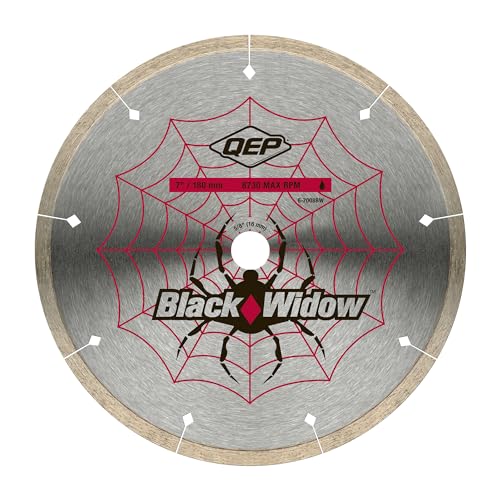
The QEP Black Widow 7″ blade emphasizes premium-grade construction for wet cutting of porcelain, ceramic, granite, and marble tile. Its thin rim supports fast cuts while maintaining reliability at higher speeds. Diamond-shaped laser cutouts help prevent wobble and keep the blade cooler, extending life under demanding tile work conditions.
Buying Guide: What to Consider When Choosing a Marble Wet Saw Blade
- Blade size and arbor compatibility: Marble projects vary in scale. Choose a blade size that matches your saw and project. Common arbors include 5/8″ and 7/8″, and some blades offer adapters for multiple sizes.
- Rim design and chip protection: Continuous rims reduce chipping on marble’s delicate edges, while segmented rims are better for granite or concrete. For marble, prioritize continuous rims or ultra-thin profiles to minimize edge damage.
- Cutting wet vs. dry capabilities: Wet cutting helps reduce heat and dust, preserving marble’s finish and prolonging blade life. Ensure the blade is rated for wet or dry use if your workflow requires flexibility.
- Blade thickness and body rigidity: Thinner blades cut faster with less material removal but can be more prone to deflection. A balance between speed and stability is important for clean marble edges.
- Teeth geometry and material compatibility: X-teeth or turbo designs improve aggressive cutting with reduced chipping. Check that the blade is suitable for marble, porcelain, ceramic, and granite as needed.
- Durability and safety features: Look for blades with robust core construction, vibration-reducing designs, and cooler-running features to minimize heat transfer to marble surfaces.
- Tool compatibility and accessories: Verify arbor size compatibility and whether you need add-ons like adapters or splash guards for wet cutting setups.
- Cost vs. value: Higher-priced blades often offer better longevity and fewer chipping incidents. For frequent marble tile work, selecting a blade with proven performance is cost-effective over time.
Additional Considerations for Marble Projects
- Test cuts: Before committing to a full tile run, perform test cuts on scrap marble to observe edge quality and adjust water flow, RPM, and feed rate.
- Water management: When wet cutting, maintain a steady water supply to keep the blade cool and minimize dust. Replace water if it becomes contaminated with marble slurry.
- Edge finishing: After cutting, inspect edges for micro-chips. Minor touch-ups can be performed with a polishing pad or a finer blade if needed.
- Safety: Use eye and ear protection, and ensure proper ventilation when cutting marble. Secure the workpiece to prevent kickback or chatter.
- Maintenance: Clean the blade after use and store it in a dry environment to prevent corrosion, especially if the blade has exposed metal components.