Best Pruning Saws for Trees: Top Picks
Choosing the right pruning saw can make tree trimming safer, faster, and more efficient. This guide highlights five highly regarded models that balance cutting power, blade longevity, and ergonomic design for American gardeners and professionals alike. Each option is suitable for different tree sizes and pruning needs, from lightweight regular maintenance to heavy limb removal.
Summary Table
| Product | Brand | Key Feature | Approximate Blade Length |
|---|---|---|---|
| Kanzawa Samurai Ichigeki Pruning Saw 330mm C-330-LH | SAMURAI | Ergonomic grip, sheath with belt clip | 13 in (330 mm) |
| Corona Tools 18-Inch RazorTOOTH Pruning Saw RS 7510D | Corona | RazorTOOTH teeth, high-carbon Japanese SK5 blade | 18 in |
| Corona Tools 14-Inch RazorTOOTH Pruning Saw RS 7395 | Corona | Single-hand use, 3-sided razor teeth | 14 in |
| Corona Tools 13-Inch RazorTOOTH Pruning Saw RS 7120 | Corona | Compact single-hand saw, 3-sided teeth | 13 in |
| WEIMELTOY 10 Inch Folding Pruning Saw | WEIMELTOY | SK5 blade, folding design, triple-cut teeth | 10 in |
Note: All models are evaluated for typical American pruning tasks, from branch trimming to limb removal, across a variety of wood types. Consider blade length, tooth geometry, and grip comfort when selecting a saw for your orchard, backyard, or landscape work.
Kanzawa Samurai Ichigeki Pruning Saw 330mm
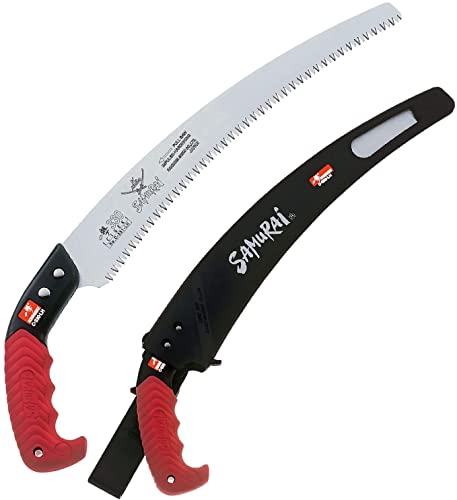
The Kanzawa Samurai Ichigeki pruning saw features a 13-inch Japanese blade with TRI CUT teeth designed for fast, clean cuts through green and seasoned wood. The ergonomic handle provides a secure grip during extended pruning sessions, reducing hand fatigue. A sheath with belt clip enables safe, on-the-go storage and transport. This model is suitable for medium-size branches and tree maintenance tasks. Its Japan-made construction emphasizes blade hardness and edge retention, making it a reliable choice for homeowners and professional users alike.
Key points:
– 13-inch TRI CUT Japanese blade for efficient cutting
– Ergonomic handle with grip for comfort
– Included sheath with belt clip for transport
Corona Tools 18-Inch RazorTOOTH Pruning Saw RS 7510D

The RS 7510D RazorTOOTH pruning saw delivers aggressive material removal with an 18-inch curved blade. It’s designed for cutting branches up to roughly 9–10 inches in diameter. Each tooth is triple-ground to create multiple bevel angles, boosting cutting efficiency. The high-carbon Japanese SK5 steel blade adds strength and edge retention for demanding pruning tasks. This saw is well-suited for professional landscapers and seasoned homeowners tackling thicker limbs.
Key points:
– 18-inch blade handles large branches
– RazorTOOTH technology for fast material removal
– Triple-ground teeth maximize cut efficiency
Corona Tools 14-Inch RazorTOOTH Pruning Saw RS 7395
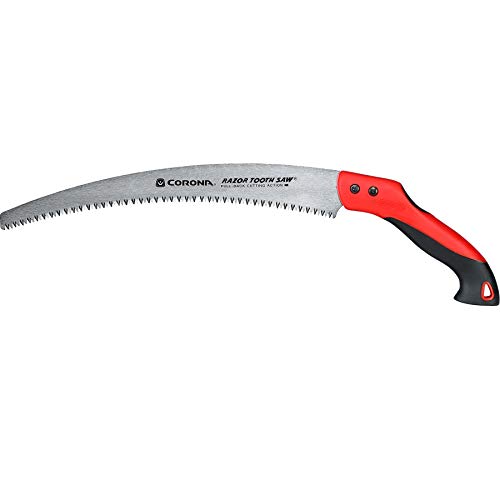
The RS 7395 is designed for single-handed operation with a curved blade that reaches tight spots. Its 14-inch length balances control with cutting power for branches up to about 8 inches in diameter. RazorTOOTH teeth and a high-carbon SK5 steel blade work together to optimize each pass, reducing effort and time spent on pruning tasks. This model is ideal for gardeners who frequently prune medium-sized limbs from shrubs and trees.
Key points:
– 14-inch blade for nimble handling
– Single-hand use with curved blade
– RazorTOOTH teeth for efficient cutting
Corona Tools 13-Inch RazorTOOTH Pruning Saw RS 7120

The RS 7120 offers a compact, single-hand saw with a 13-inch curved blade and RazorTOOTH teeth for efficient limb work. The high-carbon SK5 Japanese steel blade provides durability and a sharp edge for repeated pruning sessions. Its compact size makes it a versatile choice for pruning smaller branches and shrubs, especially when maneuverability is crucial in tight spaces or around dense canopy growth.
Key points:
– 13-inch blade for precise pruning
– Single-hand use with multi-cut teeth
– Durable SK5 steel for sustained performance
WEIMELTOY 10-Inch Folding Pruning Saw

The WEIMELTOY folding pruning saw is a compact option with a 10-inch SK5 curved blade and triple-cut Razor Teeth for clean, efficient cuts. Its folding design enhances portability and safety during transport and storage, making it ideal for hikers, campers, and homeowners who need a ready-to-use tool in a small toolkit. The rubberized, soft grip improves comfort and control in various weather conditions.
Key points:
– Folding design for portability and safety
– 10-inch SK5 blade with triple-cut teeth
– Ergonomic, non-slip handle for secure grip
Buying Guide: Pruning Saws For Trees
- Blade length: Short blades (7–13 inches) are better for precision cuts and small branches; longer blades (14–18 inches) excel at larger limbs and speed but require more control.
- Teeth geometry: RazorTOOTH-style blades with triple-ground teeth cut quicker and with less effort, especially on green wood. For dense wood, a sturdier blade like SK5 steel enhances durability.
- Blade material: High-carbon steel blades (like SK5) offer good edge retention but may require maintenance to prevent rust. Look for rust-resistant coatings if pruning in humid conditions.
- Handle ergonomics: An ergonomic, non-slip grip reduces fatigue during extended pruning sessions and improves safety in wet conditions.
- Weight and balance: Lighter saws reduce fatigue, while heavier models can provide more momentum for tougher cuts. If pruning many limbs, test a mid-weight option for comfort.
- Foldable vs fixed blades: Folding saws are portable and safe for travel; fixed-blade saws usually offer greater rigidity and stability for frequent use.
- Maintenance: Clean blades after use, dry to prevent rust, and occasionally oil teeth to sustain performance. Sharpening frequency depends on use and wood type.
- Intended tasks: For home landscaping, a 10–14 inch blade is typically versatile. For orchard work or heavy pruning, an 18-inch blade may be advantageous.
- Safety: Always use gloves and eye protection. Keep the sheath in place when not in use and store away from children.
- Budget vs durability: Higher-quality blades can reduce replacement frequency and improve safety; balance cost with expected use.