Best Corded Belt Sander for Serious Woodworking
Choosing the right corded belt sander can dramatically improve wood shaping, edge work, and panel finishing. This guide highlights five reliable corded models that balance power, control, and dust management for American workshops. From compact 6-pound options to longer 24-inch belt machines, these tools cover common jobs like flattening tabletops, smoothing edges, and preparing surfaces for finish. Each model emphasizes belt speed, durability, and usability, helping you compare performance without guesswork. Use the Buying Guide below to weigh your needs against features like weight, dust control, and belt change ease, then click through to the Amazon pages for full specs.
| Product | Brand | Model / Size | Power / Belt | Key Feature |
|---|---|---|---|---|
| WEN 6321 Corded Belt Sander | WEN | 7-Amp, 3″ x 21″ | 7 Amp | Detachable dust bag |
| Makita 9403 Belt Sander | Makita | 4″ x 24″ | Corded | Low noise; 1,640 ft/min belt speed; labyrinth seals |
| CRAFTSMAN CMEW213 Belt Sander | CRAFTSMAN | 3″ x 21″ | 7 Amp | Angled belt design; tool-free belt release |
| Jellas BS750-SD Belt Sander | Jellas | 3″ x 21″ | 7 Amp | Dust bag; 2-in-1 vacuum adapter; 10 belts |
| WEN 6307 Belt Sander | WEN | 1/2″ x 18″ | Corded | Variable speed; auto-tracking; 50°–55° tilt |
WEN 6321 Corded Belt Sander
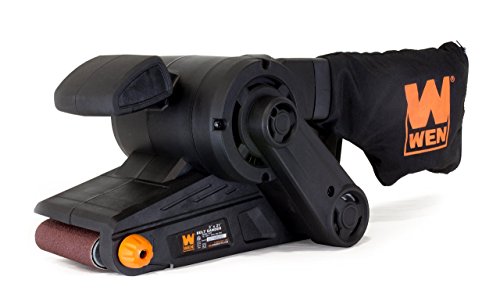
The WEN 6321 uses a 7-amp motor to power a 3-by-21 inch belt, delivering aggressive stock removal with a belt speed over 13 feet per second. Its compact, six-pound design reduces fatigue during long finishing sessions and improves control when moving along edges and rails. The detachable dust bag helps keep the workspace cleaner between passes, contributing to better visibility and smoother results on wood surfaces.
Ideal for doors, tabletops, and cabinetry, the 6321 provides solid raw-removal capability in a portable package. While the dust bag helps, users may still opt for a shop vacuum for finer dust control on fine-grain projects. The sander’s balance and weight make it a versatile choice for both beginners and experienced hobbyists seeking reliable, corded power without bulky form factors.
Makita 9403 Belt Sander

Makita’s 9403 is a corded belt sander built for wide-area surfacing. Its 4-by-24 inch belt covers more surface per pass, speeding up tasks on tabletops, doors, and large panels. The unit operates with relatively low noise for a belt sander and achieves up to 1,640 feet per minute, enabling faster stock removal while maintaining control over finish quality.
Durability is enhanced by labyrinth construction that seals the motor and bearings from dust and debris, extending tool life in busy workshops. To keep air clean, pair the sander with an efficient dust collection setup. The Makita 9403 is well suited to serious woodworking projects where speed and long-term reliability matter, making it a common choice for professional garages and shops.
CRAFTSMAN CMEW213 Belt Sander

CRAFTSMAN CMEW213 pairs a 7-amp motor with a 3-by-21 inch belt designed to approach adjoining surfaces more closely, thanks to an angled belt design. This configuration supports faster material removal, with a maximum belt speed around 800 feet per minute for efficient progress on edges and panels. A tool-free belt release simplifies swapping belts between tasks, minimizing downtime in busy shops.
The CMEW213 balances power with maneuverability, making it suitable for trim work, cabinetry prep, and finishing tasks. Its design emphasizes control and ease of maintenance, helping operators maintain consistent results across different wood species. For users prioritizing quick belt changes and tighter sanding near joints, this Craftsman model offers solid capability in a corded package.
Jellas BS750-SD Belt Sander
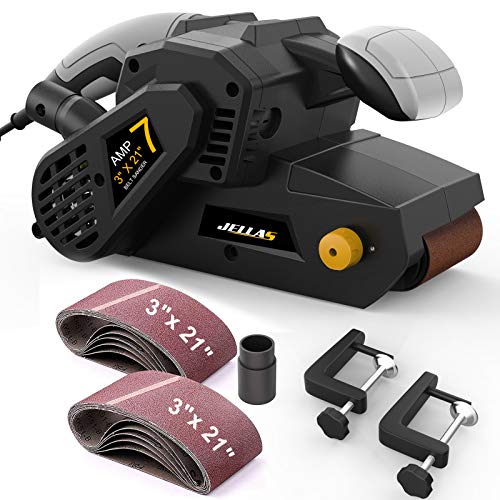
The Jellas BS750-SD provides a 7-amp, 3-by-21 inch belt with a built-in dust bag for cleaner retreat passes. A notable feature is the 2-in-1 vacuum adapter, enabling connection to a shop vacuum to further reduce dust during use. The kit also includes ten sanding belts across a range of grits, supporting a variety of jobs from rough stock removal to finishing passes.
With a variable-speed control offering 120 to 400 rpm, this sander adapts to different materials and desired finishes. The design includes two metal C clamps for bench mounting, and a lock-on button to ease extended sanding. The result is a versatile workhorse suited for both portable use and fixed-bench applications in hobby and professional settings.
WEN 6307 Belt Sander
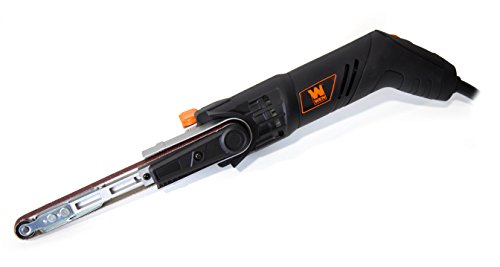
The WEN 6307 offers a compact detailing belt sander with a 1/2-by-18 inch belt and a broad speed range. The variable-speed control enables precise tuning from 1080 to 1800 feet per minute, allowing careful shaping on curves and tight profiles. An auto-tracking belt system eliminates the need for constant tension adjustments, keeping belts centered through aggressive passes.
With flexibility in motion, the 6307 tilts from 50 to 55 degrees to access awkward angles, corners, and joints. This model complements larger belt sanders by handling delicate detailing and finish work on small parts, trim, and moldings. Its corded design provides steady power for extended sessions without the need to recharge, making it a reliable addition to any woodshop toolkit.
Buying Guide
Power, Speed, And Sanding Surface
Consider belt size and motor power when matching a sander to the job. Larger belts (4″ x 24″ or 3″ x 21″) cover more surface and remove material quickly, while smaller belts (1/2″ x 18″) excel at detailing and tight spots. Amp ratings indicate ongoing power availability; higher amps support faster removal on dense stock but yield heavier tools. Look for models with a belt speed range that suits your tasks, such as quick stock removal or fine finishing.
Dust Management
Dust control is essential for health and visibility. Look for built-in dust bags or the ability to connect to a vacuum system. Some belt sanders include dust collection adapters or compatible vacuum ports, which can significantly reduce cleanup time and improve edge clarity on finished surfaces.
Ergonomics And Weight
Weight and balance affect fatigue over long sessions. Lighter units are easier to maneuver for detail work, while heavier models may offer more stability on large flat surfaces. Features like curved handles, soft-grip surfaces, and balanced weight distribution help maintain control during extended use.
Versatility And Mounting
Bench or table mounting capabilities add versatility. Some models include clamps or can be turned into bench sanders, expanding usage beyond handheld work. Adjustable belt angles and tilt ranges enable better access to edges, corners, and joints, expanding the range of tasks a single tool can perform.
Maintenance, Durability, And Warranty
Durability features such as sealed bearings, labyrinth seals, and robust housings contribute to tool life in busy workshops. Tool-free belt changes save downtime between tasks. Review warranty terms to gauge support for wear items like belts and dust bags, which helps protect your investment over time.
Brand, Availability, And Value
Established brands with a track record of reliability can reduce the risk of downtime. Compare the included accessory sets (like belts and dust bags) and the availability of replacement parts. A model with a comprehensive accessory package often provides better long-term value than a bare tool.