Best Laser Cutters for Glass: Top Picks for Precision Engraving and Cutting
Glass engraving and cutting with lasers demand precision, safety, and reliable performance. The following selections highlight high-precision laser engravers capable of working with glass, from compact models suitable for hobbyists to robust machines designed for professional use. Each entry includes key specs, focusing on spot size, speed, and working area to help you compare suitability for glass projects.
Summary of chosen products:
| Product | Brand | Key Focus | Working Area |
|---|---|---|---|
| Ray5 5W Laser Engraver | Longer | 0.08 mm spot, high speed | 400×400 mm |
| ACMER S1 6000mW | ACMER | Ultra-fine accuracy, 0.04 mm spot | 130×130 mm |
| Woxcker L2 MAX 20W | Woxcker | High power, enclosure, safety | 300×300 mm |
| Creality Falcon 5W | CREALITY FALCON | 0.06 mm spot, large bed | 400×415 mm |
| ACMER S1 3500mW | ACMER | Balanced power and detail | 130×130 mm |
Ray5 5W Laser Engraver for Glass and More

The Longer Ray5 5W laser engraver combines speed and precision with a large working area of 400×400 mm, making it suitable for glass engraving tasks on decorative panels or beveled glass pieces. It features a 240MHz ESP32 chipset and a laser dot size of 0.08×0.08 mm, delivering engraving accuracy around 0.01 mm. The system supports offline use and includes a 3.5-inch touchscreen for straightforward operation. Designed for compatibility with common software such as LaserGRBL and LightBurn, it aims to provide dependable results for glass surfaces, wood, metal, and acrylic as well. Overall, it emphasizes high-speed performance and consistent detail, valuable for hobbyists exploring glass art.
Key features: high-speed 10,000 mm/min engraving, 0.08 mm laser spot, 400×400 mm workspace, offline usage. This model suits users who want rapid prototyping or layered glass designs, including etched logos or fine linework on flat glass substrates. For glass projects, consider adequate ventilation and eye protection due to laser exposure. The 0.01 mm engraving precision helps reproduce intricate motifs with crisp clarity.
ACMER S1 6000mW Laser Engraver

The ACVER S1 6000mW laser engraver offers high-precision engraving with a 0.04 mm laser spot and a repeatable positioning accuracy of 0.01 mm. With a 130×130 mm working area, it delivers fine detail suitable for glass etching, wood, leather, and plastics. The device operates at up to 10,000 mm/min engraving speed and comes 2-in-1 as a versatile engraving and cutting tool, making it apt for both decorative glass work and small professional projects. It’s designed for beginners and professionals, arriving mostly preassembled for quick start-up and easy operation.
Considerations for glass work include ensuring clean surfaces, securing glass during engraving, and protecting eyes and skin from laser exposure. The 455±5 nm wavelength is well-regarded for various materials, and the compact footprint supports desktop setups while delivering reliable performance for glass etching and light cutting tasks.
Woxcker L2 MAX 20W Laser Engraver

The Woxcker L2 MAX brings substantial power with a 20W laser module, enabling deeper cuts and faster engraving, including on glass and metal. It offers a large, enclosed work area of 300×300 mm and a range of safety features, including six protection layers, auto-shutdown on tilt, emergency stop, and a flame sensor. The 360° enclosure helps contain fumes and improve safety during glass engraving, while the driver software supports expanding options and a stable workflow for precise results. The model is described as suitable for wood, metal, glass, leather, and acrylic tasks, with a focus on reliability and safety for more demanding projects.
Important glass considerations include ensuring the glass is properly secured and using appropriate cutting fluids or oils when cutting or scoring, along with ventilation. The enclosure design and safety features help mitigate exposure, and the machine’s high power is best matched with thicker or more opaque glass or with masking and masking tape to protect areas not intended for engraving.
Creality Falcon 5W Laser Engraver
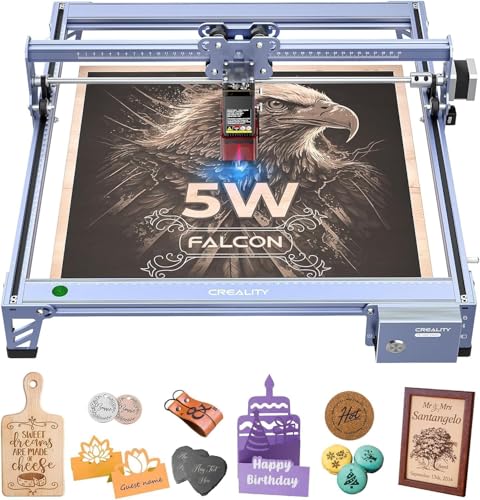
The Creality Falcon 5W laser engraver delivers high-precision engraving with a spot size of 0.06×0.06 mm and a precise positioning accuracy of about 0.007 inches. It supports speeds up to 10,000 mm/min and offers a large working area of 400×415 mm, enabling larger glass pieces to be engraved in a single pass. The machine uses a 32-bit control chip to balance speed and detail, aiding consistent results across projects. Optional upgrades, such as a rotary roller and raisers, expand capabilities for cylindrical or raised glass pieces.
Glass projects with this model can focus on etched designs or decorative patterns on panel glass. Ensure safe operation by using protective gear and keeping the enclosure closed during engraving. The integrated safety features and robust build make it a strong contender for both garage workshops and small studios focusing on glass art and signage.
ACMER S1 3500mW Laser Engraver

ACMER’s S1 3500mW model offers a balanced option for those seeking solid engraving results with glass, wood, and plastics. The laser delivers up to 10,000 mm/min engraving speed and a 0.04 mm laser spot with 0.01 mm repeatable positioning accuracy, suitable for detailed work. The unit is positioned as beginner-friendly, arriving largely preassembled, with a compact 130×130 mm working area that is well-suited for small glass pieces, plaques, or decorative glass tiles. This model emphasizes a blend of accessibility and precision, appealing to hobbyists expanding into glass crafts.
For glass engraving, working with proper masking can protect areas while achieving crisp lines. Always verify the glass type and thickness to select the appropriate power and focus settings. Preassembled designs help minimize setup steps, enabling quicker experimentation with glass etching motifs and text or logos.
Buying Guide: What to Consider When Choosing a Glass-Capable Laser Printer
- Laser power and material compatibility: Glass engraving benefits from higher power for deeper or faster passes, but higher power also demands robust safety and cooling solutions. Choose a model that supports glass in a way that suits your project size and thickness.
- Spot size and precision: A smaller laser spot translates to finer detail on glass surfaces. Look for spot sizes around 0.04–0.08 mm and positioning accuracy near 0.01 mm for intricate work.
- Working area vs. project size: Larger glass pieces require bigger beds. Balance your typical project size with the machine’s maximum working area, noting that larger beds can increase enclosure size and safety considerations.
- Safety and enclosure: Glass engraving involves fumes and potential glass splinters. Enclosures with safety interlocks, airflow, and flame detection reduce risk and keep the workspace clean.
- Cooling and maintenance: Air-cooled systems reduce complexity but may require more attention to smoke and heat during longer sessions. Ensure proper ventilation and regular maintenance for consistent results.
- Software compatibility: Compatibility with common software (e.g., LaserGRBL, LightBurn) makes it easier to craft precise glass designs and adjust parameters, especially for complex patterns.
- Installation and setup: Preassembled units offer quicker setup, which is beneficial if you’re new to laser engraving. Check the warranty and customer support in case of glass-specific questions.
- Community and accessories: A strong user community and available accessories (rotary rollers, masks, jigs) can expand what you can do with glass, including curved or cylindrical glass items.
- Safety training: Always implement eye protection, proper ventilation, and fire safety protocols when working with glass and lasers.
Across these models, glass projects can range from decorative etching on glass panels to subtle surface engraving or etched logos on glass plaques. When selecting, align your intended glass applications with the machine’s power, accuracy, and bed size, and ensure you have a safe, well-ventilated workspace.