Best Adapted Scissors for Special Needs: Safe, Easy-Cut Tools
For caregivers and educators, selecting the right adapted scissors can boost independence and confidence for users with special needs. This guide highlights five top options designed for safety, ease of use, and versatile cutting in homes, classrooms, and therapy settings. From spring-loaded mechanisms to suction bases and universal designs, these tools support motor skills development, weak grip strength, and rehabilitation needs while minimizing risk. Below you’ll find detailed product sections, a quick comparison table, and a buying guide to help you choose the best fit.
| Product | Brand | Best Use |
|---|---|---|
| HARAC Adapted Safety Scissors | HARAC | Toddlers, special needs, rehabilitation |
| HARAC Tabletop Mounted Adaptive Scissors | HARAC | Seniors, weak grip, classroom & therapy |
| Special Supplies Mini Loop Scissors | Special Supplies | Teens and children needing easy-squeeze action |
| Abilitations Adapted Scissors | Easi-Grip | Self-opening assist for right-handed users |
| Triadic Loop Scissors (2-Pack) | Triadic | Left or right-handed beginners |
HARAC Adapted Safety Scissors
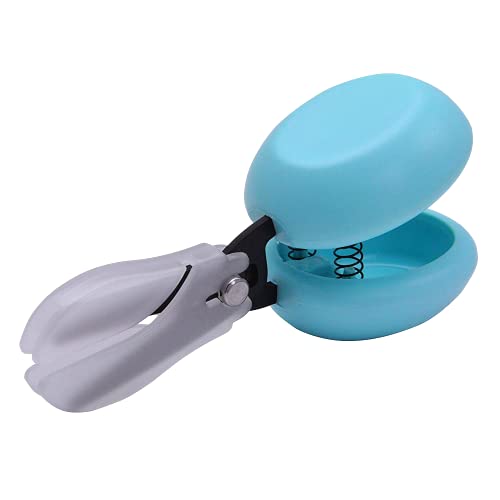
These scissors are designed to help develop fine motor skills, hand-eye coordination, grip strength, dexterity, and bilateral coordination in toddlers and young children. The rounded blade edge and detachable safety cover prevent direct contact with the blade, enhancing safety during use. The ergonomic, ambidextrous design accommodates both hands, and the spring-loaded mechanism opens the blades automatically after each cut, supporting users with limited hand strength. Suitable for those with autism, physical disabilities, or undergoing rehabilitation, the universal design prioritizes safety and ease of use. The product carries a Good Design Award in Japan, reflecting thoughtful design for diverse users.
HARAC Tabletop Mounted Adaptive Scissors
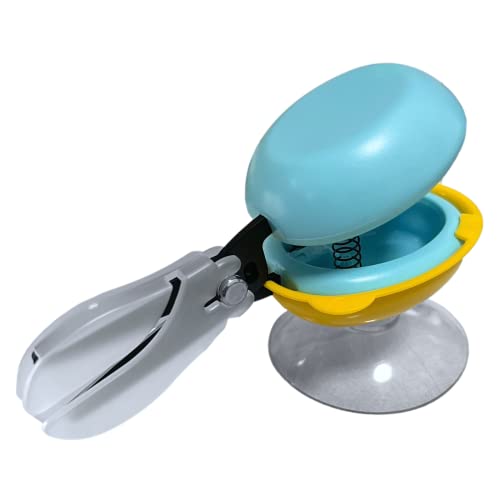
Designed for stable tabletop use, these scissors feature a suction base that secures to tables or walls, enabling hands-free operation by pressing with the palm, elbow, or forearm. The universal design suits toddlers learning motor skills, children with special needs, and individuals with limited hand mobility, including seniors with weak grip strength. High-quality Japanese stainless steel blades cut smoothly with minimal effort, and a safety blade cover allows cutting while attached. The tool emphasizes safety and stability for classroom therapy centers or home use, with easy adaptability for various cutting tasks.
Special Supplies Mini Loop Scissors

Adaptive 5.5-inch loop scissors designed for easy-squeeze use by teens, children, or toddlers with low coordination or hand strength. Suitable for home and classroom environments, these scissors automatically re-open after each cut to help maintain control. The looped handles provide a higher level of stability for users who need larger finger openings, supporting steady cutting with reduced fatigue. The compact size is ideal for small hands and developing motor skills, making them a practical addition to arts and crafts activities in special education settings.
3Pcs Loop Scissors (Telooco)
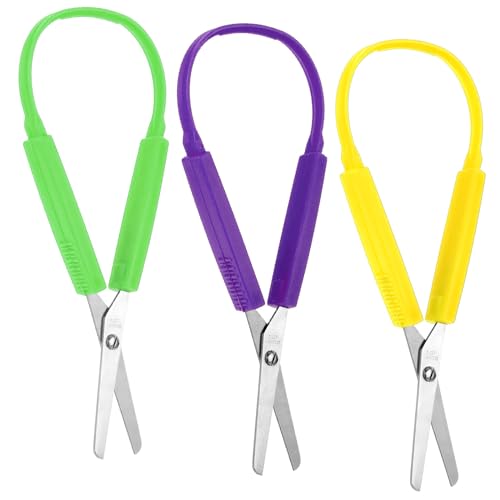
This 3-piece loop scissors set offers three color options, enhancing engagement for children who benefit from visual variety. Each pair measures about 5.5 inches, a size well-suited for slender hands and beginners. Made from durable stainless steel to resist rust, the scissors feature a safety design and easy grip, supporting both left- and right-handed users. The multi-pack format supports classroom needs or family use, enabling multiple children to practice cutting skills without sharing restricted tools.
Abilitations Adapted Scissors

Abilitations Adapted Scissors provide self-opening assistance for right-handed users, supporting easy starts for beginners and those with limited finger dexterity. The design aims to mimic the feel of regular scissors while offering cutting assistance, simplifying the cutting process for users who require extra help. The product emphasizes comfortable grip and stability, facilitating independent use in classrooms or home settings and enabling progress toward greater motor control over time.
Buying Guide
Key considerations when choosing adapted scissors for special needs include safety features, grip design, force required to cut, and stability during use. For beginners or rehabilitation contexts, spring-loaded mechanisms can reduce the effort needed and support consistent cutting action. If table-top use is preferred, look for suction bases or wall-mount options to free up hands for stabilization through the palm, elbow, or forearm. Ambidextrous handles improve accessibility for left- and right-handed users, while rounded blades and safety covers minimize risk during practice. Material quality, blade smoothness, and ease of cleaning are practical factors for regular classroom or habitat use. Finally, consider whether a multi-pack or color-coded options better support classroom management and engagement, especially for younger learners. Evaluate each product’s intended age range, mobility needs, and whether the design accommodates ongoing therapy goals or home activities.