Best Downdraft Table for Sanding: Clear Dust, Better Finish
Downdraft tables support cleaner air and better dust control during sanding by pulling dust away from the workpiece and into a built-in collection system. This guide highlights top downdraft tables and accessory panels from trusted brands, helping American woodworkers compare sizing, ports, and airflow features to fit their shop layouts and dust-management goals.
| Product | Brand | Key Feature |
|---|---|---|
| Rockler Downdraft Table | Dust Right | Downdraft airflow with adjustable sides/back for containment |
| Shop Fox W1734A (15″ x 25″) Downdraft Table | Shop Fox | Compact, 2-1/2″ dust port, lightweight |
| Shop Fox W1733A (20″ x 40″) Downdraft Table | Shop Fox | Bench-top design with 4″ dust port and non-slip feet |
| Peachtree Woodworking Downdraft Panel Set | Peachtree Woodworking | Panel set with rubber grommets to prevent stock marking |
| WOODRIVER Downdraft Panels | WOODRIVER | Movable stops and blank panel options for small pieces |
Rockler Downdraft Table
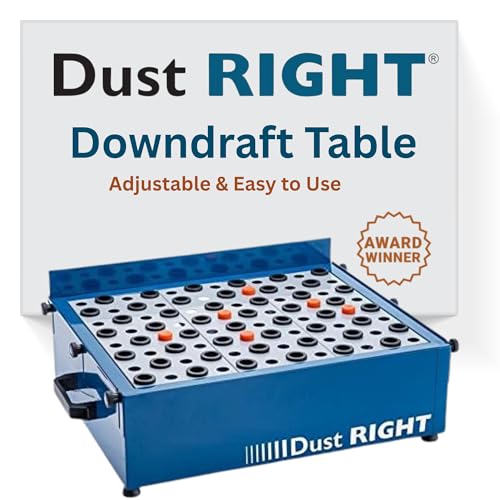
The Rockler Downdraft Table by Dust Right is designed to pull dust downward as you sand, reducing airborne particles and improving air quality in small to mid-size shops. Its sides and back can be raised to contain dust or removed to accommodate larger workpieces. The unit provides controlled downward airflow that directs dust into a chute leading to your dust-collection system, making it a practical choice for orbital sanders that generate fine dust. The metal construction with a durable powder-coat finish offers long-term durability and stability, with adjustable rubber feet to level the table on uneven floors.
Key benefits include enhanced visibility and cleaner sanding surfaces, which help prevent dust from resettling on your freshly sanded pieces. While setup is straightforward, buyers should consider how their dust-collection system integrates with the table’s downward airflow path. For small-shop workflows prioritizing air quality, this downdraft table aligns well with standard dust-collection configurations and can support a wide range of sanding tasks.
Shop Fox W1734A Downdraft Sanding Table

This 15″ by 25″ downdraft table from Shop Fox combines a compact footprint with practical dust-control features. The table includes a 2-1/2″ dust port and a 15″ by 25″ work area, making it suitable for smaller projects and benchtop use in tight shops. It weighs about 14 pounds, which supports easy relocation if needed. The design focuses on efficient dust capture during sanding operations, helping to minimize airborne dust while preserving workspace cleanliness. It’s a solid option for hobbyists and professionals who prioritize portability and straightforward setup in addition to dust management.
Potential considerations include the airflow capacity relative to sanding workloads and how the table fits alongside other benchtop equipment. For users with limited space, this model provides a balanced solution between table size, dust collection, and mobility, while maintaining a stable work surface for delicate or detailed sanding tasks.
Shop Fox W1733A Downdraft Table

The Shop Fox W1733A model offers a larger work area, measuring 20″ by 40″, with a 4-inch dust port that accommodates typical shop vacs or dust-collection hoses. Its bench-top design includes non-skid feet to reduce movement during sanding tasks, ensuring consistent dust capture even when applying light to moderate sanding pressure. The table’s airflow helps pull fine dust away from the workpiece, supporting better surface finishes and reduced particle resurfacing on surrounding tools.
Considerations for this table include the compatibility of the dust-collection system with the table’s port size and the overall noise level associated with continuous dust extraction. It’s well-suited for users who work on mid-to-large projects or who need ample workspace without sacrificing dust control in a permanent-benchtop setup. The solid build and larger surface area can enhance productivity for more demanding sanding sessions.
Peachtree Woodworking Downdraft Panel Set

The Peachtree Woodworking Downdraft Panel Set includes two panels designed to complement downdraft setups by providing additional dust containment. Each panel measures 6 3/4″ by 16 1/2″ and comes with rubber grommets to prevent stock marking during sanding. Orange stops are included to help prevent stock movement. These panels are particularly useful when adapting existing tables or workplace layouts to improve dust capture around smaller pieces or irregular shapes, offering modular flexibility for sanding operations that require customized dust-management coverage.
From a practical standpoint, users should verify compatibility with their current downdraft table dimensions and whether they need extra stops or grommets for specific stock types. The panel set is a modular addition that can expand containment and reduce the risk of airborne dust during intricate sanding tasks, especially in wood shops with limited ventilation or where clean air is a priority for safety and comfort.
WOODRIVER Downdraft Panels

The WOODRIVER Downdraft Panels offer 16-1/2″ by 6-3/4″ panels with rubber grommets and movable stops to minimize workpiece movement. A blank steel panel option can block off one side for smaller workpieces, enabling a customizable dust-control surface that can adapt to varied sanding tasks. This flexibility is beneficial for shops that regularly switch between different piece sizes, as it allows users to create a more focused dust-collection footprint without needing to invest in multiple fixed fixtures.
When evaluating these panels, consider the number of panels needed for typical workpieces, the ease of installation, and how the panels interact with your primary downdraft table. The WOODRIVER solution is particularly attractive for shops seeking modularity and the ability to tailor dust containment to each project, helping sustain cleaner air and better finish quality during sanding operations.
Buying Guide: Key Purchase Considerations And Comparisons
Air quality and dust control are the core reasons to choose a downdraft table or related panels. When evaluating options, consider the following:
- Work surface size: Choose a table that fits your most common project dimensions. Larger tables support bigger pieces but require more space and more powerful dust collection to maintain airflow.
- Dust port size and compatibility: Ensure the table’s dust port matches your vacuum or dust-collection hose. A mismatched port can reduce suction and dust capture efficiency.
- Airflow level: Downdraft tables should create sufficient downward airflow to pull dust from the workpiece into the table. Consider models with adjustable airflow or expandable containment for larger pieces.
- Containment features: Sides and back panels that can be raised, lowered, or removed provide flexibility for different piece sizes and shapes, reducing dust leakage during sanding.
- Material and durability: Metal frames with powder-coat finishes offer durability in shop environments. Look for stable feet or leveling options to maintain accuracy on uneven floors.
- Modularity and expansion: Panels and add-ons (like bumper stops or rubber grommets) help tailor the dust-control footprint. Consider whether you’ll need future expansion for new tools or projects.
- Portability vs. fixed setup: Some downdraft tables are lighter and easier to reposition, while larger models may be intended as permanent fixtures. Balance mobility with dust-control efficiency for your workflow.
- Brand and compatibility: Reputable brands often provide more reliable dust collection integration and better customer support. Ensure compatibility with your existing dust-collection system and accessories.
Buying decisions should balance project size, shop space, and dust-management goals. For small shops prioritizing air quality, compact tables with effective containment and reliable dust-port connections can deliver meaningful improvements. For professional shops handling larger workloads, a bigger table with robust containment and flexible panels can streamline sanding tasks and keep the air cleaner over longer sessions. Panels and add-ons extend the life and versatility of your dust-control system, especially when frequently switching between piece sizes or sanding styles.