Best Router Bit for Handrail: Precision Edges for Banisters
Choosing the right router bit for handrails and table edges ensures smooth cuts, crisp profiles, and durable finish on any wood species. The following selections emphasize large-radius and thumbnail-edge profiles commonly used in banister work, table edging, and furniture detailing. Each product below is evaluated for cut quality, durability, and compatibility with standard 1/2-inch shank routers. Whether you’re building classic stair rails or refined table edges, these bits provide consistent results across projects.
Summary of Selected Products
| Product | Brand | Diameter | Shank | Ideal For |
|---|---|---|---|---|
| Freud 99-444 | Freud | 1-3/16″ dia | 1/2″ | Handrails, large-radius profiles |
| Akylin Table Edge and Handrail Router Bit | Akylin | 3″ diameter | 1/2″ | Table edges, thumbnail edge, handrails |
| Freud 99-027 | Freud | 2-19/32″ dia | 1/2″ | Table edges, handrails, custom bannisters |
| Yonico 13127 | Yonico | 2-1/2″ dia | 1/2″ | Classical edge profiles, table tops |
| Akylin 3Pcs Table Edge Set | Akylin | 2″, 7/8″, 1″ thumbnail options | 1/2″ | Mix of thumbnail edges for tables and rails |
Freud 99-444: Handrail Bit With Large Radius
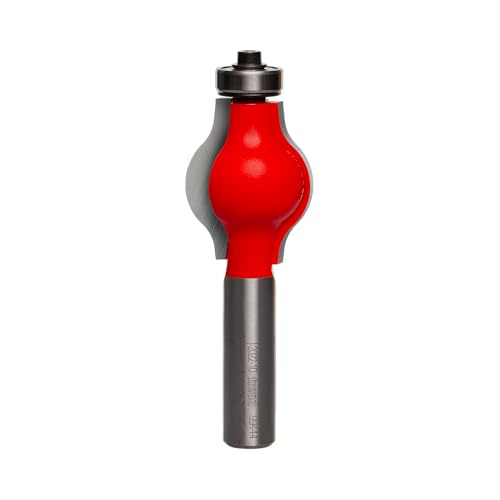
The Freud 99-444 combines accuracy with a substantial radius suitable for elegant handrails. Bearing diameter measures 5/8″, with a large radius of 1/2″ and a small radius of 3/8″. The bit features two cutters and an overall diameter of 1-3/16″ with a 1/2″ shank. Overall length is 3-1/2″. This setup is designed to mill refined railing profiles across diverse wood species, enabling clean curves suitable for stair banisters and table edges. It pairs well with Freud models 99-450, 99-452, or 99-027 for top-profile matching when a unified look is desired.
Key attributes include a durable carbide height of 1-1/2″ and compatibility with common 1/2″ shank routers. The tool excels at producing smooth, consistent curves with minimal tear-out when used with appropriate feeds and speeds. For projects requiring precise rail profiles, this Freud bit offers reliability and repeatable results across multiple passes.
Akylin Table Edge and Handrail Router Bit, 1/2″ Shank

This Akylin router bit is built for thumbnail edge profiles on tables and handrails. It uses a 1/2″ shank and offers a cutting depth of 1-1/4″ with a 3″ cutting diameter and a cutting height of 13/16″. The design targets dining and coffee table edges, handrails, and similar moldings. The thumbnail profile adds a refined, decorative edge that complements a wide range of woods. Akylin notes compatibility with handrail bits to create cohesive banisters and rail systems, making it suitable for complete stair projects as well as furniture detailing.
The dual-flute carbide tips deliver good edge quality and longevity, with straightforward setup for beginners and pros alike. For users aiming to craft clean, repeated thumbnail edges across multiple pieces, this router bit provides a reliable, economical option in a 1/2″ shank format.
Freud 99-027: Table Edge & Handrail Bit

The Freud 99-027 is a robust option for creating table edges, handrails, and more. With a bearing diameter of 1/2″ and a large radius of 1-25/32″, it offers four cutters for detailed profiles. The overall diameter is 2-19/32″, and the overall length is 2-5/8″, with a 1/2″ shank and a small radius of 13/64″. Carbide height measures 23/32″. This bit is designed to rout elegant table and furniture details and is commonly paired with Freud 99-442, 99-444, or 99-446 to create customized bannisters and handrails. It strikes a balance between aggressive cutting and refined edge work, supporting a wide range of handrail designs.
For projects requiring intricate profiles, the 99-027 offers multiple cutter tips to achieve consistent results. When used with a compatible collection of Freud handrail bits, it supports modular, repeatable profiles across stairways, rails, and tables. Proper feed direction and speed are essential to maximize accuracy and minimize tear-out on hardwoods.
Yonico 13127: Table Edge & Handrail Bit

The Yonico 13127 is designed for table edges and handrails with a 2-1/2″ diameter and a 1/2″ shank. It features premium C3 micro-grain tungsten carbide blades that provide a sharp, long-lasting edge. Suitable for table-mounted and handheld routers, this bit excels at producing classic and ornate edge profiles on tabletops and railing components. The larger diameter promotes prominent profiles, making it a preferred choice for custom banister work where a pronounced edge is desired and repeatability across pieces is important.
Users should consider the bit’s balance between cutting depth and feed rate to avoid overloading the cutter, especially when working with dense hardwoods. Proper chip ejection and proper clearance can help in achieving a consistent finish across multiple passes. Yonico’s edge quality and blade geometry support clean cuts with reduced burning when handling longer routing sessions.
Yonico 13140: Thumbnail & Handrail Router Bit
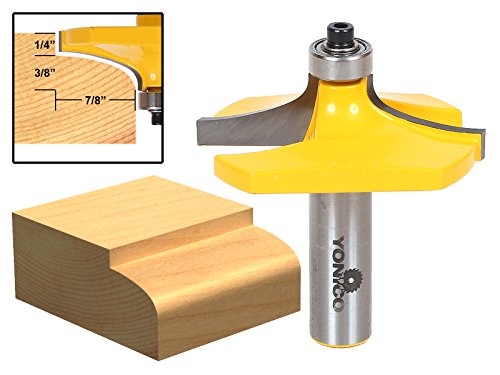
The Yonico 13140 focuses on thumbnail edge work for tables and handrails, delivering a compact 2-1/4″ diameter with a 1/2″ shank. The tool emphasizes a clean thumbnail profile that enhances furniture surfaces and rail details. It pairs well with handheld routers and offers the precision necessary for delicate accent edges on tabletops and banister components. As with other Yonico bits, the premium carbide blades aim for sharp, long-lasting performance across typical softwood and hardwood applications.
For projects that call for a more understated thumbnail edge, the 13140 provides consistent results with good surface quality. When using it on larger pieces, ensure steadier guidance and feed control to minimize chatter and maximize edge uniformity throughout the cut.
Buying Guide: Key Purchase Considerations
- Shank size and compatibility: Most handrail and table-edge bits use a standard 1/2″ shank. Confirm your router accepts 1/2″ shanks and consider 1/4″ optional variants if you have compact routers.
- Diameter and radius options: Larger diameters (2-3 inches) produce bold profiles, while smaller diameters create subtle edges. For handrails, large-radius bits deliver smoother curves; for table edges, thumbnail edges add decorative lines without overwhelming the surface.
- Number of cutters and carbide quality: Bits with multiple cutters and high-quality carbide (like C3 micro-grain tungsten carbide) yield cleaner cuts and longer life, particularly on hardwoods. Fewer cutters can be faster but may wear unevenly on dense woods.
- Cutting depth and height: Match cutting depth to the profile you want. Higher cutting heights offer deeper relief but require careful feed control to maintain edge consistency and avoid tear-out.
- Profile compatibility: Some brands offer complementary bits designed to be used in sets (e.g., top-profile matching or banister combinations). Check if you need a companion bit to complete a rail or table edge look.
- Material considerations: Hardwood and softwood respond differently. Use appropriate feeds, climb vs conventional routing, and ample dust extraction to improve surface finish and prolong tool life.
- Router capability and safety: Ensure your router’s horsepower and RPM range suits the bit’s carbide height and diameter. Use clamps, push blocks, and eye protection for safe operation.
- Maintenance and replacement: Bits with shared profiles often require occasional sharpening or replacement of cutters. Store bits in a dry place to reduce corrosion and maintain sharpness.
- Aesthetic goals: Decide whether you want a bold, classic, or subtle edge profile. This will guide your choice among thumbnail edges, large-radius profiles, or ornate ogee offerings.