Best 8 Inch Circular Saw Blades for Wood and Light Metal Cutting
Choosing the right 8-inch circular saw blade can improve cut quality, reduce work time, and extend blade life. This guide highlights five dependable options across wood-focused, metal-cutting, and crosscutting needs. Each blade features a distinct tooth design, kerf, and arbor compatibility to help you match your saw and project. The selections emphasize durability, cleaner finishes, and versatility for common framing, decking, and light metal tasks.
| Product | ||||
|---|---|---|---|---|
| KuangBBBTools 8″ 40T | KuangBBBTools | 40T | 5/8″ | General wood cutting; ripping and crosscutting |
| Evolution 8BLADEMS | EVOLUTION | 50T | 5/8″ | Mild steel and ferrous metal cuts |
| Diablo D0842CF | Diablo | 42T | 5/8″ | Thick metal and durable metal cutting |
| Milwaukee 42T 8″ (48-40-4515) | Milwaukee | 42T | 5/8″ | Crosscuts and clean finishes |
| Freud LU88R008 | Freud | 48T | 5/8″ | Fine finish crosscuts |
KuangBBBTools 8″ 40 Teeth Carbide Tip Blade
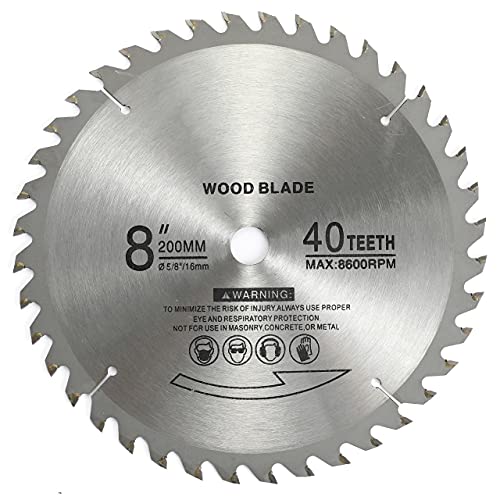
This 8-inch general-purpose blade uses 40 carbide-tipped teeth for a balance of speed and smoothness. The ATB tooth profile supports clean ripping and crosscuts in softwood, hardwood, and plywood, with a 5/8″ arbor compatible with common table, miter, and combination saws. The blade’s kerf of 0.1″ helps minimize material waste while maintaining stable cuts. With a 10–15 degree hook angle, it prioritizes fast, consistent feeding, ideal for shop workloads that mix framing and trim tasks.
Features to note include a 0.055″ plate thickness for rigidity and a 10,000 RPM rating to handle dense woods. This blade is not intended for metal cutting, ensuring you won’t risk material damage or blade wear when switching projects. The blade’s compatibility makes it a strong all-around choice for DIYers and professionals who value versatility in a single 8″ blade.
Evolution 8BLADEMS 8″ 50T Steel Cutting Blade

The Evolution 8BLADEMS is designed specifically for cutting mild steel and ferrous metals. With 50 teeth and a tungsten carbide composition, it’s engineered for reduced heat build-up, smoother finishes, and extended blade life. The blade minimizes sparks and heat, enabling safer, cleaner cuts in metalworking projects. It’s optimized for metal-cutting saws and can handle light steel framing and repair jobs without compromising blade integrity.
Note that this blade is not intended for galvanized, hardened, or high-carbon steels. Its design emphasizes a balance between aggressive metal removal and heat management, making it a reliable option for mechanical room work, automotive projects, or metal framing where clean edges and quick cutting are critical.
Diablo D0842CF Steel Demon Cermet II Blade
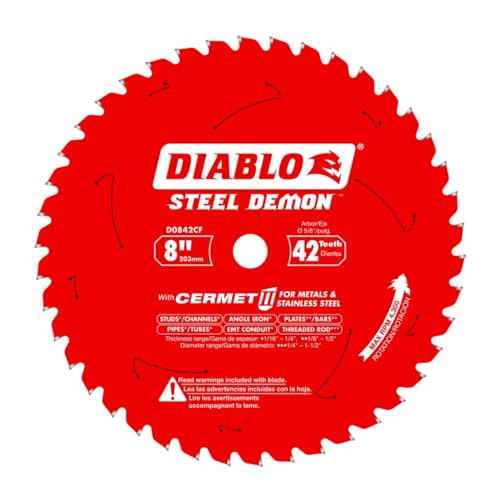
Diablo’s Cermet II technology blends ceramic and metallic materials to deliver high heat tolerance and extended wear life. This 8″ blade features 42TCG teeth and a 5/8″ arbor, with a kerf of 0.075″ and an aggressive 0° hook angle for precise metal cutting. The design promotes cooler operation, reducing tool wear and helping maintain straight cuts on thick metals. The blade’s stabilizer vents minimize vibration for steadier cuts and longer service life under heavy use.
Ideal for thicker metal work where durability and reduced downtime matter, the blade aims to minimize blade changes on demanding jobsites. It’s a strong match for metal fabrication, railing, and automotive applications where straight, repeatable cuts are essential.
Milwaukee 8″ 42T Cermet Crosscut Blade

Milwaukee’s 42-tooth crosscut blade is built for clean, fast finishes. Its cermet construction provides improved wear resistance and cooler operation, helping deliver finished cuts with reduced finishing work. The positive hook angle supports smooth feeding and faster progress through wood and composite materials, making it suitable for framing, cabinetry, and trim tasks. The 5/8″ arbor ensures compatibility with most 8″ saws and miter boxes.
Users should expect clean edges and minimal tear-out on plywood and hardwood, with fewer burrs compared to lower-tooth-count blades. It’s a practical choice for projects requiring precise, cosmetic cuts, especially where speed matters without sacrificing finish quality.
Benchmark Abrasives 8″ 64T TCT Blade

This 8″ blade from Benchmark Abrasives features 64 tungsten carbide teeth for fine, precise cuts in softwoods and hardwoods alike. Its carbide tips are designed for extended life and reduced chipping, especially in plywood and MDF. The blade is positioned for high-quality crosscuts and trim work, with durability that supports frequent changes in project demands. It’s a strong option for professionals who need tight tolerances and smooth finishes across a variety of wood species.
Keep in mind that a higher tooth count can trade bulk removal for smoother edges; pairing this blade with a slower feed rate can optimize results on dense boards. The blade’s universal 8″ size and 5/8″ arbor help fit most standard saws, minimizing compatibility issues on job sites.
Buying Guide: Key Considerations For 8-Inch Circular Saw Blades
- Material and tooth design: ATB teeth are common for general wood cutting; alternative designs (TC, laser-cut, cermet) improve metal cutting and reduce heat. Choose based on the main material you work with most often.
- Arbor size and kerf: Ensure a 5/8″ arbor compatibility and a kerf that matches your saw and cutting style. A thinner kerf reduces material loss but may require steadier feeds.
- Cut quality vs. speed: More teeth typically yield smoother finishes but can slow aggressive material removal. For framing or decking, 40–50T is versatile; for finish work, 48–64T shines.
- Durability and heat management: Carbide tips and cermet constructions resist wear and heat, extending blade life on metal or dense wood. Consider blades with stabilizers or vents to reduce vibration and heat buildup.
- Intended use: Distinguish between general-purpose wood blades, crosscut finishes, and metal-cutting blades. Using the wrong blade can reduce performance and safety.
- Safety and compatibility: Always confirm compatibility with your saw model, including RPM range and non-metal cutting restrictions. Use appropriate PPE and follow manufacturer guidelines.
In summary, the five blades reviewed offer a spectrum of capabilities—from wood-focused general-purpose cutting to metal cutting and refined crosscuts. For a workshop that handles framing, cabinetry, and light metal work, these selections provide dependable options to optimize efficiency and cut quality across diverse projects.