Best Chainsaw Cut-Resistant Gloves for Safe, Durable Hand Protection
Choosing the right chainsaw gloves is essential for hand safety and comfort during heavy carpentry, forestry, or yard work. This guide highlights five top-rated options offering cut resistance, dexterity, and durable materials. Each product is evaluated on standards compliance, protection coverage, and wearability. Read on to compare features and pick the glove that best fits your needs.
| Product | Brand | Key Feature |
|---|---|---|
| Intra-FIT Chainsaw Gloves Saw Protection on Left Hand Back | Intra-FIT | Left-hand protection with back-of-hand layers |
| Oregon Protective Chainsaw Work Safety Gloves | Oregon | Left-hand protection; reinforced palm |
| Oregon Chainsaw Left-Hand Protection Leather Gloves | Oregon | Extra thick left-hand protection; close-fit wrist |
| ZELARMAN Chainsaw Safety Gloves | ZELARMAN | 12-layer back-of-left-hand protection; EN ISO 11393-4 |
| Intra-FIT Chainsaw Gloves Both Hands Back | Intra-FIT | Dual-hand protection; back-of-hand padding |
Intra-FIT Chainsaw Gloves Saw Protection on Left Hand Back

The gloves are designed for left-hand protection, featuring a back-of-hand protective layer and a premium cowhide palm. They comply with EN ISO 11393-4:2019, Design A Type 2, with CAT III modules B and C2 indicating enhanced back-of-hand reinforcement. The gloves also pass EN 388:2016 with a 3133X rating, reflecting strong abrasion and cut resistance. This model emphasizes back-of-hand safety for users who frequently handle or adjust a running chainsaw.
Oregon Protective Chainsaw Work Safety Gloves
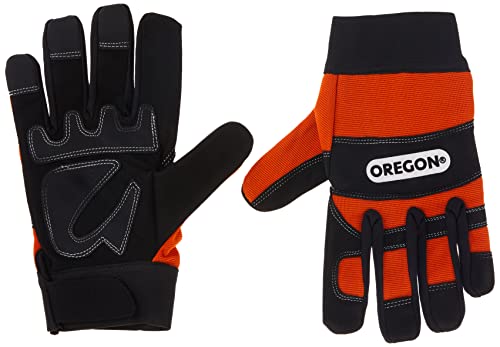
These gloves focus on left-hand protection with a shaped and reinforced palm. Exposed areas are kept seamless and reinforced with leather to withstand abrasion and grip challenges during chainsaw operation. The design aims for durability during prolonged use, while maintaining dexterity for precise handling and control.
Oregon Chainsaw Left-Hand Protection Leather Gloves
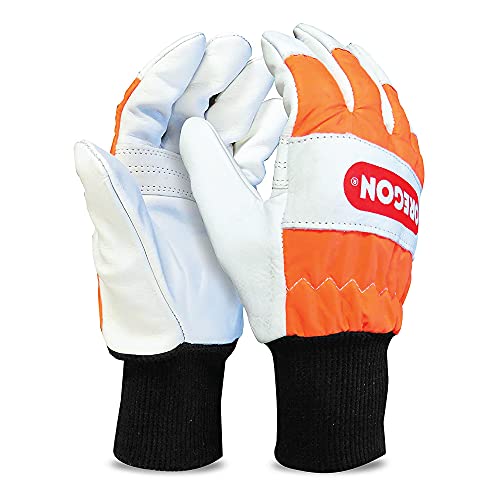
These large-size gloves emphasize left-hand protection with extra-thick material designed to meet EN ISO 11393-4 standards. The palms are reinforced for maximum control when gripping a chainsaw, and the close-fit wrist helps prevent debris and moisture from entering the glove. They balance durability with fingertip precision for operation and safety.
ZELARMAN Chainsaw Safety Gloves

The ZELARMAN gloves feature 12-layer protection on the back of the left hand, aligning with EN ISO 11393-4 Class 1 (20 m/s). They combine genuine leather palms with reinforced stitching to ensure durability and grip. The design targets forestry workers and homeowners seeking robust left-hand protection with reliable cut resistance for routine chainsaw use.
Intra-FIT Chainsaw Gloves Both Hands Back

This model covers both hands with back-of-hand protection, meeting EN ISO 11393-4 standards (Class 1, 20 m/s) and CAT III Module B and Module C2. The gloves use synthetic leather palms with EVA padding and extra knuckle protection provided by robust neoprene. The design aims to offer comprehensive safety for users needing dual-hand coverage during chainsaw work.
Buying Guide
- Standards and certifications: Look for EN ISO 11393-4 certification and Class level appropriate to your work speed. Higher classes offer better protection against chainsaw teeth and kickback.
- Back-of-hand protection: Gloves with reinforced or padded back-of-hand areas reduce injuries from glove exposure and chainsaw contact during handling and adjustments.
- Palm material and grip: Genuine cowhide or reinforced leather palms provide durability and secure grip, reducing tool slippage during operation.
- Dexterity and fit: A close fit with a flexible wrist closure improves control and prevents debris entry. Keystone thumb designs and pre-curved fingers can increase dexterity for precise cuts.
- Ventilation and comfort: Breathable back fabrics and lining help reduce sweat buildup on long jobs, improving wearability without sacrificing safety.
- Left-hand vs. dual-hand coverage: If your workflow involves frequent left-hand exposure to the cutting area, prioritize back-of-hand protection on the left; dual-hand models provide symmetrical protection for both hands.
- Durability vs. cost: Leather gloves tend to be more durable and offer long-term value; synthetic backings may improve comfort but could wear faster in harsh environments.
- Maintenance: Some gloves are water-repellent or easy to clean; consider care instructions to extend glove life in dusty or damp conditions.
When selecting gloves, consider typical work scenarios, glove size availability, and compatibility with other PPE. Safety standards and material composition influence both protection and comfort—choose a model that balances these aspects for your specific tasks.