Best Jigsaw Blades for Steel: Top Picks for Metal Cutting
Selecting the right jigsaw blade for steel can dramatically improve cutting precision and blade life. The following hand-picked blades are optimized for metal and stainless steel, offering durability, clean cuts, and compatibility with common jig saws. Use this guide to compare steel-focused blades across performance, tooth design, and blade material.
| Product | Brand | Best For | Tooth Type |
|---|---|---|---|
| Bosch TPM005 5 pc. Pro-Metal T-Shank Jig Saw Blade Set | Bosch | Stainless steel and metal with carbide edge | Progressive/Carbide |
| Bosch T118GFS 5-Piece 3-1/4 in. 36 TPI Basic for Stainless Steel T-Shank Jig Saw Blades | BOSCH | Stainless steel, clean straight cuts | 36 TPI, milled |
| Diablo High Speed Steel Jig Saw Blades for Thick Metal – T-Shank, 3-5/8″ – DJT118B5 | Diablo | Thick metal, fast cuts | High-Speed Steel |
| Diablo Bi-Metal Jig Saw Blades for Thick Metal – 3-5/8″, 12 TPI – DJT121BF5 | Diablo | Thick metal, long blade life | Bi-Metal |
| Bosch T118G 5 pc. 3-5/8 in. 36 TPI Basic for Metal T-Shank Jig Saw Blades | Bosch | Very thin metal sheets to ferrous metals | 36 TPI |
Note: All selections are compatible with standard T-shank jig saws and are designed to deliver clean, accurate cuts in steel and metal applications.
Bosch TPM005 5 pc. Pro-Metal T-Shank Jig Saw Blade Set

The Bosch TPM005 Pro-Metal set is designed for cutting stainless steel and metal, offering multiple blade types that prioritize metal performance. It includes carbide-edge blades for stainless steel and a progressive tooth design to balance speed and blade life. The Progresser for metal provides faster cuts while maintaining durability across varying thicknesses, making it a versatile choice for metal fabrication tasks.
Bosch T118GFS 5-Piece For Stainless Steel T-Shank Blades

These blades are an economical choice for straight cuts in 8-26 gauge stainless steel, featuring a 36 TPI wavy set with milled teeth for clean, smooth cuts. The Bi-Metal construction provides durability and extended blade life, making them suitable for repeated use on stainless and light metal panels. Ideal for projects requiring consistent straight lines in stainless metal sheets.
Diablo High Speed Steel Jig Saw Blades for Thick Metal – DJT118B5

Diablo’s High Speed Steel blades are engineered for long-lasting performance in thick metal cutting. The edge is designed to maintain its cutting edge for extended periods, allowing smooth, efficient cuts through medium-to-heavy metal. Its universal T-shank fit ensures compatibility with most jig saws, providing versatility for various tool brands.
Diablo Bi-Metal Jig Saw Blades for Thick Metal – 3-5/8″, 12 TPI

Diablo’s Bi-Metal blades deliver efficiency with a cool-cutting design, helping prevent overheating during deep cuts in metal. The 12 TPI configuration balances fast cutting with controlled removal of material, while the ultrahardened edge extends blade life. This makes them suitable for repetitive cuts in thick metal applications and professional use.
Bosch T118G 5 pc. 3-5/8 in. 36 TPI Basic for Metal
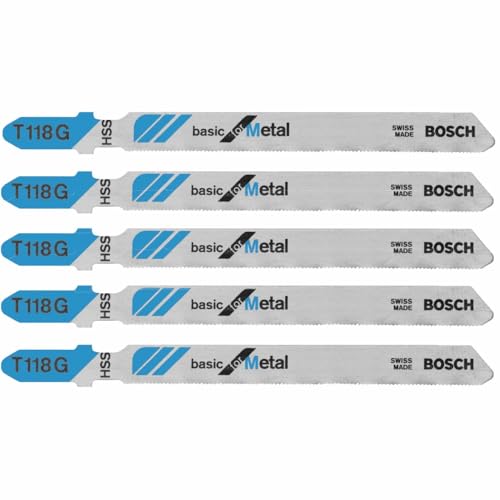
This Bosch set targets thin ferrous and non-ferrous metals, including sheet metal 17-26 gauge and very thin metals 1/64″ to 3/64″ thick. With a 36 TPI tooth design, these blades provide smooth, precise cuts in metal with a high-speed steel construction for durable straight cuts. They are ideal when fine metal sheets require clean finishes.
Buying Guide: Key Considerations For Best Steel Cutting Jigsaw Blades
When choosing jigsaw blades for steel, consider blade material, tooth configuration, and compatibility with your jig saw. Here are several factors to weigh:
- Material and construction: Carbide-edged and bi-metal blades offer longer life when cutting stainless steel and tough metals, reducing dulling and blade changes during metal work.
- Tooth design and count: Higher TPI counts produce smoother cuts in thin metals, while lower TPI blades remove material faster for thick metal. For steel, 12-36 TPI is common depending on thickness and desired finish.
- Blade length and shank type: T-shank blades are widely compatible with most modern jig saws, while U-shank blades may require adapters. Length should suit the material thickness you’re cutting.
- Cut quality vs. speed: Carbide edges and progressively designed teeth improve finish and longevity but may cost more. Bi-metal blades balance performance and value for heavy metal cutting.
- Application specifics: For stainless steel vs. ferrous metal, select blades designed for stainless or metal-specific blades to optimize results and reduce work-hardening or heat buildup.
Practical guidance for selecting: for thin stainless sheets, pick a 36 TPI stainless-specific blade with milled or carved teeth; for thick metal, choose high-speed steel or bi-metal blades with robust tooth geometry; for versatile use across metal thicknesses, a metal-focused pro-set provides a range of options in one pack.
Usage Tips
Clamp workpieces securely and drill a pilot guide if necessary to prevent blade deflection. Maintain steady feed pressure without forcing the blade, and let the blade do the cutting. Regularly inspect blades for dull teeth or chipped edges and replace as needed to preserve cut quality.
Compatibility Considerations
Verify your jig saw model supports T-shank blades and confirm the maximum blade length your tool can accept. For projects involving multiple materials (metal, wood, or plastic), consider purchasing a mixed set with dedicated metal blades to optimize performance and minimize blade changes.