Best Cement Board Circular Saw Blades for Fiber Cement Projects
Choosing the right cement board circular saw blade can dramatically improve cut quality, reduce dust, and extend blade life when working with fiber cement boards and related hard materials. This guide highlights five top-performing options, detailing their features, and offering practical buying tips to help American DIYers and professionals select the best blade for fiber cement, HardiePlank, Eternit, and laminate applications.
Summary of chosen products
| Product | Brand | Diameter | Arbor | Specialty |
|---|---|---|---|---|
| WEN BL0704 | WEN | 7-1/4″ | 5/8″ | PCD diamond-tipped for fiber cement and laminate |
| Diablo D0704DH | Diablo | 7-1/4″ | 5/8″ | PCD tipped; James Hardie approved |
| Janchi 6-1/2″ | Janchi | 6-1/2″ | 5/8″ | Long life; ultra-thin kerf; laser-cut |
| CRALY C0604FC | CRALY | 6-1/2″ | 5/8″ | PCD; non-stick coating; thin kerf |
| TOMAX PCDM61204 | TOMAX | 6-1/2″ | 5/8″ | 4 PCD teeth; fast cutting |
WEN BL0704 7-1/4-Inch PCD Blade Review
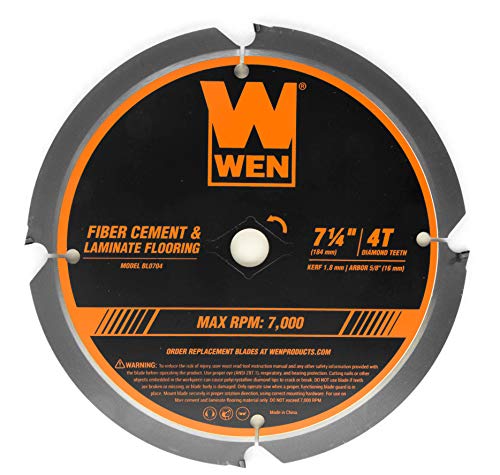
The WEN BL0704 features a 7-1/4-inch diameter with a 5/8-inch arbor and a robust 7000 RPM rating, making it well-suited for fiber cement boards and laminate flooring. Its ultra-thin kerf of 1/15 inch (about 1.8 mm) enables clean, efficient cuts with reduced waste. The PCD-tipped edge reduces wear and extends blade life under heavy use, aligning with professional demands and home projects alike.
Key benefits include fast cutting action, minimal dust generation due to the thin kerf, and compatibility with standard 7-1/4″ circular saws. The blade is designed for fiber cement and laminate applications, providing reliable performance when shaping HardiePlank or similar materials. As with all PCD blades, optimal results depend on correct feed rate and proper alignment to maximize life and cut quality.
Diablo HardieBlade Fiber Cement Blade, 7-1/4″ D0704DH
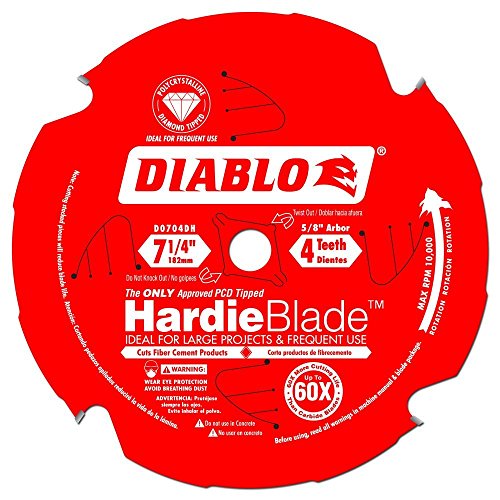
The Diablo HardieBlade for fiber cement is a 7-1/4″ blade with a 4-tooth PCD edge designed for heavy-duty cuts. Its triple-chip design provides up to 75 times longer life than standard carbide blades, reducing blade changes on long fiber cement runs. It also minimizes dust generation—up to 50% less respirable dust—creating a safer, cleaner work environment. James Hardie approval indicates reliable performance with fiber cement products, offering dependable results for frequent fiber cement cutting tasks.
Janchi 6-1/2″ PCD Hardie Blade for Fiber Cement

Janchi’s 6-1/2″ PCD-tipped blade targets fiber cement and laminate work with a 5/8″ arbor. It offers up to 60 times longer life than standard carbide blades thanks to its four PCD teeth. The ultra-thin kerf of 1.8 mm allows fast, precise cuts with less waste. Features such as a laser-cut body and anti-vibration design contribute to smoother operation and reduced chatter, making it suitable for HardiePlank, Eternit, MDF, and Corian along with fiber cement boards.
CRALY 6-1/2″ Hardie Fiber Cement Blade with PCD

CRALY’s C0604FC blade uses a 6-1/2″ diameter with a 5/8″ arbor and PCD-tipped teeth. It features a thin kerf (1.8 mm), a non-stick coating, and laser-cut expansion slots to reduce heat buildup and binding. Stabilizer vents and a diamond-tip design contribute to a long cutting life, with claimed lifetimes up to 75 times longer than standard carbide blades—benefits that matter when cutting hard fiber cement boards and other ultra-hard materials like MDF and Corian.
TOMAX PCDM61204 Hardie Fiber Cement Blade

The TOMAX PCDM61204 blade is built with four PCD teeth for high wear resistance and fast cutting through fiber cement like HardiePlank and Cemplank. It features a 6-1/2″ diameter, a 5/8″ DMK arbor, and a design focused on reducing wear and tear while delivering rapid, clean cuts. The PCD tips ensure long-lasting performance in tough fiber cement applications, with a kerf designed for efficiency and minimal material removal.
Buying Guide: Key Purchase Considerations
- Blade diameter and arbor compatibility: Ensure the blade matches your saw’s throat depth and arbor size (commonly 5/8″).
- PCD teeth benefits: Polycrystalline diamond tipped teeth offer dramatically longer life on fiber cement and hard surfaces, with faster cutting and less wear than carbide.
- Kerf width: Ultra-thin kerf (around 1.8 mm or 1/15″) reduces waste and requires less power, but may be less forgiving on very thick boards or misalignment.
- Dust reduction: Some blades are designed to minimize respirable dust, improving workplace safety during fiber cement cuts.
- Brand approvals and compatibility: James Hardie and similar brands often approve specific blades, signaling reliable performance with their products.
- Cut quality vs. life: Higher life blades excel in repetitive cuts; for occasional projects, balance cost with performance needs.
- Maintenance and safety: Use proper PPE, allow the saw to maintain steady speed, and avoid forcing the blade through material to extend life.
- Applications: Consider whether you’ll cut HardiePlank, Eternit, MDF, Corian, laminate, or other ultra-hard materials to pick the blade optimized for those materials.
When evaluating blades, compare your typical project scale, material hardness, and dust management requirements. Blades with PCD teeth generally outperform carbide blades in fiber cement applications, delivering cleaner cuts and longer service life, though they may come at a higher upfront cost. Choosing a blade tested for fiber cement and approved by related brands can help ensure consistent results across jobs.