Best Thin Kerf Table Saw Blades for Clean, Precise Cuts
Finding the thinnest kerf blade that still delivers clean, accurate cuts can boost efficiency and reduce waste on any workshop floor. This guide covers top thin kerf options suited for miter saws and table saws, highlighting blades known for fine finishes, smooth cuts, and durability. The selections below balance kerf width with tooth design to help you choose blades that optimize finish quality and cutting speed across various woods.
Summary of chosen products
| Product | Brand | Type | Key Benefit |
|---|---|---|---|
| WEN BL1080 10-Inch Ultra-Fine Finish Blade | WEN | 40/80-Tooth, Ultra-Thin Kerf | Impressive finish with ultra-thin 0.1″ kerf for precise crosscuts |
| WEN BL1060 10-Inch Fine-Finish Blade | WEN | 60-Tooth, Ultra-Thin Kerf | Balanced for fine finishes on soft/hardwoods |
| DEWALT DWA11040 10-Inch Fine Finish Blade | DEWALT | 40-Tooth, Ultra Sharp Carbide | Increased accuracy and finish with optimized geometry |
| FOXBC 60-Tooth Fine Finish Blade | FOXBC | 60-Tooth, Thin Kerf | High-density carbide for wear resistance and smooth cuts |
| FOXBC 80-Tooth Ultra Finish Blade | FOXBC | 80-Tooth, 0.098″ Kerf | Ultra-fine finish with minimal vibration |
WEN BL1080 10-Inch Ultra-Fine Finish Blade

The WEN BL1080 is built for ultra-fine finish work with a 10-inch diameter and a 5/8-inch arbor. The blade’s ultra-thin 1/10-inch kerf (2.4 mm) supports reduced waste and fast cutting, making it suitable for precise crosscuts in both hard and softwoods. It is rated up to 6000 RPM, ensuring stable performance on compatible table and miter saws. The tooth geometry emphasizes clean edges and minimal tearing in delicate work.
WEN BL1060 10-Inch 60-Tooth Fine-Finish Blade
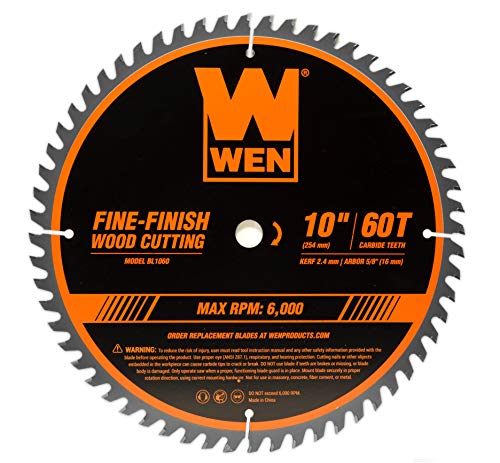
The WEN BL1060 pairing features a 60-tooth configuration with a thin kerf for finer finish cuts on a range of woods. A 10-inch blade with a 5/8-inch arbor and an RPM rating up to 6000 ensures reliable performance while enhancing edge quality on crosscuts and miters. The combination of tooth density and kerf thinness is particularly well-suited to smoothing faces and end grains without sacrificing cut speed.
DEWALT DWA11040 10-Inch Fine Finish Blade

DEWALT’s DWA11040 blade emphasizes fine finish with carbide-tipped teeth and an ultra-sharp profile. Its optimized tooth geometry aims to increase accuracy and reduce tear-out, especially on hardwoods. The blade’s ultra-sharp carbide and durable construction are designed to deliver cleaner cuts through repeated use, while the fine kerf helps conserve material in precision work and cabinet-grade projects.
FOXBC 60-Tooth Fine Finish Blade
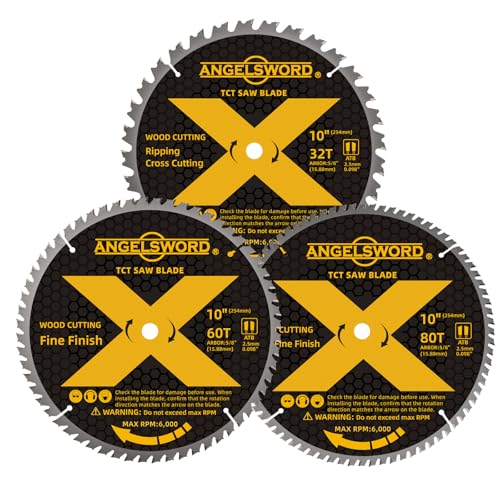
The FOXBC 60-Tooth Fine Finish Blade is designed for precise, smooth crosscuts with a 5/8-inch arbor and a kerf around 0.098 inches (2.5 mm). Its high-density tungsten carbide teeth offer wear resistance and longevity, making it a practical choice for cabinetmaking and decorative woodworking. The blade’s tooth geometry aims to minimize heat buildup while delivering a high-quality surface finish.
FOXBC 80-Tooth Ultra Finish Blade

The FOXBC 80-Tooth Ultra Finish Blade is engineered for ultra-fine finishes with an 80-tooth count and a 0.098″ kerf. This blade prioritizes a smooth finish on end grains and veneered surfaces, delivering minimal fuzz and tear-out. The combination of a high tooth count and thin kerf helps reduce waste while maintaining cutting speed and accuracy on table and miter saws.
DEWALT DWA11080 10-Inch 80-Tooth Fine Finish Blade

DEWALT’s 80-tooth option emphasizes finish quality with a high tooth count designed for ultra-fine cuts. The blade features a patented body slot design to reduce vibration and a geometry optimized for accuracy. While not the thinnest kerf in the line, its precision-cut edges and carbide durability deliver excellent surface quality for cabinetry and fine woodworking.
Buying Guide: Key Considerations For Thin Kerf Blades
- Kerf width: A thinner kerf typically means reduced material waste and easier cutting through dense woods, but it may be more prone to deflection on heavy cuts. Look for kerf around 0.087″ to 0.098″ for a balance of waste reduction and stability.
- Tooth count: Higher tooth counts (60–80) deliver finer finishes but cut more slowly. For finish-heavy work or veneered panels, consider 60–80 teeth; for fast rip cuts, 40–60 teeth may be preferable.
- Arbor compatibility: Most 10″ blades use a 5/8″ arbor. Verify your table saw or miter saw arbor size before purchasing.
- Material compatibility: Carbide-tipped teeth provide wear resistance and durability across hard and softwoods, as well as plywood and laminates. Check coating and tooth geometry for specific applications.
- Rim and body design: Thin kerfs with a solid body reduce vibration and heat buildup. Blades with reinforced bodies and optimized body slots can improve stability during high-RPM operations.
- Finish quality vs. speed: Higher tooth counts yield smoother edges but slower feed rates. For cabinetry and furniture where finish is critical, prioritize blades with ATB (Alternate Top Bevel) or improved finishes.
- Maintenance: Keep blades clean and sharp. Residue can affect kerf width and surface finish. Regularly inspect teeth for chipping or dullness.
- Noise and vibration: Some thin kerf blades reduce vibration due to tooth geometry and body design, contributing to a calmer cut and better surface quality.
- Intended use: Separate blades excel in specific tasks—finishing crosscuts, miters, or general ripping. Match blade selection to your primary workflow to maximize results.
Across these options, the selection focuses on blades with thin kerfs to maximize material efficiency while preserving cut quality. For users prioritizing ultra-fine finishes on cabinetry, furniture components, and decorative woodwork, blades with 60–80 teeth and a slim kerf provide a strong balance of speed and surface quality. For broader cutting tasks, blades with 40–60 teeth can offer faster, cleaner cuts with adequate finish.