Best Class 2 Chainsaw Boots for Professional Forestry and DIY Jobs
Choosing the right Class 2 chainsaw boots helps protect feet from sharp cuts, heavy impacts, and hazardous debris while keeping comfort on long workdays. This guide highlights five top options, spanning trusted brands and feature sets—from lightweight BOA-fit systems to rugged waterproof designs. Each entry focuses on safety performance, durability, and user comfort to help you compare quickly and pick the best boot for your needs.
Summary of Selected Products
- Viking Class 2 Ultra Flexible Chainsaw Boots — Protective Grade 1 Steel Toe, slip-resistant, chemical-resistant upper
- ARBORTEC Scafell Lite Cobalt Waterproof Chainsaw Boots Class 2 — 24 m/s protection, breathable and waterproof
- ARBORTEC Scafell Lite Lime Green Waterproof Chainsaw Boots Class 2 — 24 m/s protection, breathable and waterproof
- Pfanner BOA Chainsaw Boot Class 2 — BOA Fit System for precise, quick adjustments
- HAIX Protector Ultra Signal Red Chainsaw Boots — EU Class 2 cut protection, buckle-free safety and waterproofing
Viking Class 2 Ultra Flexible Chainsaw Boots
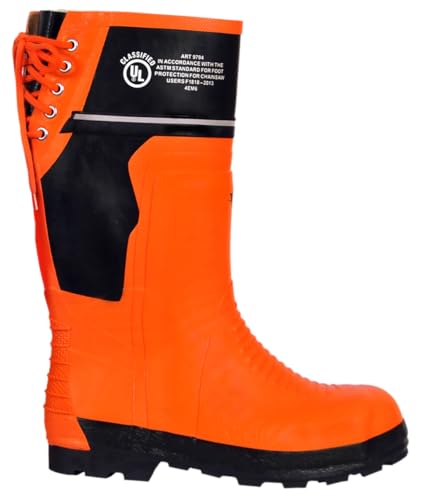
The Viking boots combine a Class 2 chainsaw protection rating with a robust upper designed to resist chemical exposure. They use a heavy-duty SBR-natural rubber blend for durability, plus an interior cotton canvas lining for comfort on long shifts. Deep NBR lug soles provide reliable grip on wet or icy surfaces and are highly resistant to abrasion, oil, and chemicals. The design emphasizes compatibility with ice studs, making them suitable for winter work in rough terrain.
ARBORTEC Scafell Lite Cobalt Waterproof Chainsaw Boots Class 2

These boots strike a balance between stability, flexibility, weight, and longevity. They are designed specifically for forestry and arborist work, with Class 2 chainsaw protection rated at 24 m/s. The “Breathe Dry” system enhances breathability, while the waterproof construction keeps feet dry in wet conditions. Note the boots run slightly small, so consider sizing up by half a size for a comfortable fit even when wearing thick socks.
ARBORTEC Scafell Lite Lime Green Waterproof Chainsaw Boots Class 2

This variant mirrors the cobalt model with a lime color and identical core features: Class 2 protection of 24 m/s, waterproofing, and Breathable Dry system for improved comfort. The fit note about running small also applies here, so sizing adjustments may be needed for optimal support and toe room during long days on unpredictable terrain.
Pfanner BOA Chainsaw Boot Class 2

The Pfanner boot introduces the BOA Fit System for even pressure distribution and quick, secure adjustments. It claims the title of the lightest Class 2 chainsaw boot among its peers, which can translate into reduced fatigue and better agility on the job. The design emphasizes safe lacing with a dial mechanism to minimize entanglement risk, making it a practical choice for climbers and workers who frequently adjust their fit during the day.
HAIX Protector Ultra Signal Red Chainsaw Boots

HAIX boots feature European Class 2 cut protection and robust leather construction with extra layers of protection around the toe and heel. They meet multiple safety certifications, including ASTM F2413 and CAN/CSA Z195, addressing toe, puncture, and electrical hazard readiness. The design prioritizes comfort, with a steel toe cap that offers ample room and improved breathability integration for all-day wear in demanding environments.
Buying Guide: Key Purchase Considerations
When selecting Class 2 chainsaw boots, consider safety, fit, and work conditions to ensure optimal protection and comfort. Below are important factors and how they compare across the reviewed options.
- Certification and protection: Look for Class 2 protection ratings (typically 24 m/s) and toe protection that meets or exceeds your local standards. Boots like Viking, ARBORTEC Scafell models, Pfanner, and HAIX emphasize robust cut and impact resistance with reinforced toe areas.
- Material and durability: Full-grain leather and rubber upper constructions offer abrasion resistance and chemical resistance. SBR blends and polyurethane outsoles provide varied grip and oil-resistance for different work sites.
- Waterproofing and breathability: For wet conditions, waterproof membranes and Breathable Dry systems help keep feet dry while preventing overheating in warm weather.
- Fit and sizing: Some models run small or have specific sizing recommendations (e.g., ARBORTEC Scafell Lite). Consider half-size adjustments or trying on in person if possible, especially for long days on uneven terrain.
- Latch and lacing systems: BOA Fit (Pfanner) offers quick, uniform tightening with reduced snag risk, while traditional laces may require more frequent adjustments. Check for secure eyelets and gusseted tongues to keep debris out.
- Weight and comfort: Lighter boots reduce fatigue but must still meet safety standards. Balancing weight with protection is key for climbers and loggers who move a lot during the day.
- Maintenance and replacement: Look for durable outsoles, chemical resistance, and ease of cleaning. Removable insoles and breathable liners can extend comfort between shifts.
Important Fit and Usage Notes
Ensure the boot size aligns with your typical work sock thickness and climate. For wet or snowy sites, prioritize waterproof and insulated models. If you’re frequently climbing or navigating uneven ground, a boot with good ankle support and a snug heel fit can reduce fatigue and prevent slips.
Choosing The Right Boot For Your Environment
For forestry and arborist work, Class 2 protection is essential, but the choice may hinge on climate, terrain, and maneuverability. In wet climates or applications with frequent water exposure, waterproof and breathable designs (such as ARBORTEC Scafell Lite variants) offer practical benefits. In jobs requiring rapid on/off adjustments or climbing, a boot like Pfanner with BOA Fit can streamline your workflow. For workers who demand maximum protection with a robust, traditional look, HAIX and Viking models provide strong all-around protection and durability.
Additional Considerations
Consider maintenance routines to extend boot life, such as cleaning rubber components to prevent cracking, checking for sole wear, and inspecting protective panels for signs of fatigue. Store boots away from direct heat to preserve leather and insulation. If possible, select boots with a serviceable insole and replaceable components to maximize lifespan on tough job sites.