Best Crosscut Table Saw Blades for Precise Finishes
Choosing the right crosscut blade can dramatically improve finish quality, reduce tear-out, and minimize vibration on a variety of table and miter saws. This guide highlights top crosscut blades designed for clean, accurate cuts on both hardwoods and softwoods, with emphasis on thin-kerf and high-density carbide designs that balance speed, finish, and durability. Read on to compare leading options and make an informed purchase for American workshops and job sites.
The following table summarizes five highly regarded crosscut blades. It focuses on blades that deliver crisp crosscuts, smooth finishes, and practical compatibility with common 10-inch format saws. Use this quick reference to scan key features at a glance.
| Product | Brand | Teeth | Kerf | Bore |
|---|---|---|---|---|
| FOXBC 10″ Thin Kerf Fine Finish Crosscut Blade | FOXBC | 60 | 0.087″ | 5/8″ |
| Freud LU88R010 Thin Kerf Fine Finish Blade | Freud | 60 | Thin Kerf | 5/8″ |
| Freud LU83R010 Thin Kerf Combination Blade | Freud | 50 | Thin Kerf | 5/8″ |
| CMT 256.050.10 ITK ITK XTreme 50T | CMT ORANGE TOOLS | 50 | 0.098″ | 5/8″ |
| WEN BL1080 80T Ultra-Fine | WEN | 80 | Thin Kerf (0.1″) | 5/8″ |
FOXBC 10 Inch Thin Kerf Fine Finish Crosscut Blade

The FOXBC blade is built for fine finish crosscuts with a 60-tooth ATB grind and a 5/8-inch arbor. Its 0.087-inch kerf minimizes material waste and envelope resistance, supporting smoother cuts with less vibration. The high-density tungsten carbide construction enhances wear resistance and life, making it suitable for repeated crosscuts in hardwoods and softwoods. Its thin kerf design also reduces horsepower demands on lower-powered saws, improving cut quality and efficiency in professional and hobbyist settings.
Freud LU88R010 Thin Kerf Fine Finish Blade

The Freud LU88R010 features a premium TiCo carbide blend and a positive hook angle designed to boost feed rates while delivering smoother, cleaner crosscuts. The thin kerf reduces power draw and material waste, helping machines with modest horsepower achieve excellent results. The ATB grind provides clean edges and reduced chipping on difficult species, making it a strong choice for finish-focused crosscuts on a range of woods.
Freud LU83R010 Thin Kerf Combination Blade

This combination blade blends rip and crosscut capabilities with a thin kerf and a TiCo carbide blend. It features one flat tooth for ripping followed by four alternate top bevel teeth for crosscuting, plus a large gullet for effective chip clearance. The design reduces horsepower requirements while maintaining solid cut quality across varied woodworking tasks, from cabinet making to panel work.
CMT 256.050.10 ITK XTreme Industrial Combination Blade

The CMT ITK blade is designed for both ripping and crosscutting, with large gullets for deep cuts and efficient chip clearance. It handles solid wood, plywood, laminates, and other sheet goods on table and radial saws. A 0.098-inch kerf and 0.071-inch plate thickness, combined with a 15-degree hook angle and a 1-flat + 4/20-degree grind, balance aggressiveness with finish quality—suitable for cabinet shops and general-purpose use.
WEN BL1080 80-Tooth Ultra-Fine Finish Blade
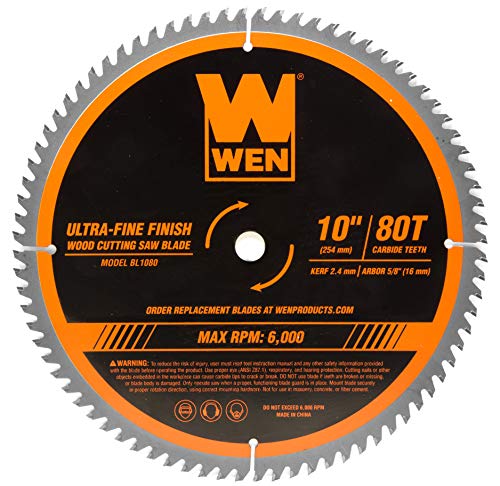
WEN’s BL1080 offers an 80-tooth carbide-tipped blade designed for ultra-fine finish work. Its 10-inch diameter and 5/8-inch arbor suit common consumer and contractor saws. A 0.1-inch kerf reduces material waste while maintaining solid cutting performance at speeds up to 6,000 RPM. The blade’s fine tooth geometry aims to minimize tear-out on delicate joinery and veneer-laden panels, delivering consistently smooth surfaces in finish work and cabinetry projects.
CMT ITK Fine Finish Blade LU85R010

Freud’s LU85R010 offers ATB geometry with a TiCo Hi-Density Carbide blend for ultra-fine finish work, paired with anti-vibration design. The blade targets precise crosscuts with minimal chipping on delicate materials, while maintaining solid edge retention for repeated sessions in fine finish tasks. Its 0.116-inch kerf and 5/8-inch arbor align with standard 10-inch saws, making it compatible with a broad range of brands and models.
CMT 221.060.10 Industrial Cabinetshop Blade

This cabinet shop blade is designed for heavy-duty crosscuts on laminated panels and plywood. It features a 0.126-inch kerf and 0.087-inch plate, with a 10-degree hook angle and a trapezoidal tooth grind. It handles radial arm saws, miter saws, and table saws, delivering robust performance in shop environments where aggressive material handling and steady, flat crosscuts are required.
Freud LU85R010 Carbide Tipped Blade

Freud’s LU85R010 combines 80 teeth with TiCo Hi-Density Carbide and an ATB geometry, engineered for ultra-fine, precise cuts with minimal tear-out. An anti-vibration design helps reduce blade chatter for quieter operation and smoother finishes on fine woodworking projects, from cabinetry to moldings. The blade’s 5/8-inch arbor aligns with most 10-inch saws, making it broadly compatible for professional and hobbyist use.
Buying Guide: Key Purchase Considerations
- Alignment with Saw Type: Ensure the blade’s diameter, bore, and kerf match your table saw or miter saw. A thin kerf minimizes power draw and waste, especially on lower-powered saws.
- Tooth Geometry and Count: ATB (Alternate Top Bevel) teeth are common for clean crosscuts; higher tooth counts yield smoother finishes but can reduce cutting speed. Combination blades offer versatile use for rip and crosscut tasks.
- Carbide Quality: TiCo or high-density carbide blends deliver longer edge life and better resistance to wear, important for repeated crosscuts in hardwoods and composites.
- Gullets and Chip Clearance: Larger gullets improve chip removal, reducing heat buildup and achieving cleaner cuts in plywood and laminates.
- Vibration and Noise: Anti-vibration designs help reduce chatter and produce consistent finishes, particularly on portable or lightweight saws.
- Application Range: Fine finish blades excel on cabinet, furniture, and trim work, while combination blades are more versatile for mixed-material projects.
- Compatibility and Brand Availability: Popular 10-inch blades from brands like Freud, CMT, and WEN are widely compatible across major saw brands, but always verify bore size and hook angle in your manual.
- Maintenance and Care: Keep blades clean, verify alignment, and replace when teeth corrode or glaze. Store blades in protective sheaths to preserve edge quality.
When choosing a crosscut blade for a table saw, prioritize a balance of finish quality, durability, and compatibility with your saw’s horsepower and speed. For cabinetry and fine furniture, prioritize blades with ATB geometry, thin kerf, and a high-density carbide blend. For mixed-use projects, consider a combination blade that provides solid crosscut performance along with decent ripping capability.