Best 165mm Circular Saw Blades for Smooth, Precise Cutting
The 165mm blade size (approximately 6 1/2 inches) is a common choice for portable circular saws, offering a balance between cut depth and maneuverability. This guide highlights top 165mm blades suited for wood, plywood, and mixed-material projects, focusing on teeth configuration, kerf, and arbor compatibility to help you choose a blade that reduces tear-out and increases accuracy. The selections below cover finish-grade cuts, framing and general-purpose tasks, with attention to noise, heat, and wear resistance for durable performance.
| Product | Brand | Teeth | Arbor | Notes |
|---|---|---|---|---|
| CMT ORANGE TOOLS 272.165.36H ITK Plus Finish | CMT ORANGE TOOLS | 36 ATB | 20 mm | Finish-grade ATB for smooth cuts |
| FOXBC 6-1/2″ Ultra Fine Finish 60-Tooth | FOXBC | 60 | 5/8″ | Ultra-thin kerf for speed |
| YOIbuy 6 1/2″ Ultra Fine Finish 55T | YOIbuy | 55 | 5/8″ | Japanese-style teeth for precision |
| DEWALT 6 1/2″ 40 Tooth Framing | DEWALT | 40 | 20 mm | ToughTrack design with low vibration |
| WEN BL6556 56-Tooth Thin-Kerf | WEN | 56 | 20 mm | PTFE-coated for cool cuts |
Note: The table above summarizes a subset of options that align with common 165mm blades. Each product section below provides more detail on performance traits and suitability for various tasks.
CMT Orange Tools Finish Saw Blade 165mm

The CMT ORANGE TOOLS 272.165.36H ITK PLUS Finish Saw Blade is designed for finish cuts with ATB (alternate top bevel) tooth geometry. Its 165mm diameter and 1.7mm body thickness work with a 20mm bore, making it suitable for finish work on softwood, hardwood, and plywood. The blade emphasizes clean edge quality and minimal chipping on crosscuts, making it a solid option for cabinetry and trim tasks. Users should consider its slightly thicker kerf when planning for fast stock removal.
FOXBC 6-1/2″ Ultra Fine Finish 60-Tooth
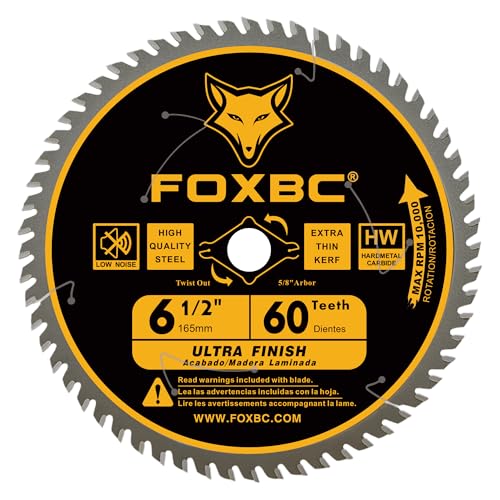
This FOXBC blade features 60 teeth on a 6-1/2″ blade with a 5/8″ arbor, designed for ultra-fine finish cuts. The 0.059″ (1.5mm) kerf reduces waste and allows smoother, precise crosscuts through softwood or hardwood, plywood, and MDF. The design emphasizes reduced tear-out and a quieter cut, benefiting cabinetmaking, shelving, and other finish-oriented tasks where edge quality matters most. Compatibility with common corded and cordless circular saws broadens its versatility.
YOIbuy 6 1/2″ Ultra Fine Finish 55T

The YOIbuy 165mm blade with 55 teeth uses Japanese-style teeth for an ultra-fine finish, combined with a 1.5mm kerf for efficient material use. The 5/8″ arbor is standard for many popular saws, and the design aims to reduce noise and vibration through unequal pitch teeth and modern tooth geometry. This blade is well-suited for precise crosscuts in trim, cabinetry, and paneling, where a clean edge is essential and quick cuts are desired without sacrificing finish quality.
DEWALT 6-1/2″ 40-Tooth Framing Blade

The DEWALT DWA161240 blade emphasizes durability and tracking with a patent-pending ToughTrack tooth design and proprietary body slots to minimize vibration. Its 40 teeth are optimized for rapid material removal in framing tasks, delivering solid straight cuts with reduced wander. A high-density tungsten carbide composition contributes to wear resistance, making it a reliable option for framing lumber and similar materials where speed is prioritized over ultra-fine finishes.
WEN 6.5-Inch 56-Tooth Thin-Kerf Blade

The WEN BL6556 blade offers a 6.5-inch diameter with a 20mm arbor and a thin kerf for efficient cuts. The 56-tooth carbide-tipped configuration and PTFE coating reduce heat buildup and sticking, enabling cleaner cuts in plywood, veneered panels, and hardwoods. The blade’s coating helps resist gumming and keeps the cut edges smoother, suitable for finish carpentry and cabinetry projects that require consistent quality.
Buying Guide: Key Purchase Considerations For 165mm Blades
Selecting the right 165mm blade depends on the material you cut and the finish you expect. Consider the following factors to guide your choice:
- Tooth count and geometry: Higher tooth counts (50-60T) deliver finer finishes on plywood and paneling, while lower counts (40T) cut faster in framing lumber. ATB, FTG, and other tooth geometries affect edge quality and tear-out.
- Kerf width: Thin kerf blades (around 1.5 mm to 1.6 mm) reduce material waste and require less power, beneficial for portable saws. Heavier kerfs cut faster but generate more waste and blade resistance.
- Arbor compatibility: Most 165mm blades use a 20 mm bore or 5/8″ adapters. Ensure your saw supports the blade’s arbor size and any required adapters.
- Coating and heat management: PTFE or anti-friction coatings help keep workpieces cool and reduce gumming on adhesive surfaces. This is especially useful when cutting hardwoods or laminates.
- Vibration and tracking: Features like body slots or vibration-damping designs improve stability and cut accuracy, particularly in longitudinal cuts or dense stock.
- Finish versus speed: For cabinetry and trim, prioritize blades with finish-grade teeth and smoother cut quality. For framing or rough-cut tasks, speed and durability may take precedence.
- Material compatibility: Some blades are optimized for wood, others for plywood, MDF, or laminates. Check the manufacturer’s guidelines for best results with your project.
- Maintenance and replacement: Replace blades with dull teeth or chipped edges promptly to maintain accuracy and reduce burn marks on stock.
When choosing a blade, align your selection with the primary material and finish you require, as well as your saw’s compatibility. The options listed above provide a range of finishes from ultra-smooth crosscuts to rapid framing cuts, all in a standard 165mm diameter family.