Best Miter Saw Stand Wheels for Easy Jobsite Mobility
Choosing the right miter saw stand with wheels can dramatically improve workflow, safety, and productivity on any jobsite. This guide highlights five top options that emphasize portability, stability, and universal compatibility. Each product is evaluated based on wheel design, mounting versatility, load capacity, and ease of setup to help you select the best stand for your miter saw, workspace, and project demands.
| Product | Brand | Wheel Type | Key Benefit |
|---|---|---|---|
| DEWALT Miter Saw Stand With Wheels | DEWALT | Wide rubber grip wheels | Flexible mounting rails and easy mobility |
| WEN Miter Saw Stand, MSA330 | WEN | Two 8-inch never-flat wheels | Universal compatibility and onboard outlets |
| Deluxe Heavy Duty Rolling Miter Saw Stand WK-MS029E-2 | WORKESS | Heavy-duty wheels; extendable arms | Flexible height and quick-release mounting |
| POWERTEC Portable Miter Saw Stand MT4000V | POWERTEC | Super-grip 8″ wheels | Folding design with universal mounting brackets |
| BOSCH T4B Portable Gravity-Rise Stand | BOSCH | 8-Inch pneumatic wheels | Gravity Rise system for rapid setup |
DEWALT Miter Saw Stand With Wheels

The DEWALT DWX726 Stand features adjustable mounting rails to accommodate nearly any miter saw, with wide rubber grip wheels designed for smooth jobsite mobility. Its three-position pneumatic assisted raising and lowering adds flexibility when switching between tasks or adjusting cutting height. The combination of durable steel construction and quick-adjust rails supports efficient setup and reliable performance on a range of projects. This stand emphasizes compatibility, stability, and ease of use for professionals and DIYers alike.
WEN Miter Saw Stand MSA330
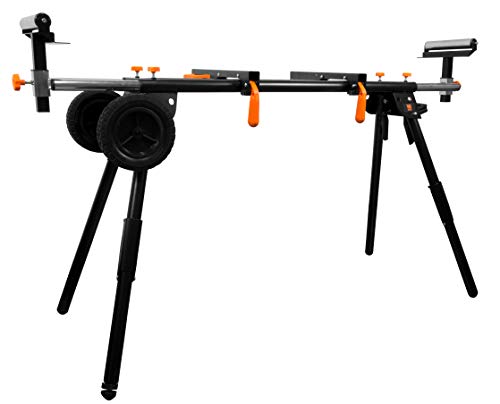
The WEN MSA330 stand provides a universal design that fits nearly every miter saw on the market, including all WEN models. Its two onboard outlets add convenience for accessory tools, and the stand’s collapsible rolling design with two 8-inch never-flat wheels makes transportation and storage straightforward. The sturdy 1-1/2-inch steel frame lifts the saw to a comfortable working height, balancing portability with robust support for a wide range of applications.
Deluxe Heavy Duty Rolling Miter Saw Stand WK-MS029E-2
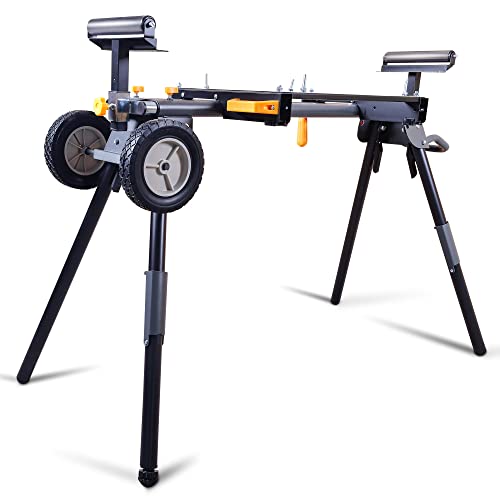
The WORKESS WK-MS029E-2 delivers a heavy-duty rolling frame with 8 mph-style versatility, featuring an extended reach from 45.6 inches to 78.7 inches and quick-release mounting brackets for fast setup. The stand includes cross supports to accommodate saws with non-standard hole patterns, offering flexibility for a variety of miter saw models. Its design aims to maximize stability while enabling quick adjustments on larger or more complex cutting tasks.
POWERTEC Portable Miter Saw Stand MT4000V

The POWERTEC MT4000V combines a folding design with universal mounting brackets and a set of 8″ wheels for easy movement. Its spring-loaded locking legs ensure quick setup and breakdown, while the stand accommodates a variety of planers and miter saws. The triple-outlet arrangement simplifies powering multiple tools at the job site, making it a practical option for smaller shops and on-site work where space is at a premium.
BOSCH T4B Portable Gravity-Rise Stand

The BOSCH T4B stand uses a patented Gravity Rise System for rapid setup and breakdown, designed to boost productivity on demanding jobsites. It supports up to 18 feet of material capacity—the highest among portable units in this list—while 8-inch pneumatic wheels provide solid transport across varied terrain. This stand emphasizes fast deployment and substantial material handling, suitable for larger framing or molding projects requiring long cuts and heavy saws.
Buying Guide
Key considerations help determine which miter saw stand with wheels best fits your needs. Use these perspectives to compare options beyond listed features.
- Compatibility: Check mounting patterns and hole spacings to ensure your miter saw will attach securely. Some stands include universal brackets or adjustable rails to accommodate a wide range of brands and models.
- Weight capacity: Look for the maximum load the stand can safely support, including saw weight and accessories. Heavier-duty stands are essential for large framing or metal-cutting tasks.
- Mobility: Evaluate wheel size and construction. Larger pneumatic or solid wheels improve stability on uneven terrain, while lockable wheels help position the stand precisely during cutting.
- Height adjustability: A stand with adjustable height or a gas/air-assisted lift reduces user strain and enables better ergonomics for varied users and projects.
- Portability vs. stability: Collapsible or folding designs save space for storage, but ensure they don’t compromise rigidity when in use. Consider the jobsite environment and storage constraints.
- Electrical accessibility: Some stands integrate outlets or power options, which is convenient for running additional tools alongside the saw. Verify the number and type of outlets to match your setup.
- Durability and materials: Steel frames offer rugged durability for frequent jobsite use, while aluminum can reduce weight without sacrificing rigidity. Inspect welds and joints for long-term reliability.
- Setup time: Stands with quick-release brackets or Gravity Rise mechanisms can dramatically shorten setup and breakdown times, increasing overall productivity on tight schedules.
- Maintenance: Consider wheel bearings and folding mechanisms that may require lubrication or occasional adjustment. A stand with simpler maintenance usually reduces downtime.
- Storage needs: If space is limited, prioritize stands with compact folding dimensions and locking mechanisms to keep the unit secure when not in use.
When selecting a miter saw stand with wheels, balance the need for portability with the demand for robust support and compatibility. The right choice will depend on how often you move between sites, the size of your saws, and the types of projects you tackle most often.